Edible seaweed
Edible Seaweed
Edible seaweed are types of seaweed that can be eaten and used in the preparation of food. They typically contain high amounts of fiber and are a complete protein. They are also rich in vitamins and minerals.
Types of Edible Seaweed[edit]
There are several types of edible seaweed, including:
- Kombu: This is a type of kelp that is often used to flavor broths and stews.
- Dulse: This red seaweed is often used in cooking for its unique flavor and high nutritional content.
Culinary Uses[edit]
Edible seaweed has a wide range of uses in the kitchen. It can be used as a flavor enhancer, a salad ingredient, a soup base, or even a snack. In addition to its use in traditional Japanese cuisine, seaweed is also used in Korean cuisine, Chinese cuisine, and Irish cuisine.
Nutritional Value[edit]
Edible seaweed is highly nutritious. It is a good source of vitamin A, vitamin C, vitamin K, and B vitamins. It is also rich in iodine, iron, and calcium. In addition to these nutrients, seaweed also contains a variety of beneficial antioxidants.
Environmental Impact[edit]
The cultivation of edible seaweed can have positive environmental impacts. It can help to improve water quality by absorbing excess nutrients, and it can also help to mitigate the effects of ocean acidification.
See Also[edit]

-
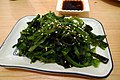 Sapporo Ichiban, Catford, London
 -
 Corn chips flavoured and coloured with cultivated seaweed
 -
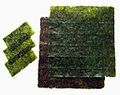 Nori
Nori -
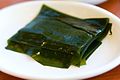 Dasima
 -
 Kombu
Kombu -
 Cakes and Food Made of Seaweed by Kubo Shunman
 -
 Green Tea Yokan
 -
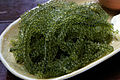 Umibudou at Miyakojima
.jpg)


Ad. Transform your health with W8MD Weight Loss, Sleep & MedSpa

Tired of being overweight?
Special offer:
Budget GLP-1 weight loss medications
- Semaglutide starting from $29.99/week and up with insurance for visit of $59.99 and up per week self pay.
- Tirzepatide starting from $45.00/week and up (dose dependent) or $69.99/week and up self pay
✔ Same-week appointments, evenings & weekends
Learn more:
- GLP-1 weight loss clinic NYC
- W8MD's NYC medical weight loss
- W8MD Philadelphia GLP-1 shots
- Philadelphia GLP-1 injections
- Affordable GLP-1 shots NYC
|
WikiMD Medical Encyclopedia |
Medical Disclaimer: WikiMD is for informational purposes only and is not a substitute for professional medical advice. Content may be inaccurate or outdated and should not be used for diagnosis or treatment. Always consult your healthcare provider for medical decisions. Verify information with trusted sources such as CDC.gov and NIH.gov. By using this site, you agree that WikiMD is not liable for any outcomes related to its content. See full disclaimer.
Credits:Most images are courtesy of Wikimedia commons, and templates, categories Wikipedia, licensed under CC BY SA or similar.
Translate this page: - East Asian
中文,
日本,
한국어,
South Asian
हिन्दी,
தமிழ்,
తెలుగు,
Urdu,
ಕನ್ನಡ,
Southeast Asian
Indonesian,
Vietnamese,
Thai,
မြန်မာဘာသာ,
বাংলা
European
español,
Deutsch,
français,
Greek,
português do Brasil,
polski,
română,
русский,
Nederlands,
norsk,
svenska,
suomi,
Italian
Middle Eastern & African
عربى,
Turkish,
Persian,
Hebrew,
Afrikaans,
isiZulu,
Kiswahili,
Other
Bulgarian,
Hungarian,
Czech,
Swedish,
മലയാളം,
मराठी,
ਪੰਜਾਬੀ,
ગુજરાતી,
Portuguese,
Ukrainian
