Phagocyte
Phagocyte
A phagocyte is a type of cell within the body capable of phagocytosis, a process that involves the engulfing and absorption of bacteria, other microorganisms, and foreign particles. Phagocytes form an important part of the immune system, which defends the body against infection.
Types of Phagocytes[edit]
There are several types of phagocytes in the body, including:
- Neutrophils: These are the most abundant type of phagocyte and are typically the first cells to arrive at the site of an infection.
- Monocytes: These cells are larger than neutrophils and have a longer lifespan. They can differentiate into macrophages and dendritic cells.
- Macrophages: These cells are named for their ability to move towards an infection site and engulf large particles.
- Dendritic Cells: These cells present antigens to T-cells, initiating an immune response.
Phagocytosis Process[edit]
The process of phagocytosis involves several steps:
- Chemotaxis: The phagocyte moves towards the source of infection or inflammation in response to chemical signals.
- Adherence: The phagocyte attaches to the microorganism or foreign particle.
- Ingestion: The phagocyte engulfs the microorganism or particle, forming a phagosome.
- Digestion: Lysosomes within the phagocyte fuse with the phagosome, releasing enzymes that break down the ingested material.
- Excretion: The indigestible waste is expelled from the phagocyte.
Role in Immune Response[edit]
Phagocytes play a crucial role in the body's immune response. They are responsible for the direct destruction of pathogens and also help to stimulate other immune cells to respond to the infection. In addition, phagocytes are involved in the removal of dead cells and other debris from the body, a process known as efferocytosis.
See Also[edit]
 | |
|---|---|
 |
 |
Phagocyte[edit]
-
 Neutrophil with anthrax
 -
 Professeur Metchnikoff, portrait du scientifique dans un laboratoire de recherche
 -
 Phagocytosis in three steps
 -
 Opsonin
 -
 Phagocytosis
 -
 Gram stain of gonorrhoea
 -
 MHC Class I processing
 -
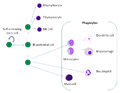 Myeloid cells
 -
 Neutrophil action
 -
 Monocytes, a type of white blood cell (Giemsa stained)
 -
 Gram stain of a macrophage with ingested S. epidermidis bacteria
 -
 Cutaneous abscess MRSA staphylococcus aureus


.jpg)


Ad. Transform your health with W8MD Weight Loss, Sleep & MedSpa

Tired of being overweight?
Special offer:
Budget GLP-1 weight loss medications
- Semaglutide starting from $29.99/week and up with insurance for visit of $59.99 and up per week self pay.
- Tirzepatide starting from $45.00/week and up (dose dependent) or $69.99/week and up self pay
✔ Same-week appointments, evenings & weekends
Learn more:
- GLP-1 weight loss clinic NYC
- W8MD's NYC medical weight loss
- W8MD Philadelphia GLP-1 shots
- Philadelphia GLP-1 injections
- Affordable GLP-1 shots NYC
|
WikiMD Medical Encyclopedia |
Medical Disclaimer: WikiMD is for informational purposes only and is not a substitute for professional medical advice. Content may be inaccurate or outdated and should not be used for diagnosis or treatment. Always consult your healthcare provider for medical decisions. Verify information with trusted sources such as CDC.gov and NIH.gov. By using this site, you agree that WikiMD is not liable for any outcomes related to its content. See full disclaimer.
Credits:Most images are courtesy of Wikimedia commons, and templates, categories Wikipedia, licensed under CC BY SA or similar.
Translate this page: - East Asian
中文,
日本,
한국어,
South Asian
हिन्दी,
தமிழ்,
తెలుగు,
Urdu,
ಕನ್ನಡ,
Southeast Asian
Indonesian,
Vietnamese,
Thai,
မြန်မာဘာသာ,
বাংলা
European
español,
Deutsch,
français,
Greek,
português do Brasil,
polski,
română,
русский,
Nederlands,
norsk,
svenska,
suomi,
Italian
Middle Eastern & African
عربى,
Turkish,
Persian,
Hebrew,
Afrikaans,
isiZulu,
Kiswahili,
Other
Bulgarian,
Hungarian,
Czech,
Swedish,
മലയാളം,
मराठी,
ਪੰਜਾਬੀ,
ગુજરાતી,
Portuguese,
Ukrainian
