Sfenj
Sfenj is a traditional North African doughnut that is especially popular in Morocco, Algeria, and Tunisia. It is also commonly consumed in Israel by the Mizrahi Jewish community. Sfenj is typically eaten for breakfast or during Ramadan.
Etymology[edit]
The word "Sfenj" comes from the Arabic word "Isfenj", which means "sponge". This is likely due to the doughnut's spongy texture when it is cooked.
Preparation[edit]
Sfenj is made from a sticky, unsweetened yeast dough. The dough is shaped into a ring and then deep-fried until it becomes golden and crispy. It is often served hot and dusted with sugar, although it can also be eaten plain or soaked in honey. Unlike many other types of doughnuts, Sfenj is not typically filled with any kind of jam or cream.
Cultural Significance[edit]
In North Africa, Sfenj is often sold by street vendors and is a popular choice for breakfast or for breaking the fast during Ramadan. In Israel, it is commonly eaten during the Hanukkah holiday, as it is customary to eat fried foods during this time to commemorate the miracle of the oil in the Second Temple.
See Also[edit]

-
 Sfenj in Marrakesh, Morocco
 -
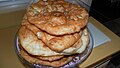 Sfenj
Sfenj -
 Homemade sfenj coated with honey
 -
 Sfenj in Essaouira, Morocco
 -
 Sfenj
Sfenj -
 Khfaf de Kabylie
 -
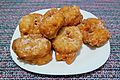 Sfenj sprinkled with sugar and served on a plate


_sfenj.jpg)


Ad. Transform your health with W8MD Weight Loss, Sleep & MedSpa

Tired of being overweight?
Special offer:
Budget GLP-1 weight loss medications
- Semaglutide starting from $29.99/week and up with insurance for visit of $59.99 and up per week self pay.
- Tirzepatide starting from $45.00/week and up (dose dependent) or $69.99/week and up self pay
✔ Same-week appointments, evenings & weekends
Learn more:
- GLP-1 weight loss clinic NYC
- W8MD's NYC medical weight loss
- W8MD Philadelphia GLP-1 shots
- Philadelphia GLP-1 injections
- Affordable GLP-1 shots NYC
|
WikiMD Medical Encyclopedia |
Medical Disclaimer: WikiMD is for informational purposes only and is not a substitute for professional medical advice. Content may be inaccurate or outdated and should not be used for diagnosis or treatment. Always consult your healthcare provider for medical decisions. Verify information with trusted sources such as CDC.gov and NIH.gov. By using this site, you agree that WikiMD is not liable for any outcomes related to its content. See full disclaimer.
Credits:Most images are courtesy of Wikimedia commons, and templates, categories Wikipedia, licensed under CC BY SA or similar.
Translate this page: - East Asian
中文,
日本,
한국어,
South Asian
हिन्दी,
தமிழ்,
తెలుగు,
Urdu,
ಕನ್ನಡ,
Southeast Asian
Indonesian,
Vietnamese,
Thai,
မြန်မာဘာသာ,
বাংলা
European
español,
Deutsch,
français,
Greek,
português do Brasil,
polski,
română,
русский,
Nederlands,
norsk,
svenska,
suomi,
Italian
Middle Eastern & African
عربى,
Turkish,
Persian,
Hebrew,
Afrikaans,
isiZulu,
Kiswahili,
Other
Bulgarian,
Hungarian,
Czech,
Swedish,
മലയാളം,
मराठी,
ਪੰਜਾਬੀ,
ગુજરાતી,
Portuguese,
Ukrainian
