Smoking (cooking)
Smoking (cooking) is a method of cooking, flavoring, and preserving food by exposing it to smoke from burning or smoldering material, usually wood. Different woods impart different flavors to the food, which can range from subtle to strong and vary according to the type of wood used. Smoking is a technique that has been used for thousands of years, having been discovered soon after the development of cooking with fire.
History
The practice of smoking food likely dates back to the Paleolithic era, when early humans would have noticed that foods exposed to smoke lasted longer without spoiling. Over time, the process was refined and became a popular method for preserving food, especially in areas without access to modern preservation methods such as refrigeration. In addition to preservation, smoking also imparts unique flavors to food, making it a favored cooking technique in various cultures around the world.
Types of Smoking
There are primarily two types of smoking: hot smoking and cold smoking.
- Hot Smoking involves cooking food by exposing it to smoke at high temperatures, typically between 126°F to 176°F (52°C to 80°C). This method not only flavors the food but also fully cooks it, making it ready to eat immediately after smoking.
- Cold Smoking is a process where food is exposed to smoke at lower temperatures, usually below 85°F (29°C). This method is used primarily for flavoring and preserving food, and the food remains raw and requires further cooking before consumption.
Techniques and Equipment
Smoking can be done using a variety of equipment, ranging from traditional smokehouses to modern electric smokers. The choice of equipment often depends on the scale of smoking, the type of food being smoked, and the desired flavor profile. Common smoking equipment includes:
- Traditional Smokehouses, which are large chambers where foods are hung and exposed to smoke over a long period.
- Charcoal Smokers, which use charcoal as the heat source, with wood chips added for smoke flavor.
- Electric Smokers, which are convenient and easy to control, using electricity as the heat source and wood chips for smoke.
- Gas Smokers, which use propane or natural gas as the heat source, with wood chips for smoke.
Wood Types and Flavors
The type of wood used in smoking plays a significant role in the flavor of the finished product. Different woods impart different flavors, which can range from sweet to robust. Commonly used woods include:
- Hickory, which imparts a strong, bacon-like flavor.
- Applewood, known for its sweet, fruity flavor.
- Mesquite, which offers a strong, earthy flavor.
- Cherrywood, valued for its mild and fruity flavor.
Health Considerations
While smoking can add unique flavors to food, there are health considerations to take into account. The process of smoking produces polycyclic aromatic hydrocarbons (PAHs) and other potentially harmful compounds. Consuming large amounts of smoked foods may increase the risk of certain types of cancer. It is recommended to enjoy smoked foods in moderation and to use techniques that minimize the formation of harmful compounds.
Culinary Uses
Smoked foods are a staple in many cuisines around the world. Commonly smoked foods include:
- Meats such as beef, pork, and chicken
- Fish and seafood
- Cheese
- Vegetables
Smoking adds depth and complexity to the flavor of these foods, making it a cherished cooking method for both home cooks and professional chefs.
See Also
| Cooking techniques | ||||||||||||||||||||||||||||||
|---|---|---|---|---|---|---|---|---|---|---|---|---|---|---|---|---|---|---|---|---|---|---|---|---|---|---|---|---|---|---|
|
| Food preservation |
|---|
|
|

-
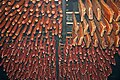 Smoking (cooking)
 -
 Schwartz smoked meat in Montreal
 -
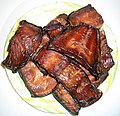 Smoked Salmon
 -
 Little Chief smoker
 -
 Hot smoked salmon on racks
 -
 Smoked country style pork ribs
 -
 Offset smoker
 -
 Diagram of coals for smoking
 -
Vertical water smoker
-
 Propane smoker
 -
 Kūpinātava
 -
 Smoking (cooking)


Ad. Transform your health with W8MD Weight Loss, Sleep & MedSpa

Tired of being overweight?
Special offer:
Budget GLP-1 weight loss medications
- Semaglutide starting from $29.99/week and up with insurance for visit of $59.99 and up per week self pay.
- Tirzepatide starting from $45.00/week and up (dose dependent) or $69.99/week and up self pay
✔ Same-week appointments, evenings & weekends
Learn more:
- GLP-1 weight loss clinic NYC
- W8MD's NYC medical weight loss
- W8MD Philadelphia GLP-1 shots
- Philadelphia GLP-1 injections
- Affordable GLP-1 shots NYC
|
WikiMD Medical Encyclopedia |
Medical Disclaimer: WikiMD is for informational purposes only and is not a substitute for professional medical advice. Content may be inaccurate or outdated and should not be used for diagnosis or treatment. Always consult your healthcare provider for medical decisions. Verify information with trusted sources such as CDC.gov and NIH.gov. By using this site, you agree that WikiMD is not liable for any outcomes related to its content. See full disclaimer.
Credits:Most images are courtesy of Wikimedia commons, and templates, categories Wikipedia, licensed under CC BY SA or similar.
Translate this page: - East Asian
中文,
日本,
한국어,
South Asian
हिन्दी,
தமிழ்,
తెలుగు,
Urdu,
ಕನ್ನಡ,
Southeast Asian
Indonesian,
Vietnamese,
Thai,
မြန်မာဘာသာ,
বাংলা
European
español,
Deutsch,
français,
Greek,
português do Brasil,
polski,
română,
русский,
Nederlands,
norsk,
svenska,
suomi,
Italian
Middle Eastern & African
عربى,
Turkish,
Persian,
Hebrew,
Afrikaans,
isiZulu,
Kiswahili,
Other
Bulgarian,
Hungarian,
Czech,
Swedish,
മലയാളം,
मराठी,
ਪੰਜਾਬੀ,
ગુજરાતી,
Portuguese,
Ukrainian

