Smokehouse
Smokehouse
A Smokehouse is a building where meat or fish is cured with smoke. The process of smoking is an ancient food preservation method which reduces bacteria and extends the shelf life of the food.
History[edit]
The use of smokehouses dates back to the Paleolithic era, when early humans first began to control fire. The process of smoking food was likely discovered by accident, but it quickly became a reliable method of preserving food. Smokehouses were commonly used in the Middle Ages, and they continue to be used in many cultures around the world today.
Construction[edit]
A traditional smokehouse is typically a small enclosed building, often made of wood, where a fire can be kept smoldering for extended periods of time. The smoke produced by the fire is used to cure the food. Modern smokehouses can be made of a variety of materials, including brick, concrete, and steel, and they often use electric or gas heating elements instead of a traditional wood fire.
Process[edit]
The process of smoking involves exposing the food to smoke from a controlled source of heat. The food is usually hung or placed on racks inside the smokehouse, and the smoke is allowed to permeate the food. This process can take anywhere from a few hours to several days, depending on the type and quantity of food being smoked.
Types of Smokehouses[edit]
There are several types of smokehouses, including:
- Cold Smokehouses: These smokehouses smoke the food at a temperature that does not cook the food. The smoke adds flavor and helps to preserve the food.
- Hot Smokehouses: These smokehouses smoke the food at a temperature that cooks the food. The smoke adds flavor and helps to preserve the food.
- Smoke Ovens: These are modern smokehouses that use electric or gas heating elements to produce smoke. They are often used in commercial settings.
See Also[edit]

 | This article about the process of building or construction is a stub. You can help WikiMD by expanding the page. |
-
 Reitman's Smokehouse in Campbell County, Kentucky
 -
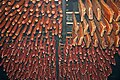 Freilichtmuseum Ballenberg Smokehouse
 -
 Industrial Smokehouse in Poland
 -
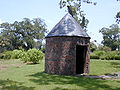 BH SmokeHouse
 -
 Fjordling Smokehouse
 -
 Smokehouse in North Carolina
 -
 Walraversijde Smokehouse


Medical Disclaimer: WikiMD is for informational purposes only and is not a substitute for professional medical advice. Content may be inaccurate or outdated and should not be used for diagnosis or treatment. Always consult your healthcare provider for medical decisions. Verify information with trusted sources such as CDC.gov and NIH.gov. By using this site, you agree that WikiMD is not liable for any outcomes related to its content. See full disclaimer.
Credits:Most images are courtesy of Wikimedia commons, and templates, categories Wikipedia, licensed under CC BY SA or similar.
Translate this page: - East Asian
中文,
日本,
한국어,
South Asian
हिन्दी,
தமிழ்,
తెలుగు,
Urdu,
ಕನ್ನಡ,
Southeast Asian
Indonesian,
Vietnamese,
Thai,
မြန်မာဘာသာ,
বাংলা
European
español,
Deutsch,
français,
Greek,
português do Brasil,
polski,
română,
русский,
Nederlands,
norsk,
svenska,
suomi,
Italian
Middle Eastern & African
عربى,
Turkish,
Persian,
Hebrew,
Afrikaans,
isiZulu,
Kiswahili,
Other
Bulgarian,
Hungarian,
Czech,
Swedish,
മലയാളം,
मराठी,
ਪੰਜਾਬੀ,
ગુજરાતી,
Portuguese,
Ukrainian
