Mespilus germanica
Mespilus germanica, commonly known as the medlar, is a large shrub or small tree in the family Rosaceae. The plant is native to Southwest Asia and Southeastern Europe, particularly the Black Sea coasts of Bulgaria and Turkey.
Description[edit]
The Mespilus germanica grows up to 8 meters tall. It has large, glossy leaves that are 6-15 cm long and 3-5 cm wide. The leaves turn a spectacular red in autumn before falling. The flowers are white or pink, 2-3 cm in diameter, with five petals. The fruit, known as a medlar, is an unusual shape, resembling a large rosehip. It is initially hard and acidic, but becomes edible after being softened, 'bletted', by frost, or naturally in storage given sufficient time.
Cultivation and uses[edit]
The Mespilus germanica has been cultivated for its fruit for thousands of years. The fruit is harvested in late autumn, and can be eaten raw or used in cooking. Medlars are used to make jellies, desserts, and a type of wine. The wood of the tree is hard and can be used for making furniture.
Cultural significance[edit]
The Mespilus germanica has a rich history in literature and folklore. It is often used as a symbol of patience and delayed gratification, due to the long wait for the fruit to become edible.
See also[edit]
References[edit]
<references />
.jpg)

This article is a fruit tree-related stub. You can help WikiMD by expanding it!
-
 Mespilus germanica
 -
 Mespilus germanica
 -
 Mespilus germanica
 -
 Mespilus germanica
 -
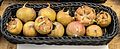 Mespilus germanica
 -
 Mespilus germanica
 -
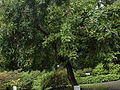 Mespilus germanica
 -
 Mespilus germanica
 -
 Mespilus germanica
 -
 Mespilus germanica
 -
 Mespilus germanica
 -
 Mespilus germanica


.jpg)


Ad. Transform your health with W8MD Weight Loss, Sleep & MedSpa

Tired of being overweight?
Special offer:
Budget GLP-1 weight loss medications
- Semaglutide starting from $29.99/week and up with insurance for visit of $59.99 and up per week self pay.
- Tirzepatide starting from $45.00/week and up (dose dependent) or $69.99/week and up self pay
✔ Same-week appointments, evenings & weekends
Learn more:
- GLP-1 weight loss clinic NYC
- W8MD's NYC medical weight loss
- W8MD Philadelphia GLP-1 shots
- Philadelphia GLP-1 injections
- Affordable GLP-1 shots NYC
|
WikiMD Medical Encyclopedia |
Medical Disclaimer: WikiMD is for informational purposes only and is not a substitute for professional medical advice. Content may be inaccurate or outdated and should not be used for diagnosis or treatment. Always consult your healthcare provider for medical decisions. Verify information with trusted sources such as CDC.gov and NIH.gov. By using this site, you agree that WikiMD is not liable for any outcomes related to its content. See full disclaimer.
Credits:Most images are courtesy of Wikimedia commons, and templates, categories Wikipedia, licensed under CC BY SA or similar.
Translate this page: - East Asian
中文,
日本,
한국어,
South Asian
हिन्दी,
தமிழ்,
తెలుగు,
Urdu,
ಕನ್ನಡ,
Southeast Asian
Indonesian,
Vietnamese,
Thai,
မြန်မာဘာသာ,
বাংলা
European
español,
Deutsch,
français,
Greek,
português do Brasil,
polski,
română,
русский,
Nederlands,
norsk,
svenska,
suomi,
Italian
Middle Eastern & African
عربى,
Turkish,
Persian,
Hebrew,
Afrikaans,
isiZulu,
Kiswahili,
Other
Bulgarian,
Hungarian,
Czech,
Swedish,
മലയാളം,
मराठी,
ਪੰਜਾਬੀ,
ગુજરાતી,
Portuguese,
Ukrainian
