Mitotic inhibitor
Mitotic inhibitors are a type of cancer treatment that prevent cancer cells from dividing and multiplying. They are a class of drugs that target the mitosis (cell division) process in the cell cycle, disrupting the division and growth of cancer cells.
Mechanism of Action[edit]
Mitotic inhibitors work by disrupting the microtubules in the cell's structure. Microtubules are essential for cell division, and by preventing their formation, mitotic inhibitors can stop the cell from dividing. This is particularly effective against cancer cells, which divide and multiply at a much faster rate than normal cells.
Types of Mitotic Inhibitors[edit]
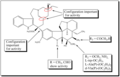
There are several types of mitotic inhibitors, including taxanes and vinca alkaloids. Taxanes, such as paclitaxel and docetaxel, work by stabilizing the microtubules and preventing them from disassembling, which is necessary for cell division. Vinca alkaloids, such as vincristine and vinblastine, work by preventing the formation of microtubules, thus inhibiting cell division.
Uses[edit]
Mitotic inhibitors are used in the treatment of various types of cancer, including breast cancer, lung cancer, ovarian cancer, and lymphoma. They are often used in combination with other types of cancer treatments, such as radiation therapy and chemotherapy.
Side Effects[edit]
Like all cancer treatments, mitotic inhibitors can have side effects. These can include nausea, vomiting, hair loss, and neuropathy. It is important for patients to discuss these potential side effects with their healthcare provider before starting treatment.
See Also[edit]


-
 Mitotic inhibitor
 -
 Mitotic inhibitor
 -
 Mitotic inhibitor
 -
 Mitotic inhibitor
 -
 Mitotic inhibitor
 -
 Mitotic inhibitor
 -
 Mitotic inhibitor
 -
 Mitotic inhibitor
 -
 Mitotic inhibitor
 -
 Mitotic inhibitor
 -
 Mitotic inhibitor
 -
 Mitotic inhibitor


Ad. Transform your life with W8MD's
GLP-1 weight loss injections special from $29.99 with insurance
|
WikiMD Medical Encyclopedia |
Medical Disclaimer: WikiMD is for informational purposes only and is not a substitute for professional medical advice. Content may be inaccurate or outdated and should not be used for diagnosis or treatment. Always consult your healthcare provider for medical decisions. Verify information with trusted sources such as CDC.gov and NIH.gov. By using this site, you agree that WikiMD is not liable for any outcomes related to its content. See full disclaimer.
Credits:Most images are courtesy of Wikimedia commons, and templates, categories Wikipedia, licensed under CC BY SA or similar.
Translate this page: - East Asian
中文,
日本,
한국어,
South Asian
हिन्दी,
தமிழ்,
తెలుగు,
Urdu,
ಕನ್ನಡ,
Southeast Asian
Indonesian,
Vietnamese,
Thai,
မြန်မာဘာသာ,
বাংলা
European
español,
Deutsch,
français,
Greek,
português do Brasil,
polski,
română,
русский,
Nederlands,
norsk,
svenska,
suomi,
Italian
Middle Eastern & African
عربى,
Turkish,
Persian,
Hebrew,
Afrikaans,
isiZulu,
Kiswahili,
Other
Bulgarian,
Hungarian,
Czech,
Swedish,
മലയാളം,
मराठी,
ਪੰਜਾਬੀ,
ગુજરાતી,
Portuguese,
Ukrainian
