Tagine
| [[File:|frameless|alt=]] | |
| Alternative names | Tajine |
| Type | |
| Course | Main |
| Place of origin | Morocco |
| Region or state | North Africa |
| Associated national cuisine | |
| Created by | |
| Invented | |
| Cooking time | minutes to minutes |
| Serving temperature | Hot |
| Main ingredients | Meat, vegetables, spices, dried fruits |
| Ingredients generally used | |
| Variations | Lamb tagine, chicken tagine, vegetable tagine |
| Food energy | kcal |
| Nutritional value | Protein: g, Fat: g, Carbohydrate: g |
| Glycemic index | |
| Similar dishes | |
| Other information | |
| Website | [ Official website] |
A tagine or tajine is a traditional North African dish named after the earthenware pot in which it is cooked. It is particularly associated with Morocco, but also popular in other countries such as Algeria and Tunisia. The tagine pot features a distinctive conical lid that helps return all condensation to the bottom, allowing for slow, low-temperature cooking. This method enhances the flavors and tenderizes the meat or vegetables within.
History[edit]
The origins of the tagine can be traced back to ancient Berber cooking techniques, which were refined over centuries. The unique design of the tagine pot is particularly suited to the dry, hot climates of the Sahara desert, where water is scarce and slow cooking can maximize flavor without excessive water usage.
Ingredients and Preparation[edit]
A typical tagine includes a combination of meat such as lamb, chicken, or beef, along with a variety of vegetables, spices like saffron, cumin, coriander, cinnamon, and ginger, and often dried fruits such as apricots, dates, or raisins. The ingredients are placed in the tagine pot, often layered and spiced, then cooked slowly over a low heat. This method allows the ingredients to stew in their own juices, resulting in a moist and flavorful dish.
Cultural Significance[edit]
In Moroccan culture, the tagine is more than just a dish; it is a part of the culinary identity and a staple at gatherings and celebrations. It is traditionally served directly from the tagine pot, often with couscous or bread, and is shared communally, emphasizing the Moroccan value of hospitality.
Variations[edit]
There are numerous regional variations of tagine, each with unique ingredients and spices. Some popular variations include:
- Lamb tagine with apricots - combines tender lamb with sweet apricots and spices.
- Chicken tagine with olives and lemon - features chicken with tangy preserved lemons and olives.
- Vegetable tagine - a vegetarian option that includes a mix of seasonal vegetables and rich spices.
See Also[edit]

-
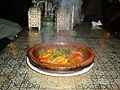 Tagine
 -
 Tagine
 -
 Tagine
 -
 Tagine
 -
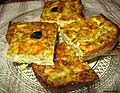 Tagine
 -
 Tagine
 -
 Tagine
 -
 Tagine
 -
 Tagine
 -
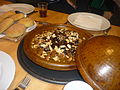 Tagine
 -
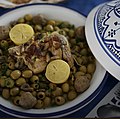 Tagine


.jpg)

.jpg)


Ad. Transform your health with W8MD Weight Loss, Sleep & MedSpa

Tired of being overweight?
Get started with evidence based, physician-supervised
affordable GLP-1 weight loss injections
Now available in New York City and Philadelphia:
- Semaglutide starting from $59.99/week and up
- Tirzepatide starting from $69.99/week and up (dose dependent)
✔ Evidence-based medical weight loss ✔ Insurance-friendly visits available ✔ Same-week appointments, evenings & weekends
Learn more:
Start your transformation today with W8MD weight loss centers.
|
WikiMD Medical Encyclopedia |
Medical Disclaimer: WikiMD is for informational purposes only and is not a substitute for professional medical advice. Content may be inaccurate or outdated and should not be used for diagnosis or treatment. Always consult your healthcare provider for medical decisions. Verify information with trusted sources such as CDC.gov and NIH.gov. By using this site, you agree that WikiMD is not liable for any outcomes related to its content. See full disclaimer.
Credits:Most images are courtesy of Wikimedia commons, and templates, categories Wikipedia, licensed under CC BY SA or similar.
Translate this page: - East Asian
中文,
日本,
한국어,
South Asian
हिन्दी,
தமிழ்,
తెలుగు,
Urdu,
ಕನ್ನಡ,
Southeast Asian
Indonesian,
Vietnamese,
Thai,
မြန်မာဘာသာ,
বাংলা
European
español,
Deutsch,
français,
Greek,
português do Brasil,
polski,
română,
русский,
Nederlands,
norsk,
svenska,
suomi,
Italian
Middle Eastern & African
عربى,
Turkish,
Persian,
Hebrew,
Afrikaans,
isiZulu,
Kiswahili,
Other
Bulgarian,
Hungarian,
Czech,
Swedish,
മലയാളം,
मराठी,
ਪੰਜਾਬੀ,
ગુજરાતી,
Portuguese,
Ukrainian
