Drug design
- Drug design, also known as rational drug design or drug discovery, is a complex and multidisciplinary process aimed at identifying and developing new medications to treat various diseases and medical conditions.
- It involves a systematic approach that combines knowledge from various scientific fields, including chemistry, biology, pharmacology, and computational sciences, to create effective and safe therapeutic agents.
Stages of Drug Design
Target Identification and Validation
- The first step in drug design involves identifying a specific biological target that plays a crucial role in the disease process.
- This target can be a protein, enzyme, receptor, or nucleic acid.
- Validation of the target ensures that it is directly linked to the disease and is a viable candidate for drug intervention.
Lead Discovery
- In this stage, potential drug candidates, known as leads, are identified.
- Leads can be small molecules, natural compounds, peptides, or biologics.
- High-throughput screening and virtual screening are common techniques used to identify potential leads from databases of chemical compounds.
Lead Optimization
- The identified leads undergo extensive chemical modification and optimization to improve their efficacy, selectivity, and pharmacokinetic properties.
- Medicinal chemists play a critical role in this stage, employing structure-activity relationship (SAR) studies to guide the design of new analogs.
Preclinical Studies
- Once lead compounds with promising properties are identified, preclinical studies are conducted to assess their safety, pharmacokinetics, and toxicology.
- These studies provide essential data for selecting the most promising candidate for further development.
Clinical Development
- The selected candidate moves into clinical trials, which consist of three phases.
- Phase I involves testing the drug on a small group of healthy volunteers to evaluate safety and pharmacokinetics.
- Phase II evaluates the drug's efficacy and safety in a larger group of patients with the target disease.
- Phase III involves large-scale trials to further assess the drug's safety and effectiveness compared to existing treatments or a placebo.
FDA Approval and Post-Marketing Monitoring
- If the drug successfully completes all clinical phases and meets safety and efficacy requirements, it can be submitted for approval by regulatory agencies, such as the U.S. Food and Drug Administration (FDA).
- After approval, post-marketing monitoring ensures ongoing safety and effectiveness evaluation.
Types of Drug Design
Structure-Based Drug Design
- Structure-based drug design involves using the three-dimensional structure of the target protein to design and optimize drug candidates.
- Computational methods, such as molecular docking and molecular dynamics simulations, play a significant role in this approach.
Ligand-Based Drug Design
- Ligand-based drug design relies on knowledge of the biological activity of known ligands (active compounds) that interact with the target.
- This approach involves the development of new compounds with structural similarities to the known ligands to improve potency and selectivity.
Fragment-Based Drug Design
- Fragment-based drug design starts with small and simple chemical fragments that bind to the target.
- These fragments are then grown or linked together to create larger molecules with higher affinity and specificity for the target.
De Novo Drug Design
- De novo drug design involves designing entirely new molecules from scratch to interact with the target.
- Computational methods play a crucial role in generating and optimizing new chemical structures with desired properties.
Computational Drug Design
- Computational drug design plays a crucial role in modern drug discovery.
- Computational methods, such as molecular modeling, molecular dynamics simulations, and virtual screening, enable researchers to predict the interactions between potential drug candidates and their biological targets.
- These techniques significantly accelerate the drug design process by reducing the number of compounds to be synthesized and tested experimentally.
Importance of Collaboration
- Drug design is a highly collaborative process that brings together experts from diverse fields.
- Medicinal chemists, biologists, pharmacologists, pharmacokineticists, computational scientists, and clinicians work together to ensure the success of drug discovery efforts.
- Collaboration facilitates a comprehensive understanding of the disease mechanisms, target biology, and drug properties, leading to more effective and safer medications.
See Also
References
- Rask-Andersen M, Almén MS, Schiöth HB. Trends in the exploitation of novel drug targets. Nat Rev Drug Discov. 2011;10(8):579-590. doi:10.1038/nrd3478.
- Gao X, Cui Y, Levenson R, Chung LWK, Nieh P. Computational Approaches to Identify Drug Targets in Pathogenic Microorganisms. Drug Dev Res. 2017;78(2):55-68. doi:10.1002/ddr.21409.
- Paul SM, Mytelka DS, Dunwiddie CT, et al. How to improve R&D productivity: the pharmaceutical industry's grand challenge. Nat Rev Drug Discov. 2010;9(3):203-214. doi:10.1038/nrd3078.
| This article is a stub. You can help WikiMD by registering to expand it. |
| Topics in medicinal chemistry |
|---|
|
|
-
 Drug discovery cycle
 -
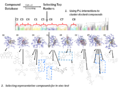 Clustering in drug design
 -
 Drug discovery cycle 2
 -
Master equation in scoring function


Ad. Transform your life with W8MD's Budget GLP-1 injections from $29.99


W8MD offers medical weight loss programs including NYC medical weight loss and Philadelphia medical weight loss offering:
- Affordable GLP1 shots (generic and brand names) such as
- Wegovy NYC (Semaglutide)
- Zepbound NYC /
- Learn more: Budget GLP1 weight loss injections NYC & Philadelphia GLP1 weight loss shots
- Most insurances accepted
- Lowest cost GLP1 weight loss NYC such as Semaglutide starting from $29.99/week and $45.00/week (Tirzepatide) with insurance.
- Prescription weight loss NYC including:
NYC weight loss doctor appointmentsNYC weight loss doctor appointments
Start your physician weight loss journey today at our:
- NYC medical weight loss
- Philadelphia medical weight loss
- Call 718-946-5500 for NYC or 215-676-2334 for Philadelphia
Tags: Budget glp1 weight loss NYC, Zepbound NYC, Philadelphia medical weight loss, Wegovy NYC, Affordable glp1 shots Philadelphia


|
WikiMD's Wellness Encyclopedia |
| Let Food Be Thy Medicine Medicine Thy Food - Hippocrates |
Medical Disclaimer: WikiMD is not a substitute for professional medical advice. The information on WikiMD is provided as an information resource only, may be incorrect, outdated or misleading, and is not to be used or relied on for any diagnostic or treatment purposes. Please consult your health care provider before making any healthcare decisions or for guidance about a specific medical condition. WikiMD expressly disclaims responsibility, and shall have no liability, for any damages, loss, injury, or liability whatsoever suffered as a result of your reliance on the information contained in this site. By visiting this site you agree to the foregoing terms and conditions, which may from time to time be changed or supplemented by WikiMD. If you do not agree to the foregoing terms and conditions, you should not enter or use this site. See full disclaimer.
Credits:Most images are courtesy of Wikimedia commons, and templates, categories Wikipedia, licensed under CC BY SA or similar.
Translate this page: - East Asian
中文,
日本,
한국어,
South Asian
हिन्दी,
தமிழ்,
తెలుగు,
Urdu,
ಕನ್ನಡ,
Southeast Asian
Indonesian,
Vietnamese,
Thai,
မြန်မာဘာသာ,
বাংলা
European
español,
Deutsch,
français,
Greek,
português do Brasil,
polski,
română,
русский,
Nederlands,
norsk,
svenska,
suomi,
Italian
Middle Eastern & African
عربى,
Turkish,
Persian,
Hebrew,
Afrikaans,
isiZulu,
Kiswahili,
Other
Bulgarian,
Hungarian,
Czech,
Swedish,
മലയാളം,
मराठी,
ਪੰਜਾਬੀ,
ગુજરાતી,
Portuguese,
Ukrainian

