Discovery and development of 5α-reductase inhibitors
The discovery and development of 5α-reductase inhibitors have marked a significant advancement in the field of medical science, particularly in the treatment of conditions like benign prostatic hyperplasia (BPH) and androgenetic alopecia (male pattern baldness). 5α-Reductase inhibitors are a class of medications that act by inhibiting the activity of 5α-reductase, an enzyme responsible for the conversion of testosterone to dihydrotestosterone (DHT), a more potent androgen that plays a crucial role in the development of these conditions.
Discovery[edit]
The journey towards the discovery of 5α-reductase inhibitors began in the 1960s and 1970s, when researchers first identified the role of DHT in the development of BPH and androgenetic alopecia. This led to the hypothesis that reducing DHT levels could be a potential therapeutic strategy. The first major breakthrough came with the identification of natural substances capable of inhibiting 5α-reductase, which laid the groundwork for the development of synthetic inhibitors.
Development[edit]
The development of 5α-reductase inhibitors involved extensive medicinal chemistry efforts to design molecules that could effectively and selectively inhibit the enzyme. The first generation of these inhibitors, including finasteride, was approved in the 1990s. Finasteride was initially approved for the treatment of BPH and later for androgenetic alopecia. Subsequent research led to the development of second-generation inhibitors like dutasteride, which offered improved efficacy and potency due to their ability to inhibit both isoforms of the 5α-reductase enzyme.
Clinical Applications[edit]
5α-Reductase inhibitors have been widely used in the treatment of BPH, a condition characterized by the enlargement of the prostate gland, leading to urinary symptoms. By reducing DHT levels, these medications can decrease prostate volume and alleviate symptoms. In the context of androgenetic alopecia, 5α-reductase inhibitors can slow hair loss and in some cases, promote hair regrowth by lowering scalp DHT levels.
Challenges and Future Directions[edit]
Despite their success, the development and use of 5α-reductase inhibitors have not been without challenges. Concerns have been raised regarding potential side effects, including sexual dysfunction and depression. Ongoing research aims to develop new inhibitors with improved safety profiles and efficacy. Additionally, there is interest in exploring the potential of these medications in treating other conditions influenced by DHT, such as acne and hirsutism.
Conclusion[edit]
The discovery and development of 5α-reductase inhibitors represent a significant achievement in pharmacology, offering effective treatments for conditions like BPH and androgenetic alopecia. As research continues, it is expected that new advancements will further enhance the therapeutic potential of these medications.

-
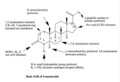 Basic structure-activity relationship of 4-azasteroids
 -
 Chemical structure of Finasteride
 -
 Chemical structure of 4-MA steroid
 -
 Chemical structure of Bexlosteride
 -
 Nonsteroidal derivatives of 5α-reductase inhibitors
 -
 Serenoa repens plant


Sponsored Health Resource

W8MD Weight Loss, Sleep & MedSpa
Looking for physician-supervised weight loss, semaglutide, tirzepatide, or GLP-1 receptor agonist options? W8MD helps eligible patients in New York City, Brooklyn, New Jersey, Connecticut, Pennsylvania, Delaware, and greater Philadelphia with medical weight loss, sleep medicine, and long-term maintenance support.
GLP-1 specials: Affordable GLP-1 injections NYC and Philadelphia starting from $29.99/week and up for semaglutide with insurance accepted for qualifying visits, and $45/week and up for tirzepatide with insurance accepted for qualifying visits. Self-pay options start from $59.99/week and up for semaglutide and $69.99/week and up for tirzepatide.
Medical weight loss NYC | Affordable GLP-1 injections NYC | Budget GLP-1 weight loss shots Philadelphia | New Jersey medical weight loss | NYC medical weight loss | Philadelphia medical weight loss | Sleep clinic NYC | W8MD's Philadelphia GLP-1 doctor | Weight loss prescriptions NYC
Book a W8MD appointment · View GLP-1 specials
Paid promotional message. Eligibility, pricing, insurance coverage, medication availability, and results vary. Medical evaluation required.

Medical Disclaimer: WikiMD is for informational purposes only and is not a substitute for professional medical advice. Content may be inaccurate or outdated and should not be used for diagnosis or treatment. Always consult your healthcare provider for medical decisions. Verify information with trusted sources such as CDC.gov and NIH.gov. By using this site, you agree that WikiMD is not liable for any outcomes related to its content. See full disclaimer.
Credits:Most images are courtesy of Wikimedia commons, and templates, categories Wikipedia, licensed under CC BY SA or similar.
Translate page: - East Asian
中文,
日本,
한국어,
South Asian
हिन्दी,
தமிழ்,
తెలుగు,
Urdu,
ಕನ್ನಡ,
Southeast Asian
Indonesian,
Vietnamese,
Thai,
မြန်မာဘာသာ,
বাংলা
European
español,
Deutsch,
français,
Greek,
português do Brasil,
polski,
română,
русский,
Nederlands,
norsk,
svenska,
suomi,
Italian
Middle Eastern & African
عربى,
Turkish,
Persian,
Hebrew,
Afrikaans,
isiZulu,
Kiswahili,
Other
Bulgarian,
Hungarian,
Czech,
Swedish,
മലയാളം,
मराठी,
ਪੰਜਾਬੀ,
ગુજરાતી,
Portuguese,
Ukrainian

