Yoga Sutras of Patanjali
Yoga Sutras of Patanjali is a seminal work in the Indian tradition of Yoga, attributed to the sage Patanjali. Comprising 196 aphorisms or sutras, the text outlines the philosophy and practice of yoga. Divided into four chapters or padas, it covers the ethical precepts (Yama and Niyama), physical postures (Asana), breath control (Pranayama), sensory withdrawal (Pratyahara), concentration (Dharana), meditation (Dhyana), and absorption (Samadhi), leading to the ultimate goal of yoga, which is liberation (Kaivalya).
Composition and Structure[edit]
The Yoga Sutras are divided into four padas:
- Samadhi Pada: Focuses on the ultimate goal of yoga, which is a state of deep meditative consciousness or absorption.
- Sadhana Pada: Describes the eight limbs or steps of yoga as a path to achieving Samadhi.
- Vibhuti Pada: Discusses the supernatural powers (Siddhis) that can be attained through yoga practice.
- Kaivalya Pada: Explores the concept of liberation or emancipation, which is the ultimate aim of yoga.
Key Concepts[edit]
- Eight Limbs of Yoga: The core of Patanjali's teachings, outlining the steps towards achieving the state of yoga, including ethical precepts, physical postures, breath control, and stages of meditation.
- Kleshas: The five afflictions that cause suffering and obstacles in the practice of yoga, including ignorance, egoism, attachment, aversion, and fear of death.
- Samadhi: The state of superconsciousness or absorption, where the practitioner's identity merges with the object of meditation.
- Kaivalya: The ultimate goal of yoga, signifying liberation or independence from the cycle of birth and death.
Historical Context[edit]
The Yoga Sutras were compiled around the 2nd century BCE, though the exact date remains a subject of scholarly debate. The text synthesizes and organizes knowledge about yoga from older traditions, making it a foundational work for all subsequent yoga philosophy and practice.
Influence and Legacy[edit]
The Yoga Sutras of Patanjali have had a profound impact on the development of yoga as a philosophical and practical discipline. The text has been studied, commented upon, and practiced by yogis, scholars, and practitioners for centuries. It has also influenced various spiritual traditions within Hinduism, Buddhism, and Jainism.
Modern Interpretations and Practice[edit]
In contemporary times, the Yoga Sutras continue to be a vital resource for those seeking to understand the philosophical underpinnings of yoga and to deepen their practice. The text is often studied in yoga teacher training programs and is considered essential reading for serious students of yoga.
See Also[edit]
References[edit]
<references/>

This article is a Hinduism-related stub. You can help WikiMD by expanding it!

This article is a philosophy-related stub. You can help WikiMD by expanding it!
-
 Yoga Sutras of Patanjali
 -
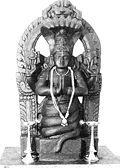 Patanjali
 -
 Lotus Position


Ad. Transform your health with W8MD Weight Loss, Sleep & MedSpa

Tired of being overweight?
Special offer:
Budget GLP-1 weight loss medications
- Semaglutide starting from $29.99/week and up with insurance for visit of $59.99 and up per week self pay.
- Tirzepatide starting from $45.00/week and up (dose dependent) or $69.99/week and up self pay
✔ Same-week appointments, evenings & weekends
Learn more:
- GLP-1 weight loss clinic NYC
- W8MD's NYC medical weight loss
- W8MD Philadelphia GLP-1 shots
- Philadelphia GLP-1 injections
- Affordable GLP-1 shots NYC
|
WikiMD Medical Encyclopedia |
Medical Disclaimer: WikiMD is for informational purposes only and is not a substitute for professional medical advice. Content may be inaccurate or outdated and should not be used for diagnosis or treatment. Always consult your healthcare provider for medical decisions. Verify information with trusted sources such as CDC.gov and NIH.gov. By using this site, you agree that WikiMD is not liable for any outcomes related to its content. See full disclaimer.
Credits:Most images are courtesy of Wikimedia commons, and templates, categories Wikipedia, licensed under CC BY SA or similar.
Translate this page: - East Asian
中文,
日本,
한국어,
South Asian
हिन्दी,
தமிழ்,
తెలుగు,
Urdu,
ಕನ್ನಡ,
Southeast Asian
Indonesian,
Vietnamese,
Thai,
မြန်မာဘာသာ,
বাংলা
European
español,
Deutsch,
français,
Greek,
português do Brasil,
polski,
română,
русский,
Nederlands,
norsk,
svenska,
suomi,
Italian
Middle Eastern & African
عربى,
Turkish,
Persian,
Hebrew,
Afrikaans,
isiZulu,
Kiswahili,
Other
Bulgarian,
Hungarian,
Czech,
Swedish,
മലയാളം,
मराठी,
ਪੰਜਾਬੀ,
ગુજરાતી,
Portuguese,
Ukrainian
