Cadherin
Cadherin refers to a class of type II transmembrane proteins that play a crucial role in cell adhesion, ensuring that cells within tissues are bound together. These proteins are dependent on calcium ions (Ca2+) to function, which is why they are often referred to as calcium-dependent adhesion molecules. Cadherins are pivotal in the development and maintenance of tissue architecture and cell signaling, influencing processes such as morphogenesis, cell migration, and wound healing.
Structure and Function[edit]
Cadherins are characterized by their extracellular domain, which comprises repeated cadherin motifs that facilitate homophilic binding (binding to the same type of cadherin on adjacent cells). This interaction is calcium-dependent, requiring the presence of calcium ions to stabilize the cadherin structure and promote adhesion. The intracellular domain of cadherins interacts with catenins, a group of proteins that link cadherins to the actin cytoskeleton, providing mechanical strength to the cell-cell junctions.
There are several types of cadherins found in the body, including E-cadherin (epithelial), N-cadherin (neural), and P-cadherin (placental), each with a specific tissue distribution and function. E-cadherin, for example, is crucial for the maintenance of epithelial cell layers, while N-cadherin is important in the nervous system.
Role in Disease[edit]
Alterations in cadherin expression or function can lead to a variety of diseases. For instance, the loss of E-cadherin expression is a hallmark of epithelial-mesenchymal transition (EMT), a process implicated in cancer progression and metastasis. Similarly, mutations in cadherin genes have been linked to genetic disorders such as hereditary diffuse gastric cancer and arrhythmogenic right ventricular cardiomyopathy.
Research and Therapeutic Implications[edit]
Given their central role in cell adhesion and signaling, cadherins are a focus of research for developing therapeutic interventions in cancer and other diseases. Strategies to modulate cadherin function include the use of monoclonal antibodies, peptides, and small molecule inhibitors that can either promote or inhibit cadherin-mediated adhesion.
See Also[edit]
References[edit]
<references/>

-
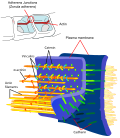 Adherens Junctions structural proteins
 -
 Protocadherins
 -
 E-Cadherin repeating unit


Ad. Transform your health with W8MD Weight Loss, Sleep & MedSpa

Tired of being overweight?
Get started with evidence based, physician-supervised
affordable GLP-1 weight loss injections
Now available in New York City and Philadelphia:
- Semaglutide starting from $59.99/week and up
- Tirzepatide starting from $69.99/week and up (dose dependent)
✔ Evidence-based medical weight loss ✔ Insurance-friendly visits available ✔ Same-week appointments, evenings & weekends
Learn more:
Start your transformation today with W8MD weight loss centers.
|
WikiMD Medical Encyclopedia |
Medical Disclaimer: WikiMD is for informational purposes only and is not a substitute for professional medical advice. Content may be inaccurate or outdated and should not be used for diagnosis or treatment. Always consult your healthcare provider for medical decisions. Verify information with trusted sources such as CDC.gov and NIH.gov. By using this site, you agree that WikiMD is not liable for any outcomes related to its content. See full disclaimer.
Credits:Most images are courtesy of Wikimedia commons, and templates, categories Wikipedia, licensed under CC BY SA or similar.
Translate this page: - East Asian
中文,
日本,
한국어,
South Asian
हिन्दी,
தமிழ்,
తెలుగు,
Urdu,
ಕನ್ನಡ,
Southeast Asian
Indonesian,
Vietnamese,
Thai,
မြန်မာဘာသာ,
বাংলা
European
español,
Deutsch,
français,
Greek,
português do Brasil,
polski,
română,
русский,
Nederlands,
norsk,
svenska,
suomi,
Italian
Middle Eastern & African
عربى,
Turkish,
Persian,
Hebrew,
Afrikaans,
isiZulu,
Kiswahili,
Other
Bulgarian,
Hungarian,
Czech,
Swedish,
മലയാളം,
मराठी,
ਪੰਜਾਬੀ,
ગુજરાતી,
Portuguese,
Ukrainian
