Flavescence dorée
Flavescence dorée (FD) is a phytoplasma disease that affects grapevines, causing significant economic losses in viticulture. It is considered one of the most dangerous grapevine yellows diseases. The disease is transmitted by the leafhopper Scaphoideus titanus and is subject to mandatory control measures in many European countries.
History[edit]
Flavescence dorée was first identified in 1950 in the Armagnac region of France. Since then, it has spread to many other wine-producing regions in Europe, including Italy, Switzerland, and Spain. The disease is named after the golden yellow color (flavescence dorée in French) that the leaves of infected vines turn.
Symptoms[edit]
The symptoms of Flavescence dorée can vary depending on the grape variety and the stage of vine development at the time of infection. Common symptoms include leaf discoloration, downward curling of the leaves, and drying and shriveling of the berries. In severe cases, the entire vine can die.
Transmission and Control[edit]
Flavescence dorée is transmitted by the leafhopper Scaphoideus titanus. The insect acquires the phytoplasma while feeding on an infected vine and can then transmit the disease to other vines. Control measures for Flavescence dorée include insecticide treatments to control the leafhopper population and removal of infected vines to prevent the spread of the disease.
Economic Impact[edit]
Flavescence dorée has a significant economic impact on the wine industry. The disease can reduce grape yield and quality, leading to lower wine production and financial losses for wine producers. In addition, the mandatory control measures required to manage the disease can also be costly.
See Also[edit]

This article is a plant disease stub. You can help WikiMD by expanding it!

-
 Flavescence dorée symptoms on grapevine leaves
 -
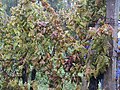 Grapevine affected by Flavescence dorée
 -
 Flavescence dorée spread in vineyards


Ad. Transform your life with W8MD's
GLP-1 weight loss injections special from $29.99 with insurance
|
WikiMD Medical Encyclopedia |
Medical Disclaimer: WikiMD is for informational purposes only and is not a substitute for professional medical advice. Content may be inaccurate or outdated and should not be used for diagnosis or treatment. Always consult your healthcare provider for medical decisions. Verify information with trusted sources such as CDC.gov and NIH.gov. By using this site, you agree that WikiMD is not liable for any outcomes related to its content. See full disclaimer.
Credits:Most images are courtesy of Wikimedia commons, and templates, categories Wikipedia, licensed under CC BY SA or similar.
Translate this page: - East Asian
中文,
日本,
한국어,
South Asian
हिन्दी,
தமிழ்,
తెలుగు,
Urdu,
ಕನ್ನಡ,
Southeast Asian
Indonesian,
Vietnamese,
Thai,
မြန်မာဘာသာ,
বাংলা
European
español,
Deutsch,
français,
Greek,
português do Brasil,
polski,
română,
русский,
Nederlands,
norsk,
svenska,
suomi,
Italian
Middle Eastern & African
عربى,
Turkish,
Persian,
Hebrew,
Afrikaans,
isiZulu,
Kiswahili,
Other
Bulgarian,
Hungarian,
Czech,
Swedish,
മലയാളം,
मराठी,
ਪੰਜਾਬੀ,
ગુજરાતી,
Portuguese,
Ukrainian
