Aerobic organism
Organism that requires oxygen for growth
An aerobic organism or aerobe is an organism that can survive and grow in an oxygenated environment. In contrast, anaerobic organisms do not require oxygen for growth and may even die in its presence.
Characteristics
Aerobic organisms use oxygen in cellular respiration, a process that converts biochemical energy from nutrients into adenosine triphosphate (ATP), and then releases waste products. This process is more efficient than anaerobic respiration, allowing aerobic organisms to produce more ATP per glucose molecule.
Types of Aerobic Organisms
Aerobic organisms can be classified into several types based on their oxygen requirements:
- Obligate aerobes: These organisms require oxygen for survival and cannot grow without it. Examples include many bacteria and fungi.
- Facultative anaerobes: These organisms can use oxygen when it is present but can also grow in its absence by relying on fermentation or anaerobic respiration. Many yeast and E. coli are facultative anaerobes.
- Microaerophiles: These organisms require oxygen to survive, but at lower concentrations than is present in the atmosphere. They are often found in environments where oxygen levels are reduced.
Metabolic Pathways
Aerobic organisms primarily rely on the process of aerobic respiration to generate energy. This process involves several key stages:
- Citric acid cycle: Also known as the Krebs cycle, this process further oxidizes pyruvate, generating more NADH and FADH2.
- Electron transport chain: Located in the mitochondria of eukaryotic cells, this chain uses electrons from NADH and FADH2 to create a proton gradient that drives the synthesis of ATP.
Ecological Role
Aerobic organisms play a crucial role in the ecosystem by participating in the carbon cycle and nitrogen cycle. They help decompose organic matter, releasing carbon dioxide back into the atmosphere and making nutrients available for other organisms.
Applications
Aerobic organisms are used in various biotechnology applications, including:
- Wastewater treatment: Aerobic bacteria are used to break down organic pollutants in sewage.
- Bioremediation: Aerobic microbes can degrade environmental pollutants, such as oil spills.
- Industrial fermentation: Certain aerobic organisms are used in the production of antibiotics, enzymes, and vitamins.
Related pages
-
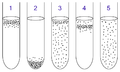 Diagram illustrating aerobic and anaerobic organisms

Ad. Transform your health with W8MD Weight Loss, Sleep & MedSpa

Tired of being overweight?
Special offer:
Budget GLP-1 weight loss medications
- Semaglutide starting from $29.99/week and up with insurance for visit of $59.99 and up per week self pay.
- Tirzepatide starting from $45.00/week and up (dose dependent) or $69.99/week and up self pay
✔ Same-week appointments, evenings & weekends
Learn more:
- GLP-1 weight loss clinic NYC
- W8MD's NYC medical weight loss
- W8MD Philadelphia GLP-1 shots
- Philadelphia GLP-1 injections
- Affordable GLP-1 shots NYC
|
WikiMD Medical Encyclopedia |
Medical Disclaimer: WikiMD is for informational purposes only and is not a substitute for professional medical advice. Content may be inaccurate or outdated and should not be used for diagnosis or treatment. Always consult your healthcare provider for medical decisions. Verify information with trusted sources such as CDC.gov and NIH.gov. By using this site, you agree that WikiMD is not liable for any outcomes related to its content. See full disclaimer.
Credits:Most images are courtesy of Wikimedia commons, and templates, categories Wikipedia, licensed under CC BY SA or similar.
Translate this page: - East Asian
中文,
日本,
한국어,
South Asian
हिन्दी,
தமிழ்,
తెలుగు,
Urdu,
ಕನ್ನಡ,
Southeast Asian
Indonesian,
Vietnamese,
Thai,
မြန်မာဘာသာ,
বাংলা
European
español,
Deutsch,
français,
Greek,
português do Brasil,
polski,
română,
русский,
Nederlands,
norsk,
svenska,
suomi,
Italian
Middle Eastern & African
عربى,
Turkish,
Persian,
Hebrew,
Afrikaans,
isiZulu,
Kiswahili,
Other
Bulgarian,
Hungarian,
Czech,
Swedish,
മലയാളം,
मराठी,
ਪੰਜਾਬੀ,
ગુજરાતી,
Portuguese,
Ukrainian
