Brioche
Brioche is a pastry of French cuisine that is highly regarded for its light, puffy texture and rich, buttery flavor. Originating from France, brioche is considered a Viennoiserie, which is a type of bread made in a similar manner to bread, but with added ingredients that give it a richer, sweeter character, akin to that of pastry. The dough contains high amounts of egg and butter, which contribute to its distinctive taste and texture. Brioche is versatile and can be enjoyed on its own or used as a component in various culinary creations.
History
The origins of brioche are believed to date back to the Middle Ages, but it was during the 17th century that the recipe was refined and became popularized within French cuisine. The name "brioche" is thought to derive from the Old French words for "break" and "piece," referring to the method of breaking off pieces of dough to form the bread. Over time, brioche has evolved into several regional varieties across France, each with its unique shape, size, and flavor profile.
Ingredients and Preparation
The basic ingredients for brioche include flour, eggs, butter, yeast, milk, and sugar. The high egg and butter content is what gives brioche its tender crumb and rich flavor. The preparation of brioche dough involves a process known as proofing, where the yeast is allowed to ferment, causing the dough to rise. This process is crucial for developing the light, airy texture characteristic of brioche.
Varieties
There are several varieties of brioche, each with its distinctive shape and flavor. Some of the most popular include:
- Brioche à tête, which is perhaps the most classic form, recognizable by its fluted bottom and small "head" on top.
- Brioche Nanterre, a loaf-shaped brioche that is baked in a mold, resulting in a soft, tender crumb.
- Brioche feuilletée, which incorporates layers of dough and butter, similar to puff pastry, creating a flakier texture.
Culinary Uses
Brioche is enjoyed in many ways, both sweet and savory. It can be served simply with a spread of jam or honey, or used as the base for French toast. In savory dishes, brioche can be found in the form of buns for sandwiches or burgers, and it is also a popular choice for stuffing due to its ability to absorb flavors well.
Nutritional Information
Due to its high content of butter and eggs, brioche is more calorie-dense than regular bread. However, it also provides a good source of protein and fat, making it a filling option when consumed in moderation.
Cultural Significance
Brioche holds a special place in French culture and cuisine, often associated with luxury and indulgence. The phrase "Let them eat cake," commonly attributed to Marie Antoinette, is actually a misquote of "Qu'ils mangent de la brioche," illustrating the bread's status as a symbol of opulence.
See Also

-
 Brioche
 -
 Sicilian brioche
 -
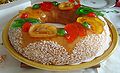 Brioche des Rois
 -
 Jean-Baptiste-Siméon Chardin painting
 -
 Gâteau des rois
 -
 Grande brioche de mariage vendéen
 -
Brioche
-
 Cougnou
 -
 Brioche Saint Genix
 -
 Tarte Tropézienne


-
Sicilian brioche
-
Brioche des Rois
-
Still life with brioche by Jean-Baptiste-Siméon Chardin
-
Gâteau des Rois
-
Grande brioche de mariage vendéen
-
Brioche
-
Cougnou
-
Brioche Saint Genix
-
Tarte Tropézienne
Ad. Transform your life with W8MD's Budget GLP-1 injections from $75


W8MD offers a medical weight loss program to lose weight in Philadelphia. Our physician-supervised medical weight loss provides:
- Weight loss injections in NYC (generic and brand names):
- Zepbound / Mounjaro, Wegovy / Ozempic, Saxenda
- Most insurances accepted or discounted self-pay rates. We will obtain insurance prior authorizations if needed.
- Generic GLP1 weight loss injections from $75 for the starting dose.
- Also offer prescription weight loss medications including Phentermine, Qsymia, Diethylpropion, Contrave etc.
NYC weight loss doctor appointmentsNYC weight loss doctor appointments
Start your NYC weight loss journey today at our NYC medical weight loss and Philadelphia medical weight loss clinics.
- Call 718-946-5500 to lose weight in NYC or for medical weight loss in Philadelphia 215-676-2334.
- Tags:NYC medical weight loss, Philadelphia lose weight Zepbound NYC, Budget GLP1 weight loss injections, Wegovy Philadelphia, Wegovy NYC, Philadelphia medical weight loss, Brookly weight loss and Wegovy NYC


|
WikiMD's Wellness Encyclopedia |
| Let Food Be Thy Medicine Medicine Thy Food - Hippocrates |
Medical Disclaimer: WikiMD is not a substitute for professional medical advice. The information on WikiMD is provided as an information resource only, may be incorrect, outdated or misleading, and is not to be used or relied on for any diagnostic or treatment purposes. Please consult your health care provider before making any healthcare decisions or for guidance about a specific medical condition. WikiMD expressly disclaims responsibility, and shall have no liability, for any damages, loss, injury, or liability whatsoever suffered as a result of your reliance on the information contained in this site. By visiting this site you agree to the foregoing terms and conditions, which may from time to time be changed or supplemented by WikiMD. If you do not agree to the foregoing terms and conditions, you should not enter or use this site. See full disclaimer.
Credits:Most images are courtesy of Wikimedia commons, and templates, categories Wikipedia, licensed under CC BY SA or similar.
Translate this page: - East Asian
中文,
日本,
한국어,
South Asian
हिन्दी,
தமிழ்,
తెలుగు,
Urdu,
ಕನ್ನಡ,
Southeast Asian
Indonesian,
Vietnamese,
Thai,
မြန်မာဘာသာ,
বাংলা
European
español,
Deutsch,
français,
Greek,
português do Brasil,
polski,
română,
русский,
Nederlands,
norsk,
svenska,
suomi,
Italian
Middle Eastern & African
عربى,
Turkish,
Persian,
Hebrew,
Afrikaans,
isiZulu,
Kiswahili,
Other
Bulgarian,
Hungarian,
Czech,
Swedish,
മലയാളം,
मराठी,
ਪੰਜਾਬੀ,
ગુજરાતી,
Portuguese,
Ukrainian
