Chloroxylenol
Overview of the antiseptic agent Chloroxylenol
| Chloroxylenol | |
|---|---|

| |
| INN | |
| Drug class | Antiseptic |
| Routes of administration | Topical |
| Pregnancy category | |
| Bioavailability | |
| Metabolism | |
| Elimination half-life | |
| Excretion | |
| Legal status | OTC |
| CAS Number | 88-04-0 |
| PubChem | |
| DrugBank | |
| ChemSpider | |
| KEGG | |
Chloroxylenol is a broad-spectrum antimicrobial agent commonly used as an antiseptic and disinfectant. It is effective against a wide range of bacteria, fungi, and viruses, making it a popular choice in healthcare settings and household products.
Chemical Properties
Chloroxylenol, also known as para-chloro-meta-xylenol (PCMX), is a chlorinated phenolic compound. Its chemical formula is C8H9ClO, and it has a molecular weight of 156.61 g/mol. The compound appears as a white to off-white crystalline solid with a mild phenolic odor.
Mechanism of Action
Chloroxylenol works by disrupting the cell wall and membrane of microorganisms, leading to cell lysis and death. It is particularly effective against Gram-positive bacteria, although it also has activity against Gram-negative bacteria, fungi, and some viruses.
Uses
Chloroxylenol is widely used in various applications, including:
- Antiseptic Soaps and Handwashes: It is a key ingredient in many antiseptic soaps and handwashes, such as Dettol, where it helps reduce the spread of infections.
- Surface Disinfectants: Used in hospitals and clinics to disinfect surfaces and equipment.
- Wound Cleansers: Applied to minor cuts, abrasions, and burns to prevent infection.
- Household Cleaners: Incorporated into household cleaning products to sanitize surfaces.
Safety and Precautions
Chloroxylenol is generally safe for use in the concentrations found in consumer products. However, it can cause skin irritation in some individuals, particularly with prolonged exposure. It should not be ingested, and care should be taken to avoid contact with the eyes.
Regulation and Availability
Chloroxylenol is available over-the-counter in many countries. It is regulated by health authorities to ensure safety and efficacy in consumer products.
Also see
References
- "Chloroxylenol." PubChem, National Center for Biotechnology Information.
- "Antiseptics and Disinfectants: Activity, Action, and Resistance." Clinical Microbiology Reviews.
Chloroxylenol
-
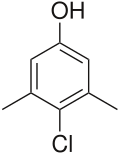 Chloroxylenol chemical structure
 -
Chloroxylenol
Ad. Transform your health with W8MD Weight Loss, Sleep & MedSpa

Tired of being overweight?
Special offer:
Budget GLP-1 weight loss medications
- Semaglutide starting from $29.99/week and up with insurance for visit of $59.99 and up per week self pay.
- Tirzepatide starting from $45.00/week and up (dose dependent) or $69.99/week and up self pay
✔ Same-week appointments, evenings & weekends
Learn more:
- GLP-1 weight loss clinic NYC
- W8MD's NYC medical weight loss
- W8MD Philadelphia GLP-1 shots
- Philadelphia GLP-1 injections
- Affordable GLP-1 shots NYC
|
WikiMD Medical Encyclopedia |
Medical Disclaimer: WikiMD is for informational purposes only and is not a substitute for professional medical advice. Content may be inaccurate or outdated and should not be used for diagnosis or treatment. Always consult your healthcare provider for medical decisions. Verify information with trusted sources such as CDC.gov and NIH.gov. By using this site, you agree that WikiMD is not liable for any outcomes related to its content. See full disclaimer.
Credits:Most images are courtesy of Wikimedia commons, and templates, categories Wikipedia, licensed under CC BY SA or similar.
Translate this page: - East Asian
中文,
日本,
한국어,
South Asian
हिन्दी,
தமிழ்,
తెలుగు,
Urdu,
ಕನ್ನಡ,
Southeast Asian
Indonesian,
Vietnamese,
Thai,
မြန်မာဘာသာ,
বাংলা
European
español,
Deutsch,
français,
Greek,
português do Brasil,
polski,
română,
русский,
Nederlands,
norsk,
svenska,
suomi,
Italian
Middle Eastern & African
عربى,
Turkish,
Persian,
Hebrew,
Afrikaans,
isiZulu,
Kiswahili,
Other
Bulgarian,
Hungarian,
Czech,
Swedish,
മലയാളം,
मराठी,
ਪੰਜਾਬੀ,
ગુજરાતી,
Portuguese,
Ukrainian
