Renal osteodystrophy

Editor-In-Chief: Prab R Tumpati, MD
Obesity, Sleep & Internal medicine
Founder, WikiMD Wellnesspedia &
W8MD's medical weight loss NYC, sleep center NYC
Philadelphia medical weight loss and Philadelphia sleep clinics
| Renal osteodystrophy | |
|---|---|

| |
| Synonyms | |
| Pronounce | N/A |
| Specialty | N/A |
| Symptoms | Bone pain, skeletal deformities, fractures |
| Complications | Fracture, vascular calcification |
| Onset | |
| Duration | |
| Types | |
| Causes | Chronic kidney disease, secondary hyperparathyroidism |
| Risks | |
| Diagnosis | Blood test, X-ray, bone biopsy |
| Differential diagnosis | Osteoporosis, osteomalacia |
| Prevention | |
| Treatment | Phosphate binders, vitamin D analogs, parathyroidectomy |
| Medication | |
| Prognosis | |
| Frequency | Common in patients with chronic kidney disease |
| Deaths | |
Renal osteodystrophy is a bone disease that occurs when your kidneys fail to maintain the proper levels of calcium and phosphorus in your blood. It's a common problem in people with kidney disease and affects almost all patients at some stage of chronic kidney disease.
Causes
Renal osteodystrophy is caused by changes in the hormones that maintain calcium and phosphorus balance. The kidneys convert vitamin D from the skin and diet into an active form that helps the body absorb calcium from the intestines. In kidney disease, this conversion is reduced, leading to lower calcium levels. In response, the parathyroid glands produce more parathyroid hormone (PTH), which helps restore calcium levels by reabsorption from the bones. However, this can lead to bone disease.
Symptoms
Symptoms of renal osteodystrophy can vary. Some people have no symptoms, while others may experience bone pain, joint pain, fractures, and muscle weakness. In children, the disease can cause growth retardation and bone deformities.
Diagnosis
Diagnosis of renal osteodystrophy involves blood tests to measure levels of calcium, phosphorus, PTH, and vitamin D. Bone biopsy may also be performed to assess the type and severity of the disease.
Treatment
Treatment aims to restore the balance of calcium, phosphorus, and PTH. This may involve dietary changes, medications to lower phosphorus levels, vitamin D supplements, and in some cases, surgery to remove the parathyroid glands.
Gallery
-
 Renal osteodystrophy
 -
 Renal osteodystrophy
 -
 Renal osteodystrophy
 -
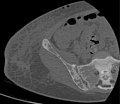 Renal osteodystrophy
 -
 Renal osteodystrophy
 -
 Renal osteodystrophy


See also
References
<references />


Ad. Transform your life with W8MD's
GLP-1 weight loss injections special from $29.99 with insurance
|
WikiMD Medical Encyclopedia |
Medical Disclaimer: WikiMD is for informational purposes only and is not a substitute for professional medical advice. Content may be inaccurate or outdated and should not be used for diagnosis or treatment. Always consult your healthcare provider for medical decisions. Verify information with trusted sources such as CDC.gov and NIH.gov. By using this site, you agree that WikiMD is not liable for any outcomes related to its content. See full disclaimer.
Credits:Most images are courtesy of Wikimedia commons, and templates, categories Wikipedia, licensed under CC BY SA or similar.
Translate this page: - East Asian
中文,
日本,
한국어,
South Asian
हिन्दी,
தமிழ்,
తెలుగు,
Urdu,
ಕನ್ನಡ,
Southeast Asian
Indonesian,
Vietnamese,
Thai,
မြန်မာဘာသာ,
বাংলা
European
español,
Deutsch,
français,
Greek,
português do Brasil,
polski,
română,
русский,
Nederlands,
norsk,
svenska,
suomi,
Italian
Middle Eastern & African
عربى,
Turkish,
Persian,
Hebrew,
Afrikaans,
isiZulu,
Kiswahili,
Other
Bulgarian,
Hungarian,
Czech,
Swedish,
മലയാളം,
मराठी,
ਪੰਜਾਬੀ,
ગુજરાતી,
Portuguese,
Ukrainian
