Thyroid neoplasm

Editor-In-Chief: Prab R Tumpati, MD
Obesity, Sleep & Internal medicine
Founder, WikiMD Wellnesspedia &
W8MD's medical weight loss NYC, sleep center NYC
Philadelphia medical weight loss and Philadelphia sleep clinics
| Thyroid neoplasm | |
|---|---|
 | |
| Synonyms | N/A |
| Pronounce | N/A |
| Specialty | N/A |
| Symptoms | Lump in the neck, hoarseness, difficulty swallowing, difficulty breathing |
| Complications | Metastasis, hypothyroidism, hyperthyroidism |
| Onset | Variable |
| Duration | Variable |
| Types | Benign tumor, Malignant tumor |
| Causes | Genetic mutations, radiation exposure |
| Risks | Family history, radiation therapy, iodine deficiency |
| Diagnosis | Ultrasound, fine needle aspiration, biopsy |
| Differential diagnosis | Thyroiditis, thyroid cyst |
| Prevention | Avoidance of radiation, iodine supplementation |
| Treatment | Surgery, radioactive iodine, thyroid hormone therapy, chemotherapy |
| Medication | Levothyroxine, antithyroid drugs |
| Prognosis | Generally good for benign, variable for malignant |
| Frequency | Common |
| Deaths | N/A |


Thyroid neoplasm is a type of neoplasm or tumor that develops in the thyroid gland. The thyroid gland is a butterfly-shaped organ located in the front of the neck, below the Adam's apple. The thyroid gland produces hormones that regulate the body's metabolic rate, heart and digestive function, muscle control, brain development, mood, and bone maintenance.
Types of Thyroid Neoplasm
There are several types of thyroid neoplasms, including:
- Papillary thyroid carcinoma: This is the most common type of thyroid cancer, accounting for about 80% of all cases. It grows very slowly and usually affects only one lobe of the thyroid gland.
- Follicular thyroid carcinoma: This type accounts for about 10% to 15% of all thyroid cancers. It grows slowly and is more likely to spread to the blood vessels and bones.
- Medullary thyroid carcinoma: This type accounts for about 3% of all thyroid cancers. It is more likely to be inherited and to spread to other parts of the body.
- Anaplastic thyroid carcinoma: This is a rare type of thyroid cancer that grows very quickly and is difficult to treat.
Symptoms
Symptoms of thyroid neoplasm may include a lump or swelling in the neck, pain in the front of the neck, hoarseness or other voice changes, difficulty swallowing, and swollen lymph nodes in the neck.
Diagnosis
Diagnosis of thyroid neoplasm typically involves a physical examination, blood tests, imaging tests, and a biopsy.
Treatment
Treatment options for thyroid neoplasm may include surgery, radioactive iodine therapy, hormone therapy, radiation therapy, chemotherapy, or targeted drug therapy.
Images
-
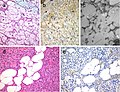 Histopathology of lipid-rich follicular thyroid carcinoma, and adenolipoma
 -
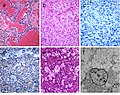 Histopathology of medullary thyroid carcinoma, solid variant of papillary thyroid carcinoma and biplastic Hürthle cell
 -
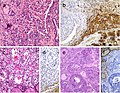 Histopathology of metastatic cancers to the thyroid
 -
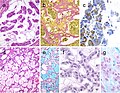 Histopathology of mucinous thyroid tumors
 -
 Histopathology of spindle cell variant of papillary thyroid carcinoma, and meningioma-like follicular adenoma
 -
 Histopathology of squamous cells tumors of the thyroid, and sclerosing mucoepidermoid carcinoma
 -
 Histopathology of tall cell and hobnail variants of papillary thyroid carcinoma
 -
 Histopathology of thyroid tumor with solid cell nest features, and hyalinizing trabecular tumor


See Also


Ad. Transform your health with W8MD Weight Loss, Sleep & MedSpa

Tired of being overweight?
Get started with evidence based, physician-supervised
affordable GLP-1 weight loss injections
Now available in New York City and Philadelphia:
- Semaglutide starting from $59.99/week and up
- Tirzepatide starting from $69.99/week and up (dose dependent)
✔ Evidence-based medical weight loss ✔ Insurance-friendly visits available ✔ Same-week appointments, evenings & weekends
Learn more:
Start your transformation today with W8MD weight loss centers.
|
WikiMD Medical Encyclopedia |
Medical Disclaimer: WikiMD is for informational purposes only and is not a substitute for professional medical advice. Content may be inaccurate or outdated and should not be used for diagnosis or treatment. Always consult your healthcare provider for medical decisions. Verify information with trusted sources such as CDC.gov and NIH.gov. By using this site, you agree that WikiMD is not liable for any outcomes related to its content. See full disclaimer.
Credits:Most images are courtesy of Wikimedia commons, and templates, categories Wikipedia, licensed under CC BY SA or similar.
Translate this page: - East Asian
中文,
日本,
한국어,
South Asian
हिन्दी,
தமிழ்,
తెలుగు,
Urdu,
ಕನ್ನಡ,
Southeast Asian
Indonesian,
Vietnamese,
Thai,
မြန်မာဘာသာ,
বাংলা
European
español,
Deutsch,
français,
Greek,
português do Brasil,
polski,
română,
русский,
Nederlands,
norsk,
svenska,
suomi,
Italian
Middle Eastern & African
عربى,
Turkish,
Persian,
Hebrew,
Afrikaans,
isiZulu,
Kiswahili,
Other
Bulgarian,
Hungarian,
Czech,
Swedish,
മലയാളം,
मराठी,
ਪੰਜਾਬੀ,
ગુજરાતી,
Portuguese,
Ukrainian
