Thai basil
Thai Basil (Ocimum basilicum var. thyrsiflora) is a type of basil native to Southeast Asia that has been cultivated to provide distinctive traits. Widely used throughout Southeast Asia, its flavor, described as anise- and licorice-like and slightly spicy, is more stable under high or extended cooking temperatures than that of sweet basil. Thai basil has small, narrow leaves, purple stems, and pink-purple flowers.
Description
Thai basil is a perennial herb, that grows as a small, multi-branched shrub, reaching up to a height of 45 cm (1.48 ft). The plant has small, narrow leaves and purple stems, with a strong scent reminiscent of anise. It produces small, pink-purple flowers that are highly attractive to bees.
Cultivation
Thai basil prefers soil that is lightly moist, well-drained and rich in organic matter, such as compost. It thrives in full sun but will tolerate light shade. The flowers should be pinched to prevent the leaves from becoming bitter.
Culinary Uses
Thai basil is widely used in the cuisines of Thailand, Vietnam, Cambodia, and Laos. It is best when cooked and is often added at the last moment to many dishes such as curries, pho, and pad Thai. It is also used in Vietnamese spring rolls and salads.
Medicinal Uses
In traditional medicine, Thai basil is used to treat digestive disorders, colds, and flu. It is also used as a mosquito repellent and a natural pesticide.
See Also

-
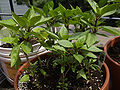 Thai basil
 -
 Sweet basil or Thai basil
 -
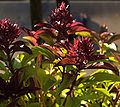 Thai basil flower
 -
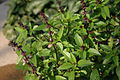 Thai basil with flowers


Ad. Transform your life with W8MD's
GLP-1 weight loss injections special from $29.99 with insurance
|
WikiMD Medical Encyclopedia |
Medical Disclaimer: WikiMD is for informational purposes only and is not a substitute for professional medical advice. Content may be inaccurate or outdated and should not be used for diagnosis or treatment. Always consult your healthcare provider for medical decisions. Verify information with trusted sources such as CDC.gov and NIH.gov. By using this site, you agree that WikiMD is not liable for any outcomes related to its content. See full disclaimer.
Credits:Most images are courtesy of Wikimedia commons, and templates, categories Wikipedia, licensed under CC BY SA or similar.
Translate this page: - East Asian
中文,
日本,
한국어,
South Asian
हिन्दी,
தமிழ்,
తెలుగు,
Urdu,
ಕನ್ನಡ,
Southeast Asian
Indonesian,
Vietnamese,
Thai,
မြန်မာဘာသာ,
বাংলা
European
español,
Deutsch,
français,
Greek,
português do Brasil,
polski,
română,
русский,
Nederlands,
norsk,
svenska,
suomi,
Italian
Middle Eastern & African
عربى,
Turkish,
Persian,
Hebrew,
Afrikaans,
isiZulu,
Kiswahili,
Other
Bulgarian,
Hungarian,
Czech,
Swedish,
മലയാളം,
मराठी,
ਪੰਜਾਬੀ,
ગુજરાતી,
Portuguese,
Ukrainian
