Cushing's syndrome: Difference between revisions
CSV import |
CSV import Tags: mobile edit mobile web edit |
||
| Line 1: | Line 1: | ||
{{SI}} | |||
{{Infobox medical condition | |||
| name = Cushing's syndrome | |||
| image = [[File:CushingsFace.jpg|alt=Moon face in Cushing's syndrome]] | |||
| caption = Moon face, a common symptom of Cushing's syndrome | |||
| field = [[Endocrinology]] | |||
| synonyms = Hypercortisolism, Itsenko-Cushing syndrome | |||
| symptoms = [[Weight gain]], [[hypertension]], [[diabetes mellitus]], [[osteoporosis]], [[muscle weakness]], [[depression (mood)|depression]], [[hirsutism]], [[acne]], [[striae]] | |||
| complications = [[Type 2 diabetes]], [[cardiovascular disease]], [[infections]], [[osteoporosis]] | |||
| onset = Typically 20–50 years old | |||
| duration = Variable, depending on treatment | |||
| causes = [[Exogenous]] (glucocorticoid medication), [[endogenous]] (pituitary adenoma, adrenal adenoma, ectopic ACTH syndrome) | |||
| risks = Long-term use of glucocorticoids, [[pituitary adenoma]], [[adrenal tumors]] | |||
| diagnosis = [[24-hour urinary free cortisol]], [[dexamethasone suppression test]], [[salivary cortisol]] | |||
| differential = [[Polycystic ovary syndrome]], [[metabolic syndrome]], [[depression (mood)|depression]], [[alcoholism]] | |||
| treatment = Reducing glucocorticoid use, [[surgery]], [[radiation therapy]], [[medications]] (e.g., [[ketoconazole]], [[mitotane]], [[mifepristone]]) | |||
| prognosis = Variable, depends on cause and treatment | |||
| frequency = 2–3 per million per year | |||
}} | |||
Cushing's Syndrome | Cushing's Syndrome | ||
Cushing's syndrome is a complex endocrine disorder characterized by excessive levels of cortisol in the blood. This condition can result from various causes, including endogenous overproduction of cortisol by the adrenal glands or exogenous sources such as glucocorticoid medications. | Cushing's syndrome is a complex endocrine disorder characterized by excessive levels of cortisol in the blood. This condition can result from various causes, including endogenous overproduction of cortisol by the adrenal glands or exogenous sources such as glucocorticoid medications. | ||
==Etiology== | ==Etiology== | ||
Cushing's syndrome can be classified into two main categories based on its etiology: | Cushing's syndrome can be classified into two main categories based on its etiology: | ||
===Endogenous Cushing's Syndrome=== | ===Endogenous Cushing's Syndrome=== | ||
* '''[[Pituitary Adenoma]]''': Also known as Cushing's disease, this is the most common cause of endogenous Cushing's syndrome. It involves a benign tumor of the pituitary gland that secretes adrenocorticotropic hormone (ACTH), leading to increased cortisol production by the adrenal glands. | * '''[[Pituitary Adenoma]]''': Also known as Cushing's disease, this is the most common cause of endogenous Cushing's syndrome. It involves a benign tumor of the pituitary gland that secretes adrenocorticotropic hormone (ACTH), leading to increased cortisol production by the adrenal glands. | ||
* '''[[Adrenal Tumors]]''': These can be either benign or malignant and directly produce cortisol. | * '''[[Adrenal Tumors]]''': These can be either benign or malignant and directly produce cortisol. | ||
* '''[[Ectopic ACTH Syndrome]]''': This occurs when ACTH is produced by non-pituitary tumors, such as small cell lung cancer. | * '''[[Ectopic ACTH Syndrome]]''': This occurs when ACTH is produced by non-pituitary tumors, such as small cell lung cancer. | ||
===Exogenous Cushing's Syndrome=== | ===Exogenous Cushing's Syndrome=== | ||
* '''Glucocorticoid Therapy''': Long-term use of glucocorticoid medications for conditions such as asthma or rheumatoid arthritis can lead to Cushing's syndrome. | * '''Glucocorticoid Therapy''': Long-term use of glucocorticoid medications for conditions such as asthma or rheumatoid arthritis can lead to Cushing's syndrome. | ||
==Pathophysiology== | ==Pathophysiology== | ||
Cortisol is a steroid hormone produced by the adrenal cortex. It plays a crucial role in regulating metabolism, immune response, and stress. In Cushing's syndrome, the excessive cortisol levels disrupt normal physiological functions, leading to a wide range of symptoms. | Cortisol is a steroid hormone produced by the adrenal cortex. It plays a crucial role in regulating metabolism, immune response, and stress. In Cushing's syndrome, the excessive cortisol levels disrupt normal physiological functions, leading to a wide range of symptoms. | ||
==Clinical Features== | ==Clinical Features== | ||
The clinical presentation of Cushing's syndrome can vary, but common features include: | The clinical presentation of Cushing's syndrome can vary, but common features include: | ||
* '''[[Weight Gain]]''': Particularly in the face (moon face), abdomen, and upper back (buffalo hump). | * '''[[Weight Gain]]''': Particularly in the face (moon face), abdomen, and upper back (buffalo hump). | ||
* '''[[Hypertension]]''': Elevated blood pressure is a frequent finding. | * '''[[Hypertension]]''': Elevated blood pressure is a frequent finding. | ||
| Line 27: | Line 39: | ||
* '''[[Skin Changes]]''': Thinning of the skin, easy bruising, and purple striae. | * '''[[Skin Changes]]''': Thinning of the skin, easy bruising, and purple striae. | ||
* '''[[Psychiatric Symptoms]]''': Depression, anxiety, and cognitive dysfunction. | * '''[[Psychiatric Symptoms]]''': Depression, anxiety, and cognitive dysfunction. | ||
==Diagnosis== | ==Diagnosis== | ||
The diagnosis of Cushing's syndrome involves a combination of clinical evaluation and laboratory tests: | The diagnosis of Cushing's syndrome involves a combination of clinical evaluation and laboratory tests: | ||
* '''[[24-hour Urinary Free Cortisol Test]]''': Measures cortisol excretion in urine. | * '''[[24-hour Urinary Free Cortisol Test]]''': Measures cortisol excretion in urine. | ||
* '''[[Dexamethasone Suppression Test]]''': Assesses the feedback inhibition of cortisol production. | * '''[[Dexamethasone Suppression Test]]''': Assesses the feedback inhibition of cortisol production. | ||
* '''[[Salivary Cortisol Test]]''': Measures cortisol levels in saliva, particularly useful for detecting diurnal variation. | * '''[[Salivary Cortisol Test]]''': Measures cortisol levels in saliva, particularly useful for detecting diurnal variation. | ||
* '''[[Imaging Studies]]''': CT or MRI scans to identify pituitary or adrenal tumors. | * '''[[Imaging Studies]]''': CT or MRI scans to identify pituitary or adrenal tumors. | ||
==Treatment== | ==Treatment== | ||
The treatment of Cushing's syndrome depends on the underlying cause: | The treatment of Cushing's syndrome depends on the underlying cause: | ||
* '''Surgical Resection''': Removal of pituitary adenomas or adrenal tumors. | * '''Surgical Resection''': Removal of pituitary adenomas or adrenal tumors. | ||
* '''Radiation Therapy''': Used for pituitary tumors when surgery is not feasible. | * '''Radiation Therapy''': Used for pituitary tumors when surgery is not feasible. | ||
* '''Medications''': Drugs such as ketoconazole or metyrapone to inhibit cortisol synthesis. | * '''Medications''': Drugs such as ketoconazole or metyrapone to inhibit cortisol synthesis. | ||
* '''Lifestyle Modifications''': Diet and exercise to manage weight and blood pressure. | * '''Lifestyle Modifications''': Diet and exercise to manage weight and blood pressure. | ||
==Prognosis== | ==Prognosis== | ||
The prognosis of Cushing's syndrome varies based on the cause and treatment success. Early diagnosis and appropriate management can lead to significant improvement in symptoms and quality of life. | The prognosis of Cushing's syndrome varies based on the cause and treatment success. Early diagnosis and appropriate management can lead to significant improvement in symptoms and quality of life. | ||
==Gallery== | |||
<gallery> | |||
File:Cushing syndrome svg hariadhi.svg|Cushing's syndrome | |||
File:CushingsBody.jpg|Cushing's syndrome | |||
File:BabyCushing.png|Cushing's syndrome | |||
File:Diagnostic algorithm of suspected Cushing's syndrome.png|Cushing's syndrome | |||
File:Management algorithm of Cushing's disease.png|Cushing's syndrome | |||
</gallery> | |||
==See Also== | ==See Also== | ||
* [[Adrenal Gland Disorders]] | * [[Adrenal Gland Disorders]] | ||
* [[Endocrinology]] | * [[Endocrinology]] | ||
* [[Hormonal Imbalance]] | * [[Hormonal Imbalance]] | ||
{{Endocrine system disorders}} | {{Endocrine system disorders}} | ||
[[Category:Endocrine disorders]] | [[Category:Endocrine disorders]] | ||
[[Category:Adrenal gland disorders]] | [[Category:Adrenal gland disorders]] | ||
[[Category:Syndromes]] | [[Category:Syndromes]] | ||
Latest revision as of 13:40, 5 April 2025

Editor-In-Chief: Prab R Tumpati, MD
Obesity, Sleep & Internal medicine
Founder, WikiMD Wellnesspedia &
W8MD's weight loss doctor NYC
Philadelphia GLP-1 weight loss and GLP-1 clinic NYC
| Cushing's syndrome | |
|---|---|

| |
| Synonyms | Hypercortisolism, Itsenko-Cushing syndrome |
| Pronounce | N/A |
| Specialty | N/A |
| Symptoms | Weight gain, hypertension, diabetes mellitus, osteoporosis, muscle weakness, depression, hirsutism, acne, striae |
| Complications | Type 2 diabetes, cardiovascular disease, infections, osteoporosis |
| Onset | Typically 20–50 years old |
| Duration | Variable, depending on treatment |
| Types | N/A |
| Causes | Exogenous (glucocorticoid medication), endogenous (pituitary adenoma, adrenal adenoma, ectopic ACTH syndrome) |
| Risks | Long-term use of glucocorticoids, pituitary adenoma, adrenal tumors |
| Diagnosis | 24-hour urinary free cortisol, dexamethasone suppression test, salivary cortisol |
| Differential diagnosis | Polycystic ovary syndrome, metabolic syndrome, depression, alcoholism |
| Prevention | N/A |
| Treatment | Reducing glucocorticoid use, surgery, radiation therapy, medications (e.g., ketoconazole, mitotane, mifepristone) |
| Medication | N/A |
| Prognosis | Variable, depends on cause and treatment |
| Frequency | 2–3 per million per year |
| Deaths | N/A |
Cushing's Syndrome
Cushing's syndrome is a complex endocrine disorder characterized by excessive levels of cortisol in the blood. This condition can result from various causes, including endogenous overproduction of cortisol by the adrenal glands or exogenous sources such as glucocorticoid medications.
Etiology[edit]
Cushing's syndrome can be classified into two main categories based on its etiology:
Endogenous Cushing's Syndrome[edit]
- Pituitary Adenoma: Also known as Cushing's disease, this is the most common cause of endogenous Cushing's syndrome. It involves a benign tumor of the pituitary gland that secretes adrenocorticotropic hormone (ACTH), leading to increased cortisol production by the adrenal glands.
- Adrenal Tumors: These can be either benign or malignant and directly produce cortisol.
- Ectopic ACTH Syndrome: This occurs when ACTH is produced by non-pituitary tumors, such as small cell lung cancer.
Exogenous Cushing's Syndrome[edit]
- Glucocorticoid Therapy: Long-term use of glucocorticoid medications for conditions such as asthma or rheumatoid arthritis can lead to Cushing's syndrome.
Pathophysiology[edit]
Cortisol is a steroid hormone produced by the adrenal cortex. It plays a crucial role in regulating metabolism, immune response, and stress. In Cushing's syndrome, the excessive cortisol levels disrupt normal physiological functions, leading to a wide range of symptoms.
Clinical Features[edit]
The clinical presentation of Cushing's syndrome can vary, but common features include:
- Weight Gain: Particularly in the face (moon face), abdomen, and upper back (buffalo hump).
- Hypertension: Elevated blood pressure is a frequent finding.
- Hyperglycemia: Increased blood sugar levels, which may lead to Diabetes Mellitus.
- Muscle Weakness: Due to protein catabolism.
- Osteoporosis: Increased risk of fractures due to bone resorption.
- Skin Changes: Thinning of the skin, easy bruising, and purple striae.
- Psychiatric Symptoms: Depression, anxiety, and cognitive dysfunction.
Diagnosis[edit]
The diagnosis of Cushing's syndrome involves a combination of clinical evaluation and laboratory tests:
- 24-hour Urinary Free Cortisol Test: Measures cortisol excretion in urine.
- Dexamethasone Suppression Test: Assesses the feedback inhibition of cortisol production.
- Salivary Cortisol Test: Measures cortisol levels in saliva, particularly useful for detecting diurnal variation.
- Imaging Studies: CT or MRI scans to identify pituitary or adrenal tumors.
Treatment[edit]
The treatment of Cushing's syndrome depends on the underlying cause:
- Surgical Resection: Removal of pituitary adenomas or adrenal tumors.
- Radiation Therapy: Used for pituitary tumors when surgery is not feasible.
- Medications: Drugs such as ketoconazole or metyrapone to inhibit cortisol synthesis.
- Lifestyle Modifications: Diet and exercise to manage weight and blood pressure.
Prognosis[edit]
The prognosis of Cushing's syndrome varies based on the cause and treatment success. Early diagnosis and appropriate management can lead to significant improvement in symptoms and quality of life.
Gallery[edit]
-
 Cushing's syndrome
 -
 Cushing's syndrome
 -
 Cushing's syndrome
 -
 Cushing's syndrome
 -
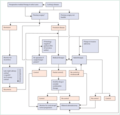 Cushing's syndrome


