Alcoholic cardiomyopathy: Difference between revisions
CSV import |
CSV import |
||
| Line 1: | Line 1: | ||
== Alcoholic Cardiomyopathy == | |||
{{Infobox medical condition | |||
| name = Alcoholic cardiomyopathy | |||
| image =[[File:Idiopathic_cardiomyopathy,_gross_pathology_20G0018_lores.jpg|250px]] | |||
| caption = Gross pathology of a heart affected by cardiomyopathy | |||
| field = [[Cardiology]] | |||
| symptoms = [[Shortness of breath]], [[fatigue]], [[swelling]] of the [[legs]], [[palpitations]] | |||
| complications = [[Heart failure]], [[arrhythmias]], [[sudden cardiac death]] | |||
| onset = Gradual | |||
| duration = Long-term | |||
| causes = [[Chronic alcohol consumption]] | |||
| risks = [[Alcohol use disorder]], [[genetic predisposition]] | |||
| diagnosis = [[Echocardiogram]], [[electrocardiogram]], [[blood tests]] | |||
| differential = [[Dilated cardiomyopathy]], [[ischemic heart disease]], [[hypertensive heart disease]] | |||
| prevention = [[Abstinence from alcohol]] | |||
| treatment = [[Lifestyle modification]], [[medications]], [[implantable cardioverter-defibrillator]] | |||
| prognosis = Variable, depends on [[alcohol cessation]] and [[treatment adherence]] | |||
| frequency = Common in individuals with [[alcohol use disorder]] | |||
}} | |||
== Alcoholic Cardiomyopathy == | |||
'''Alcoholic cardiomyopathy''' is a form of [[cardiomyopathy]] that is caused by excessive consumption of [[alcohol]]. It is characterized by the weakening and enlargement of the [[heart]] muscle, which can lead to [[heart failure]]. | '''Alcoholic cardiomyopathy''' is a form of [[cardiomyopathy]] that is caused by excessive consumption of [[alcohol]]. It is characterized by the weakening and enlargement of the [[heart]] muscle, which can lead to [[heart failure]]. | ||
Latest revision as of 04:06, 4 April 2025
| Alcoholic cardiomyopathy | |
|---|---|
| Error creating thumbnail: | |
| Synonyms | N/A |
| Pronounce | N/A |
| Specialty | N/A |
| Symptoms | Shortness of breath, fatigue, swelling of the legs, palpitations |
| Complications | Heart failure, arrhythmias, sudden cardiac death |
| Onset | Gradual |
| Duration | Long-term |
| Types | N/A |
| Causes | Chronic alcohol consumption |
| Risks | Alcohol use disorder, genetic predisposition |
| Diagnosis | Echocardiogram, electrocardiogram, blood tests |
| Differential diagnosis | Dilated cardiomyopathy, ischemic heart disease, hypertensive heart disease |
| Prevention | Abstinence from alcohol |
| Treatment | Lifestyle modification, medications, implantable cardioverter-defibrillator |
| Medication | N/A |
| Prognosis | Variable, depends on alcohol cessation and treatment adherence |
| Frequency | Common in individuals with alcohol use disorder |
| Deaths | N/A |
== Alcoholic Cardiomyopathy ==
Alcoholic cardiomyopathy is a form of cardiomyopathy that is caused by excessive consumption of alcohol. It is characterized by the weakening and enlargement of the heart muscle, which can lead to heart failure.
Pathophysiology[edit]
Alcoholic cardiomyopathy is a type of dilated cardiomyopathy, where the heart becomes enlarged and cannot pump blood efficiently. Chronic alcohol consumption leads to direct toxic effects on the myocardium, resulting in impaired myocardial contractility. This condition is often associated with arrhythmias and can progress to congestive heart failure.
Clinical Presentation[edit]
Patients with alcoholic cardiomyopathy may present with symptoms of heart failure, including dyspnea, edema, and fatigue. They may also experience palpitations due to arrhythmias. Physical examination may reveal signs of heart failure such as jugular venous distension, hepatomegaly, and peripheral edema.
Diagnosis[edit]
The diagnosis of alcoholic cardiomyopathy is based on a combination of clinical history, physical examination, and diagnostic tests. Echocardiography is a key tool in assessing the size and function of the heart. Other tests may include electrocardiogram (ECG), chest X-ray, and blood tests to assess liver function and rule out other causes of cardiomyopathy.
Treatment[edit]
The primary treatment for alcoholic cardiomyopathy is the cessation of alcohol consumption. This can lead to improvement in cardiac function and symptoms. Additional treatments may include medications such as ACE inhibitors, beta-blockers, and diuretics to manage heart failure symptoms. In severe cases, heart transplantation may be considered.
Prognosis[edit]
The prognosis of alcoholic cardiomyopathy depends on the extent of heart damage and the patient's ability to abstain from alcohol. Early diagnosis and treatment can lead to significant improvement in cardiac function and quality of life.
Related Pages[edit]
Gallery[edit]
-
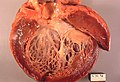 Gross pathology of idiopathic cardiomyopathy
 -
B-Mode echocardiogram of dilated cardiomyopathy


