Wilson–Turner syndrome: Difference between revisions

From WikiMD's Wellness Encyclopedia

No edit summary
 
No edit summary
Line 1: Line 1:
{{Infobox medical condition (new)
{{Short description|Rare X-linked genetic disorder with intellectual disability and obesity}}
| name            = Wilson-Turner syndrome
| synonyms        =
| field          = [[Medical genetics]], [[pediatrics]], [[psychiatry]], [[rare diseases]], [[metabolic diseases]], [[endocrine diseases]], [[mental diseases]]
| symptoms        =
| complications  =
| onset          =
| duration        =
| types          =
| causes          =
| risks          =
| diagnosis      =
| differential    =
| prevention      =
| treatment      =
| medication      =
| prognosis      =
| frequency      =
| deaths          =
}}
'''Wilson-Turner syndrome''' ('''WTS'''), also known as '''mental retardation X linked syndromic 6''' ('''MRXS6'''), and '''mental retardation X linked with gynecomastia and obesity''' is a congenital condition characterized by intellectual disability and associated with childhood-onset obesity.<ref name=":5">{{Cite journal|title = X-exome sequencing identifies a HDAC8 variant in a large pedigree with X-linked intellectual disability, truncal obesity, gynaecomastia, hypogonadism and unusual face|url = http://jmg.bmj.com/content/49/8/539|journal = Journal of Medical Genetics|date = 2012-08-01|issn = 1468-6244|pmid = 22889856|pages = 539–543|volume = 49|issue = 8|doi = 10.1136/jmedgenet-2012-100921|first = Magdalena|last = Harakalova|first2 = Marie-Jose van den|last2 = Boogaard|first3 = Richard|last3 = Sinke|first4 = Stef van|last4 = Lieshout|first5 = Marc C. van|last5 = Tuil|first6 = Karen|last6 = Duran|first7 = Ivo|last7 = Renkens|first8 = Paulien A.|last8 = Terhal|first9 = Carolien de|last9 = Kovel}}</ref> It is found to be linked to the [[X chromosome]] and caused by a mutation in the [[HDAC8]] gene, which is located on the q arm at [[Locus (genetics)|locus]] 13.1. Individuals with Wilson–Turner syndrome have a spectrum of physical characteristics including [[Dysmorphic feature|dysmorphic]] facial features, [[hypogonadism]], and short stature. Females generally have milder phenotypes than males.  This disorder affects all demographics equally and is seen in less than one in one million people.<ref name=":4">{{Cite web|title = Wilson-Turner Syndrome disease: Malacards - Research Articles, Symptoms, Drugs, Genes, Clinical Trials|url = http://www.malacards.org/card/wilson_turner_syndrome|website = www.malacards.org|accessdate = 2015-10-26}}</ref>


==History==
{{Infobox medical condition | name = Wilson–Turner syndrome | synonyms = Mental retardation X-linked syndromic 6 (MRXS6), Mental retardation X-linked with gynecomastia and obesity | image = | caption = | field = [[Medical genetics]], [[pediatrics]], [[psychiatry]], [[rare diseases]], [[metabolic diseases]], [[endocrinology]] | symptoms = Intellectual disability, obesity, gynecomastia, hypogonadism, dysmorphic facial features | complications = Psychological distress, obesity-related complications, social and developmental issues | onset = Childhood | duration = Lifelong | types = None identified | causes = Mutation in the [[HDAC8]] gene on chromosome Xq13.1 | risks = Family history (X-linked inheritance pattern) | diagnosis = Clinical evaluation, molecular genetic testing | differential = [[Prader–Willi syndrome]], [[Börjeson–Forssman–Lehmann syndrome]], [[Fragile X syndrome]], [[Cornelia de Lange syndrome]] | prevention = None | treatment = Supportive management including hormone replacement, diet and exercise, speech therapy, educational support | medication = Hormone replacement therapy, antiestrogens, aromatase inhibitors (experimental) | prognosis = Variable; intellectual disability lifelong, physical symptoms manageable | frequency = Very rare (fewer than 1 per million) | deaths = Not specifically reported }}
The study of X-linked mental retardation began in 1943 when Martin and Bell reported a family exhibiting [[sex-linked]] mental retardation.<ref>{{Cite web|title = Invited Editorial: X-linked mental retardation: In pursuit of a gene map|url = https://www.researchgate.net/publication/14696756|website = ResearchGate|accessdate = 2015-11-01}}</ref> However, this syndrome was not recognized until 1991. Wilson studied 14 males from three successive generations that presented hypogonadism, mental retardation, [[gynecomastia]], and short stature, among other symptoms.<ref>{{Cite journal|title = New X-linked syndrome of mental retardation, gynecomastia, and obesity is linked to DXS255|journal = American Journal of Medical Genetics|date = 1991-09-15|issn = 1096-8628|pages = 406–413|volume = 40|issue = 4|doi = 10.1002/ajmg.1320400405|first = Meredith|last = Wilson|first2 = John|last2 = Mulley|first3 = Agi|last3 = Gedeon|first4 = Hazel|last4 = Robinson|first5 = Gillian|last5 = Turner|pmid=1746601}}</ref> Eventually, this disorder was ruled distinct from a syndrome presented by Prader and Willi ([[Prader–Willi syndrome|Prader-Willi syndrome]]) because of its mode of inheritance, gynecomastia, and the presence of small hands and feet.<ref name=":1">{{Cite journal|title = X-linked hypogonadism, gynecomastia, mental retardation, short stature, and obesity—a new syndrome|journal = The Journal of Pediatrics|pages = 56–60|volume = 94|issue = 1|doi = 10.1016/s0022-3476(79)80350-9|pmid = 758423|first = Silvia B.|last = Vasquez|first2 = Daniel L.|last2 = Hurst|first3 = Juan F.|last3 = Sotos|date = January 1979}}</ref> However, there is some speculation that this syndrome is in the same spectrum as the [[Cornelia de Lange Syndrome|Cornelia de Lange syndrome]].<ref name=":0">{{Cite web|title = HDAC8 gene|url = http://ghr.nlm.nih.gov/gene/HDAC8|website = Genetics Home Reference|date = 2015-10-19|accessdate = 2015-10-26}}</ref>
[[File:X chromosome.png|'''X chromosome''', location of the HDAC8 gene mutation|thumb]]
'''Wilson–Turner syndrome''' ('''WTS''') is a rare, X-linked genetic disorder characterized primarily by intellectual disability, obesity, hypogonadism, and gynecomastia. Due to its association with the X chromosome, males tend to exhibit more severe manifestations than females. Females often have milder symptoms or may only be carriers with minimal clinical presentation.


== Symptoms ==
== History ==
The most notable features of Wilson-Turner syndrome are intellectual disability, obesity, hypogonadism, gynecomastia, and distinct facial features. All of the symptoms are chronic. Affected females are known to have less severe signs and symptoms than males. Female carriers of the disorder may have mild or no symptoms.
Wilson–Turner syndrome was first identified in 1991 through the study of a family exhibiting intellectual disabilities, obesity, hypogonadism, and gynecomastia in multiple generations. Initially thought related to [[Prader–Willi syndrome]], WTS was eventually recognized as a distinct clinical entity due to its unique genetic inheritance pattern (X-linked recessive) and distinct physical features. Since its first identification, fewer than 20 confirmed cases have been reported.
* [[Intellectual disability]] is the limitation in an individual's mental functioning and skills. Patients with Wilson-Turner syndrome have mental disabilities generally ranging from mild to severe, more frequently the former.<ref name=":6" /> This symptom often coincides with delays in speech development and the occurrence of mood swings.<ref name=":2">{{Cite web|title = Börjeson-Forssman-Lehman Syndrome - NORD (National Organization for Rare Disorders)|url = https://rarediseases.org/rare-diseases/borjeson-forssman-lehman-syndrome/|website = NORD (National Organization for Rare Disorders)|accessdate = 2015-11-01|language = en-US}}</ref> Most males were noted to have a quiet and a cheerful disposition. However, individuals who displayed aggression and became easily upset were also seen. Children display delays in speech development often combined with excessive drooling and low voice tones. Some of the studied male patients had [[Speech disorder|speech impairments]] ranging from little or no speech to minor stuttering.<ref name=":6" />
* [[Obesity]] is the accumulation of excess fat on the body. Individuals with Wilson-Turner syndrome are characterized as having truncal obesity, meaning the fat has accumulated in the middle. Truncal obesity is often related to heart disease, kidney disease, and a lowered blood immune system.<ref>{{Cite web|title = Onion River Chiropractic - Chiropractor In Winooski, VT USA :: Truncal Obesity and Health|url = http://onionriverchiro.com/fyi---health-articles/truncal-obesity-and-health.html|website = onionriverchiro.com|accessdate = 2015-11-02}}</ref> Truncal obesity in this disorder becomes more apparent around the age of puberty.<ref name=":6" />
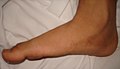
* Tapered fingers, in which one end of the finger is diminished in thickness, causing the ends of the fingers to appear pointed. This deformity is not debilitating in any particular manner. In addition to tapered fingers, both hands and feet tend to be small. Some males were observed to have ''[[Flat feet|pes planus]]'', also known as flat feet.<ref name=":6">{{Cite book|title = Atlas of X-Linked Intellectual Disability Syndromes|url = https://books.google.com/books?id=f409aV1yUkAC|publisher = OUP USA|date = 2012-07-12|isbn = 9780199811793|first = Roger E.|last = Stevenson|first2 = Charles E.|last2 = Schwartz|first3 = R. Curtis|last3 = Rogers|first4 = Richard Curtis|last4 = Rogers}}</ref>
* [[Hypogonadism]] is a condition in which the [[gonads]] have a decrease in function. This condition may result from the lack of sex hormone synthesis, such as [[androgen]] and [[estrogen]]. Hormones produced by the gonads may also decrease.<ref>{{Cite web|title = Hypogonadism|url = http://www.healthline.com/health/hypogonadism#Overview1|website = Healthline|accessdate = 2015-10-26|date = 2012-08-15}}</ref> Hypogonadism also influences the onset of other conditions of Wilson-Turner syndrome, such as gynecomastia and decreased testes size in males.<ref>{{Cite web|title = What is Male Hypogonadism? Learn Hormone.org's Hypogonadism Definition|url = http://www.hormone.org/diseases-and-conditions/mens-health/hypogonadism|website = www.hormone.org|accessdate = 2015-10-26}}</ref> It can also cause short stature in men and women. In addition to little genital development, pubic and body hair are scant.<ref name=":6" />
* Some of the facial features that are associated with Wilson-Turner syndrome include small head circumferences, high foreheads, prominent ears, and noses with  flattened bridges. There have been cases of moderately high palates. Low muscle tone and subcutaneous swelling in facial tissue has also been noted. Thick eyebrows are also common.<ref name=":6" /> However, there have been reported cases where individuals had none of the mentioned facial features, which shows phenotypic abnormalities which have possible environmental influences.<ref>{{Cite journal|title = A new form of X-linked mental retardation with growth retardation, deafness, and microgenitalism|journal = American Journal of Human Genetics|date = 1980-09-01|issn = 0002-9297|pmc = 1686104|pmid = 6107045|pages = 714–722|volume = 32|issue = 5|first = R. C.|last = Juberg|first2 = I.|last2 = Marsidi}}</ref>
* [[Gynecomastia]] is a non-cancerous increase in male breast tissue.<ref>{{Cite journal|title = Gynaecomastia and breast cancer in men|url = http://www.bmj.com/content/336/7646/709|journal = BMJ|date = 2008-03-27|issn = 0959-8138|pmc = 2276281|pmid = 18369226|pages = 709–713|volume = 336|issue = 7646|doi = 10.1136/bmj.39511.493391.BE|first = Catherine B.|last = Niewoehner|first2 = Anna E.|last2 = Schorer}}</ref> It is believed that disturbances in the [[endocrine system]] lead to an increase in estrogen and androgen hormones which cause the development of gynecomastia. A key feature of gynecomastia is rubbery or firm glandular [[Subcutaneous tissue|subcutaneous]] chest tissue that is palpated under the areola of the nipple, instead of the soft fatty tissue.<ref>{{Cite journal|title = Gynaecomastia—pathophysiology, diagnosis and treatment|journal = Nature Reviews Endocrinology|pages = 684–698|volume = 10|issue = 11|doi = 10.1038/nrendo.2014.139|first = Harmeet S.|last = Narula|first2 = Harold E.|last2 = Carlson|pmid=25112235|date=Nov 2014|url = https://touroscholar.touro.edu/tuncom_pubs/54}}</ref> There can also be in increase in the diameter of the areola asymmetry in the chest tissue.<ref>{{Cite journal|title = Algorithm for clinical evaluation and surgical treatment of gynaecomastia|journal = Journal of Plastic, Reconstructive & Aesthetic Surgery|pages = 41–49|volume = 61|issue = 1|doi = 10.1016/j.bjps.2007.09.033|first = Adriana|last = Cordova|first2 = Francesco|last2 = Moschella|pmid=17983883|year=2008}}</ref> The breast enlargement can occur in one or both side.<ref>{{Cite journal|title = Current concepts in gynaecomastia|journal = The Surgeon|pages = 114–119|volume = 7|issue = 2|doi = 10.1016/s1479-666x(09)80026-7|first = H.L.|last = Devalia|first2 = G.T.|last2 = Layer|pmid=19408804|date=Apr 2009}}</ref> Similar to truncal obesity, gynecomastia becomes apparent around the age of puberty.<ref name=":6" />


==Causes ==
== Signs and symptoms ==
Wilson–Turner syndrome has several characteristic clinical features:


* '''[[Intellectual disability]]''' – Typically mild to moderate impairment, associated with delayed speech and language development.
* '''[[Obesity]]''' – Truncal obesity, with significant fat accumulation around the abdomen starting from childhood, becoming prominent during adolescence.
* '''[[Hypogonadism]]''' – Reduced function of the testes in males resulting in reduced testosterone production, delayed or absent puberty, underdeveloped secondary sexual characteristics, sparse body hair, and small testes.
* '''[[Gynecomastia]]''' – Enlargement of male breast tissue due to hormonal imbalance, evident during puberty.
* '''Facial dysmorphisms''' – Includes a small head circumference, high forehead, prominent ears, flattened nasal bridge, thick eyebrows, and occasionally a high palate.
* '''Skeletal anomalies''' – Small hands and feet, tapered fingers, and occasionally flat feet (pes planus).


The only known cause of this disorder is the mutation on the HDAC8 gene, which is located at Xq13.1. This disorder displays X-linked inheritance.
Females carrying the genetic mutation may display mild intellectual disabilities and subtle physical features, or no symptoms at all.


== Mechanism ==
== Causes ==
Wilson–Turner syndrome results from mutations in the [[HDAC8]] gene located on chromosome Xq13.1. This gene encodes an enzyme known as histone deacetylase 8, essential in regulating gene expression during normal development. Mutations in HDAC8 disrupt developmental processes, particularly impacting brain development, endocrine function, and metabolism, leading to the clinical features seen in WTS.


=== Pathophysiology ===
== Pathophysiology ==
The primary symptoms of Wilson-Turner Syndrome is believed to result from an improperly developed [[histone deacetylase]] 8. This enzyme is coded by the HDAC8 gene. The identified mutation in the HDAC8 gene leads to a version of histone deacetylase 8 that is missing a segment. Histone deacetylase 8 is believed to be a regulator of the cohesion complex, playing a role in stabilizing the cell’s genetic information, repairing damaged DNA, and controlling gene activity. This abnormally shortened protein alters gene regulations during the individual’s normal development. Some of the effected normal development lies in the [[endocrine system]]. Males will have more [[estrogen]] and [[androgen]] than normal, leading to enlarged hypogonadism and gynecomastia. Other abnormal development is related to general mental capacity.<ref name=":0" /> [[HDAC]]s are known to be associated with human brain development disorders.<ref name=":5" /> HDAC8, in particular, represses transcription factors in neural crest cells to control various patterns of the skull.<ref name=":5" /> This contributes to the various forms of facial deformities in individuals with Wilson-Turner Syndrome. Some of the facial deformities caused by the HDAC8 include prominent supraorbital ridges and high cheekbones. Researchers also contribute the error in the HDAC8 gene to obesity. Since the HDAC family proteins are involved in changes in the gene expression in the [[hypothalamus]], it is also believed that the individual’s [[metabolism]] conditions are altered.<ref>{{Cite journal|title = Fasting and High-Fat Diet Alter Histone Deacetylase Expression in the Medial Hypothalamus|journal = PLoS ONE|date = 2011-04-15|pmc = 3078138|pmid = 21526203|pages = e18950|volume = 6|issue = 4|doi = 10.1371/journal.pone.0018950|first = Hiromasa|last = Funato|first2 = Satoko|last2 = Oda|first3 = Junko|last3 = Yokofujita|first4 = Hiroaki|last4 = Igarashi|first5 = Masaru|last5 = Kuroda}}</ref>
Histone deacetylase 8 (HDAC8) influences gene expression by modifying histones and regulating genetic transcription. In Wilson–Turner syndrome, the mutated HDAC8 enzyme fails to function normally, disrupting normal developmental patterns. This disruption manifests primarily in the nervous and endocrine systems, affecting cognitive function, hormonal regulation, and fat metabolism. The hormonal disturbances cause elevated estrogen relative to androgens, resulting in gynecomastia and hypogonadism.


== Diagnosis ==
== Diagnosis ==  
=== Diagnostic techniques ===
Diagnosis is based on clinical evaluation and characteristic symptoms, supported by genetic testing. Molecular genetic analysis identifies the specific HDAC8 gene mutation to confirm the diagnosis.


=== Techniques ===
=== Diagnostic criteria ===
The diagnosis of Wilson–Turner syndrome is based upon a clinical evaluation, a detailed patient history, and identification of characteristic features. Molecular genetic testing for mutations in the HDAC8 gene is now available to confirm the diagnosis.
A clinical diagnosis of Wilson–Turner syndrome is considered when males present with intellectual disability, obesity, hypogonadism, gynecomastia, and characteristic facial and skeletal features. Females, who typically have mild manifestations, are diagnosed primarily through family history and genetic testing for carrier status.
 
=== Criteria ===
The Wilson–Turner syndrome is characterized by mild to moderate range of intellectual disability, obesity, tapered fingers, and mood swings. Males also suffer from gynecomastia and hypogonadism. In order to be diagnosed with Wilson-Turner Syndrome, male patients must suffer from intellectual disability, obesity, and gynecomastia. Females do not necessarily have to have noticeable phenotype but can be diagnosed with this disorder by studying her family history and identifying others with the disorder. It has been noted that children with Wilson-Turner Syndrome will display speech development delay and excessive drooling. Males can be confirmed by testing androgen levels.<ref name=":2" /> Female carriers will show silencing of the gene a complex [[X-inactivation|X inactivation]].<ref name=":3">{{Cite web|title = Disease: 309585 - GenePeeks Research|url = https://research.genepeeks.com/diseases/309585/|website = research.genepeeks.com|accessdate = 2015-11-01}}</ref>


=== Family and medical history ===
Family medical history is studied in depth due to its X-linked inheritance. The families that were studied and diagnosed with Wilson-Turner Syndrome have shown X-linked recessive pedigree pattern. This disorder only have been identified in two families, thus there is still ongoing studies concerning other inherited factors that may contribute to this disorder.<ref name=":3" />
Due to its X-linked inheritance, thorough family history evaluation is crucial. Pedigrees reveal an X-linked recessive inheritance pattern, typically affecting males more severely than females, who often serve as asymptomatic or mildly symptomatic carriers.


== Screening ==
== Screening ==
Screening methods are mostly done for females to determine if they are carriers. Males do not have to be tested because those with the disorder will show symptoms close to the time they are born because the disorder is inherited from the X chromosome. Females can be tested if they are carriers by performing a X chromosome inactivation analysis on DNA isolated from the peripheral lymphocytes. The CAG repeat in this section must be amplified and methylated DNA must be sorted from unmethylated DNA with PCR. Carrier females will show skewed X-inactivation pattern (skewing close to 100%) with the mutated [[allele]] inactivated. This indicates a selection against cells with an active X chromosome with the mutated HDAC8 gene.<ref name=":5" />
Females from affected families can undergo genetic testing, such as X chromosome inactivation analysis, to identify asymptomatic carriers. Genetic counseling is recommended for families with a known mutation in HDAC8 to discuss inheritance risks and reproductive options.


== Treatment and prognosis ==
== Treatment and management ==
There is currently no cure for Wilson–Turner syndrome. Management is symptomatic and supportive, aimed at improving quality of life and managing complications:


=== Common treatment ===
* '''Obesity management''' – Dietary modification, nutritional counseling, regular physical exercise.
There is no known cure available for Wilson-Turner syndrome. Instead, treatment options are available to fight individual symptoms. For obesity, a nutritional diet manipulation is combined with an exercise regimen that has a greater energy expenditure than intake. For hypogonadism, [[Androgen replacement therapy|testosterone replacement]] is done. For gynecomastia, weight loss using similar methods for obesity is prescribed. However, if the individual finds their increased breast tissue psychologically distressing or too severe, reduction [[mammaplasty]] is done. Currently, researchers are investigating therapies using antiestrogens and [[aromatase inhibitor]]s to treat persistent pubertal gynecomastia.<ref>{{Cite web|title = Wilson-Turner X-linked mental retardation syndrome — CheckOrphan|url = http://www.checkorphan.org/diseases/wilson-turner-x-linked-mental-retardation-syndrome|website = www.checkorphan.org|accessdate = 2015-10-26}}</ref>
* '''Hormone therapy''' – Testosterone replacement therapy for hypogonadism.
* '''Gynecomastia treatment''' – Weight reduction, and in severe cases, surgical correction (mammaplasty). Antiestrogen therapy and aromatase inhibitors are under investigation.
* '''Educational and behavioral support''' – Special education programs, speech therapy, occupational therapy, psychological counseling.


=== Long-term complications ===
== Prognosis ==
Unlike [[Börjeson-Forssman-Lehmann syndrome|Borjeson-Forssman-Lehmann syndrome]], a disorder that was determined to be very similar to WTS, the individuals with Wilson–Turner syndrome do not develop [[cataract]]s or [[hypermetropia]] later in life.<ref>{{Cite journal|title = New X-linked syndrome of mental retardation, gynecomastia, and obesity is linked to DXS255|journal = American Journal of Medical Genetics|date = 1992-12-01|issn = 0148-7299|pmid = 1481864|pages = 854–855|volume = 44|issue = 6|doi = 10.1002/ajmg.1320440637|first = J.|last = Frézal}}</ref> By far, the most debilitating part of this disorder is intellectual disability. Many of the other symptoms are more easily managed through [[Hormone therapy|hormone treatment]], proper diet and exercise, and [[speech therapy]].
Wilson–Turner syndrome varies widely in its severity. Intellectual disabilities persist throughout life, but physical symptoms such as obesity and gynecomastia can often be effectively managed. Life expectancy is not typically reduced, provided obesity and associated complications are appropriately managed.


==Epidemiology==
== Epidemiology ==
This disorder affects all demographics equally. The two families that were studied are of European ancestry. Wilson–Turner syndrome is considered to be a rare disease because it affects one individual out of one million.<ref name=":4" />
Wilson–Turner syndrome is exceedingly rare, occurring in fewer than one per million individuals globally. It affects all ethnic groups and demographics equally, with only a few documented families studied extensively.


== Recent research ==
== Recent research == Recent studies of affected families suggest variability in the physical presentation, highlighting a broader spectrum of clinical features than originally recognized. Research continues to explore the biochemical and genetic pathways involving HDAC8 and its impact on endocrine and neurological development. Studies are also examining novel therapies targeting HDAC activity and gene expression, which may hold potential for improved treatments in the future.
In 2012, a study of a five-generation Dutch family consisting of seven males and seven females with Wilson-Turner syndrome. These individuals had some characteristics that differed from the stated phenotype mentioned by Wilson. These individuals have a larger stature, head, and chin, in addition to coarse facial features. Unlike the females in Wilson's study, these females showed signs of being affected, although less severe than their male counterparts. None of the men could live on their own. Studies verified that the phenotype of the disorder range on a large scale and can affect everyone differently. This research group also used [[next-generation sequencing]] of the X chromosome [[exome]] to identify the HDAC8 gene mutation<ref name=":5" />


There is also ongoing research to determine the cause of the decreased or low androgen levels. It is studying the possible disturbance of the [[hypothalamic-pituitary-gonadal axis]] because of the low levels of androgen are combined with normal levels of [[Follicle-stimulating hormone|FSH]] and [[Luteinizing hormone|LH]].<ref name=":6" />
== Gallery ==
<gallery>
File:Gynecomastia.jpg|'''Gynecomastia''', characteristic breast enlargement in males
File:Obesity6.JPG|'''Truncal obesity''', central accumulation of body fat
File:Flatfoot.jpg|'''Flat feet (pes planus)''', common in Wilson–Turner syndrome
</gallery>


== See also ==
== See also ==
* [[Prader–Willi syndrome]]
* [[Fragile X syndrome]]
* [[Börjeson-Forssman-Lehmann syndrome]]  
* [[Börjeson–Forssman–Lehmann syndrome]]
* [[Bardet–Biedl syndrome]]
* [[Cornelia de Lange syndrome]]


== References ==
{{Reflist}}
== External links ==
{{Medical resources
 
| ICDO            =
* [https://rarediseases.info.nih.gov/ Genetic and Rare Diseases Information Center (GARD)]
| OMIM            = 309585
* [https://rarediseases.org/ National Organization for Rare Disorders (NORD)]
| Orphanet       = 3459
* [https://www.orpha.net Orphanet]
}}
 
{{DEFAULTSORT:Wilson-Turner syndrome}}
{{DEFAULTSORT:Wilson–Turner syndrome}} [[Category:Congenital disorders]] [[Category:Syndromes]] [[Category:X-linked recessive disorders]] [[Category:Intellectual disability]] [[Category:Rare diseases]] [[Category:Endocrine diseases]] [[Category:Metabolic disorders]]
[[Category:Congenital disorders]]
[[Category:Syndromes]]
{{stb}}

Revision as of 23:03, 29 March 2025

Rare X-linked genetic disorder with intellectual disability and obesity


Wilson–Turner syndrome
Synonyms Mental retardation X-linked syndromic 6 (MRXS6), Mental retardation X-linked with gynecomastia and obesity
Pronounce N/A
Specialty N/A
Symptoms Intellectual disability, obesity, gynecomastia, hypogonadism, dysmorphic facial features
Complications Psychological distress, obesity-related complications, social and developmental issues
Onset Childhood
Duration Lifelong
Types None identified
Causes Mutation in the HDAC8 gene on chromosome Xq13.1
Risks Family history (X-linked inheritance pattern)
Diagnosis Clinical evaluation, molecular genetic testing
Differential diagnosis Prader–Willi syndrome, Börjeson–Forssman–Lehmann syndrome, Fragile X syndrome, Cornelia de Lange syndrome
Prevention None
Treatment Supportive management including hormone replacement, diet and exercise, speech therapy, educational support
Medication Hormone replacement therapy, antiestrogens, aromatase inhibitors (experimental)
Prognosis Variable; intellectual disability lifelong, physical symptoms manageable
Frequency Very rare (fewer than 1 per million)
Deaths Not specifically reported


X chromosome, location of the HDAC8 gene mutation

Wilson–Turner syndrome (WTS) is a rare, X-linked genetic disorder characterized primarily by intellectual disability, obesity, hypogonadism, and gynecomastia. Due to its association with the X chromosome, males tend to exhibit more severe manifestations than females. Females often have milder symptoms or may only be carriers with minimal clinical presentation.

History

Wilson–Turner syndrome was first identified in 1991 through the study of a family exhibiting intellectual disabilities, obesity, hypogonadism, and gynecomastia in multiple generations. Initially thought related to Prader–Willi syndrome, WTS was eventually recognized as a distinct clinical entity due to its unique genetic inheritance pattern (X-linked recessive) and distinct physical features. Since its first identification, fewer than 20 confirmed cases have been reported.

Signs and symptoms

Wilson–Turner syndrome has several characteristic clinical features:

  • Intellectual disability – Typically mild to moderate impairment, associated with delayed speech and language development.
  • Obesity – Truncal obesity, with significant fat accumulation around the abdomen starting from childhood, becoming prominent during adolescence.
  • Hypogonadism – Reduced function of the testes in males resulting in reduced testosterone production, delayed or absent puberty, underdeveloped secondary sexual characteristics, sparse body hair, and small testes.
  • Gynecomastia – Enlargement of male breast tissue due to hormonal imbalance, evident during puberty.
  • Facial dysmorphisms – Includes a small head circumference, high forehead, prominent ears, flattened nasal bridge, thick eyebrows, and occasionally a high palate.
  • Skeletal anomalies – Small hands and feet, tapered fingers, and occasionally flat feet (pes planus).

Females carrying the genetic mutation may display mild intellectual disabilities and subtle physical features, or no symptoms at all.

Causes

Wilson–Turner syndrome results from mutations in the HDAC8 gene located on chromosome Xq13.1. This gene encodes an enzyme known as histone deacetylase 8, essential in regulating gene expression during normal development. Mutations in HDAC8 disrupt developmental processes, particularly impacting brain development, endocrine function, and metabolism, leading to the clinical features seen in WTS.

Pathophysiology

Histone deacetylase 8 (HDAC8) influences gene expression by modifying histones and regulating genetic transcription. In Wilson–Turner syndrome, the mutated HDAC8 enzyme fails to function normally, disrupting normal developmental patterns. This disruption manifests primarily in the nervous and endocrine systems, affecting cognitive function, hormonal regulation, and fat metabolism. The hormonal disturbances cause elevated estrogen relative to androgens, resulting in gynecomastia and hypogonadism.

Diagnosis

Diagnostic techniques

Diagnosis is based on clinical evaluation and characteristic symptoms, supported by genetic testing. Molecular genetic analysis identifies the specific HDAC8 gene mutation to confirm the diagnosis.

Diagnostic criteria

A clinical diagnosis of Wilson–Turner syndrome is considered when males present with intellectual disability, obesity, hypogonadism, gynecomastia, and characteristic facial and skeletal features. Females, who typically have mild manifestations, are diagnosed primarily through family history and genetic testing for carrier status.

Family and medical history

Due to its X-linked inheritance, thorough family history evaluation is crucial. Pedigrees reveal an X-linked recessive inheritance pattern, typically affecting males more severely than females, who often serve as asymptomatic or mildly symptomatic carriers.

Screening

Females from affected families can undergo genetic testing, such as X chromosome inactivation analysis, to identify asymptomatic carriers. Genetic counseling is recommended for families with a known mutation in HDAC8 to discuss inheritance risks and reproductive options.

Treatment and management

There is currently no cure for Wilson–Turner syndrome. Management is symptomatic and supportive, aimed at improving quality of life and managing complications:

  • Obesity management – Dietary modification, nutritional counseling, regular physical exercise.
  • Hormone therapy – Testosterone replacement therapy for hypogonadism.
  • Gynecomastia treatment – Weight reduction, and in severe cases, surgical correction (mammaplasty). Antiestrogen therapy and aromatase inhibitors are under investigation.
  • Educational and behavioral support – Special education programs, speech therapy, occupational therapy, psychological counseling.

Prognosis

Wilson–Turner syndrome varies widely in its severity. Intellectual disabilities persist throughout life, but physical symptoms such as obesity and gynecomastia can often be effectively managed. Life expectancy is not typically reduced, provided obesity and associated complications are appropriately managed.

Epidemiology

Wilson–Turner syndrome is exceedingly rare, occurring in fewer than one per million individuals globally. It affects all ethnic groups and demographics equally, with only a few documented families studied extensively.

== Recent research == Recent studies of affected families suggest variability in the physical presentation, highlighting a broader spectrum of clinical features than originally recognized. Research continues to explore the biochemical and genetic pathways involving HDAC8 and its impact on endocrine and neurological development. Studies are also examining novel therapies targeting HDAC activity and gene expression, which may hold potential for improved treatments in the future.

Gallery

See also

External links