Self-concept: Difference between revisions
CSV import |
CSV import |
||
| Line 31: | Line 31: | ||
[[Category:Self]] | [[Category:Self]] | ||
[[Category:Mental health]] | [[Category:Mental health]] | ||
<gallery> | |||
File:The constituent on one's self.png|The constituent on one's self | |||
</gallery> | |||
Latest revision as of 05:04, 3 March 2025
Self-concept is an individual's perception of self and is influenced by numerous factors such as social interaction, experience, and achievement. It is an important aspect of personality psychology and has been extensively studied in psychology and social science.
Definition[edit]
The term self-concept is a general term used to refer to how someone thinks about, evaluates or perceives themselves. This perception is shaped by the individual's belief system, self-perception, and self-image. It is the mental and conceptual understanding that an individual holds for their own existence.
Development[edit]
The development of self-concept begins in early childhood and continues throughout life. It is influenced by a variety of factors including parenting style, peer relationships, and cultural background. The development of a positive self-concept is considered important in achieving mental health and well-being.
Components[edit]
Self-concept consists of two main components: the self-image and the self-esteem. The self-image is the personal description that an individual creates for themselves, while self-esteem is the value that the individual places on this image.
Measurement[edit]
There are several methods used to measure self-concept, including self-report surveys and psychometric testing. These methods aim to assess an individual's self-perception and self-evaluation.
Impact[edit]
Self-concept can have a significant impact on an individual's mental health. A positive self-concept is associated with higher levels of self-esteem, confidence, and life satisfaction. Conversely, a negative self-concept is associated with lower levels of these traits and can contribute to the development of mental health disorders such as depression and anxiety.
See also[edit]
References[edit]
<references />

-
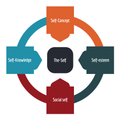 The constituent on one's self

