Syrniki: Difference between revisions
CSV import Tags: mobile edit mobile web edit |
CSV import |
||
| Line 30: | Line 30: | ||
File:Syrniki6.jpg | File:Syrniki6.jpg | ||
File:Syrniki.jpg | File:Syrniki.jpg | ||
</gallery> | |||
<gallery> | |||
File:Syrniki6.jpg|Syrniki with sour cream | |||
File:Syrniki.jpg|Traditional Syrniki | |||
</gallery> | </gallery> | ||
Revision as of 11:36, 25 February 2025
Syrniki or syrnyky are a traditional Eastern European dish, particularly popular in Russia, Ukraine, and Belarus. They are a type of pancake made from quark, a type of fresh dairy product.
History
The origins of syrniki are believed to date back to the Middle Ages, when they were a common food in monasteries. The name "syrniki" comes from the word "syr", which means "cheese" in Slavic languages. Despite this, syrniki are not made from cheese, but from quark, which is similar to cottage cheese.
Preparation
To prepare syrniki, quark is mixed with flour, eggs, and sugar, then shaped into small patties and fried until golden brown. Some recipes also include vanilla, raisins, or other flavorings. The result is a soft, creamy pancake with a slightly sweet flavor. Syrniki are typically served for breakfast or dessert, often with sour cream, jam, or honey.
Variations
There are many variations of syrniki throughout Eastern Europe. In Russia, they are often served with smetana, a type of sour cream. In Ukraine, they are sometimes made with buckwheat flour for a more savory flavor. In Belarus, syrniki are often served with lingonberry jam.
Cultural Significance
Syrniki are a beloved part of Eastern European cuisine, and they are often associated with comfort and home cooking. They are a common dish for special occasions, such as Easter and Christmas, but they are also enjoyed as a simple, everyday treat.
See Also


-
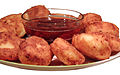 Syrniki with sour cream
 -
 Traditional Syrniki
