The Gambia: Difference between revisions
CSV import Tags: mobile edit mobile web edit |
CSV import |
||
| Line 37: | Line 37: | ||
{{Africa-stub}} | {{Africa-stub}} | ||
{{Gambia-stub}} | {{Gambia-stub}} | ||
<gallery> | |||
File:For_The_Gambia_Our_Homeland_(instrumental).ogg|For The Gambia Our Homeland (instrumental) | |||
File:Wassu_Stone_Cirles_shaunamullally_02.jpg|Wassu Stone Circles | |||
File:James_Island_and_Fort_Gambia.jpg|James Island and Fort Gambia | |||
File:The_National_Archives_UK_-_CO_1069-25-4.jpg|The National Archives UK - CO 1069-25-4 | |||
File:Gambia_1953_stamps_crop_6.jpg|Gambia 1953 stamps | |||
File:Ga-map.png|Map of The Gambia | |||
File:Dawda_Jawara_(1979).jpg|Dawda Jawara (1979) | |||
File:Yahya_Jammeh.jpg|Yahya Jammeh | |||
File:Adama_Barrow_-_2018_(39774084330)_(cropped).jpg|Adama Barrow - 2018 | |||
File:Banjul_Arch_22.jpg|Banjul Arch 22 | |||
File:Yahya_Jammeh_with_Obamas_2014.jpg|Yahya Jammeh with Obamas 2014 | |||
File:Masaneh_Kinteh_and_Carter_Ham_saluting.jpg|Masaneh Kinteh and Carter Ham saluting | |||
</gallery> | |||
Latest revision as of 21:04, 23 February 2025
The Gambia is a small West African country, bounded by Senegal, with a narrow Atlantic coastline. It's known for its diverse ecosystems around the central Gambia River. The river flows through the country’s center and empties into the Atlantic Ocean. The country is known for its rich history, diverse culture, and abundant wildlife.
History[edit]
The Gambia gained its independence from British rule on February 18, 1965. It was led by the first Prime Minister and later President, Dawda Jawara. In 1994, Jawara was overthrown in a military coup led by Yahya Jammeh, who ruled for 22 years. In 2016, Adama Barrow was elected as the President.
Geography[edit]
The Gambia is the smallest country on mainland Africa. The country is situated on either side of the Gambia River, which flows through the country's center and into the Atlantic Ocean. The country's geography is characterized by flood plains, swamps, rolling savannah, and some hills in the country's interior.
Economy[edit]
The economy of The Gambia is characterized by a large informal sector, reflecting the fact that a large part of the population is engaged in subsistence agriculture. The Gambia has limited natural resources, and relies heavily on remittances from abroad and international aid. The main cash crops are peanuts, millet, sorghum, rice, corn, sesame, cassava, and palm kernels.
Culture[edit]
The Gambia is a melting pot of various cultures, with the majority of the population being of Mandinka, Fula, and Wolof descent. The official language is English, but many Gambians also speak Mandinka, Wolof, and Fula. The country is predominantly Muslim.
Wildlife[edit]
The Gambia is home to a wide variety of wildlife, including monkeys, hippos, leopards, hyenas, antelopes, and a wide variety of bird species. The country's national parks, such as Kiang West National Park and Bao Bolong Wetland Reserve, offer opportunities for wildlife viewing.
See also[edit]
- History of the Gambia
- Geography of the Gambia
- Economy of the Gambia
- Culture of the Gambia
- Wildlife of the Gambia
 | This Africa-related article is a stub. You can help WikiMD by expanding the page. |
 | This Gambia-related article is a stub. You can help WikiMD by expanding the page. |
-
For The Gambia Our Homeland (instrumental)
-
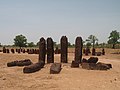 Wassu Stone Circles
 -
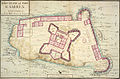 James Island and Fort Gambia
 -
 The National Archives UK - CO 1069-25-4
 -
 Gambia 1953 stamps
 -
 Map of The Gambia
 -
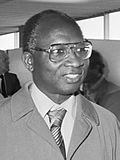 Dawda Jawara (1979)
 -
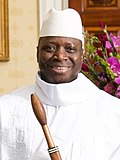 Yahya Jammeh
 -
 Adama Barrow - 2018
 -
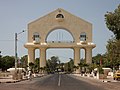 Banjul Arch 22
 -
 Yahya Jammeh with Obamas 2014
 -
 Masaneh Kinteh and Carter Ham saluting


.jpg)

_(cropped).jpg)


