Mandinka people
Mandinka people are an ethnic group indigenous to West Africa, primarily residing in the countries of Gambia, Senegal, and Guinea-Bissau. They are the largest ethnic group in Gambia and have a significant presence in other West African nations. The Mandinka people are part of the larger Mande ethnic group, which also includes the Bambara and Malinke peoples.
History[edit]
The Mandinka people trace their origins back to the Mali Empire, one of the most powerful empires in West African history. The empire was founded in the 13th century by Sundiata Keita, a Mandinka prince. The Mali Empire was known for its wealth and influence, particularly during the reign of Mansa Musa, who made a famous pilgrimage to Mecca in the 14th century.
Culture[edit]
The Mandinka people have a rich cultural heritage, with traditions in music, dance, and storytelling. The griot is a key figure in Mandinka culture, serving as a historian, storyteller, praise singer, and advisor to the community. Griots are known for their mastery of the kora, a 21-string lute-bridge-harp used extensively in West African music.
Mandinka society is traditionally organized into castes, with distinct roles for nobles, tradesmen, and griots. This social structure has been largely maintained, despite the influence of Islam and Western culture.
Religion[edit]
The majority of Mandinka people are Muslim, with Islam playing a significant role in their cultural and social life. However, traditional African religions and beliefs continue to influence their worldview, with many Mandinka people practicing a syncretic form of Islam that incorporates elements of traditional African spirituality.
Language[edit]
The Mandinka people speak Mandinka, a Mande language that is part of the larger Niger-Congo language family. Mandinka is spoken by millions of people across West Africa and has several dialects.
Cuisine[edit]
Mandinka cuisine is based on staple foods like rice, millet, and peanuts, with dishes often featuring meat, fish, and vegetables. A popular Mandinka dish is Domoda, a peanut stew served with rice.
This African ethnic group related article is a stub. You can help WikiMD by expanding it.

-
 Mansa Musa depicted in the Catalan Atlas
 -
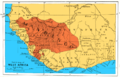 Map of the Mandingo region, 1906
 -
 Marabout Mandingue by Boilat
 -
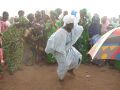 Mandinka people
 -
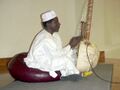 Mandinka people
 -
 Mandinka sabre
 -
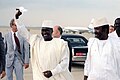 Ahmed Sékou Touré in Washington DC, 1982
 -
 Tiken Jah Fakoly
 -
 Keita in August 2008 at Joan Gamper Trophy


Medical Disclaimer: WikiMD is for informational purposes only and is not a substitute for professional medical advice. Content may be inaccurate or outdated and should not be used for diagnosis or treatment. Always consult your healthcare provider for medical decisions. Verify information with trusted sources such as CDC.gov and NIH.gov. By using this site, you agree that WikiMD is not liable for any outcomes related to its content. See full disclaimer.
Credits:Most images are courtesy of Wikimedia commons, and templates, categories Wikipedia, licensed under CC BY SA or similar.
Translate page: - East Asian
中文,
日本,
한국어,
South Asian
हिन्दी,
தமிழ்,
తెలుగు,
Urdu,
ಕನ್ನಡ,
Southeast Asian
Indonesian,
Vietnamese,
Thai,
မြန်မာဘာသာ,
বাংলা
European
español,
Deutsch,
français,
Greek,
português do Brasil,
polski,
română,
русский,
Nederlands,
norsk,
svenska,
suomi,
Italian
Middle Eastern & African
عربى,
Turkish,
Persian,
Hebrew,
Afrikaans,
isiZulu,
Kiswahili,
Other
Bulgarian,
Hungarian,
Czech,
Swedish,
മലയാളം,
मराठी,
ਪੰਜਾਬੀ,
ગુજરાતી,
Portuguese,
Ukrainian

