Prostaglandin inhibitors: Difference between revisions
CSV import Tags: mobile edit mobile web edit |
CSV import |
||
| Line 33: | Line 33: | ||
{{pharmacology-stub}} | {{pharmacology-stub}} | ||
<gallery> | |||
File:Detailed_diagram_of_an_endoscopic_retrograde_cholangio_pancreatography_(ERCP)_CRUK_001.svg|Prostaglandin inhibitors | |||
File:Osteoarthritis_--_Smart-Servier.jpg|Osteoarthritis | |||
File:Rheumatoid_arthritis_--_Smart-Servier.jpg|Rheumatoid arthritis | |||
File:An_Asthma_patient_taking_medication_using_an_inhaler.png|Asthma patient using an inhaler | |||
File:Gastric_Ulcer.jpg|Gastric Ulcer | |||
File:Methylprednisolone_inhibits_the_HPA_axis.png|Methylprednisolone inhibits the HPA axis | |||
File:Rapid_horizontal_congenital_nystagmus.gif|Rapid horizontal congenital nystagmus | |||
File:Cushing's_syndrome_(vector_image).svg|Cushing's syndrome | |||
</gallery> | |||
Latest revision as of 12:24, 18 February 2025
Prostaglandin Inhibitors
Prostaglandin inhibitors are a class of drugs that reduce the production of prostaglandins, lipid compounds that have various roles in the body, including mediating inflammation, pain, and fever. These inhibitors are widely used in the treatment of pain, fever, and inflammation caused by various conditions, including arthritis, menstrual cramps, and injury. This article provides an overview of prostaglandin inhibitors, including their mechanism of action, types, clinical uses, and potential side effects.
Mechanism of Action[edit]
Prostaglandin inhibitors work by blocking the action of the enzyme cyclooxygenase (COX), which is crucial in the biosynthesis of prostaglandins. There are two main isoforms of the cyclooxygenase enzyme: COX-1 and COX-2. COX-1 is involved in the production of prostaglandins that protect the stomach lining and support platelet function, while COX-2 is primarily involved in inflammation and pain. Prostaglandin inhibitors can be classified based on their selectivity for COX-1 and COX-2 enzymes.
Types[edit]
There are two main types of prostaglandin inhibitors:
- Non-selective COX inhibitors: These drugs inhibit both COX-1 and COX-2 enzymes. Examples include aspirin, ibuprofen, and naproxen. They are commonly used for their analgesic, antipyretic, and anti-inflammatory effects.
- COX-2 selective inhibitors: Also known as coxibs, these drugs selectively inhibit the COX-2 enzyme, reducing the risk of gastrointestinal side effects associated with non-selective COX inhibitors. Examples include celecoxib and etoricoxib.
Clinical Uses[edit]
Prostaglandin inhibitors are used to treat a variety of conditions, including:
- Pain relief, particularly for musculoskeletal pain, headache, and dental pain
- Reduction of fever
- Management of inflammatory conditions such as osteoarthritis and rheumatoid arthritis
- Menstrual pain relief
Potential Side Effects[edit]
While prostaglandin inhibitors are generally safe, they can cause side effects, especially with long-term use. Potential side effects include:
- Gastrointestinal issues, such as stomach ulcers and gastrointestinal bleeding, particularly with non-selective COX inhibitors
- Increased risk of cardiovascular events, such as heart attack and stroke, particularly with COX-2 selective inhibitors
- Kidney function impairment
- Allergic reactions
Conclusion[edit]
Prostaglandin inhibitors are an important class of medications used to manage pain, fever, and inflammation. While they offer significant benefits, it is important to use them under the guidance of a healthcare professional to minimize the risk of side effects.

-
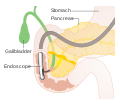 Prostaglandin inhibitors
 -
 Osteoarthritis
 -
 Rheumatoid arthritis
 -
 Asthma patient using an inhaler
 -
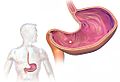 Gastric Ulcer
 -
 Methylprednisolone inhibits the HPA axis
 -
 Rapid horizontal congenital nystagmus
 -
 Cushing's syndrome
_CRUK_001.svg)


.svg)
