Fodder: Difference between revisions
From WikiMD's Medical Encyclopedia
CSV import |
CSV import |
||
| Line 29: | Line 29: | ||
{{stub}} | {{stub}} | ||
<gallery> | |||
File:Fodder_factory02.jpg|Fodder | |||
File:Manual_cutting_of_green_fodder_in_Punjab.jpg|Manual cutting of green fodder in Punjab | |||
File:Round_hay_bale_at_dawn02.jpg|Round hay bale at dawn | |||
File:Newton_of_Cawdor_stack_of_bales_-_geograph.org.uk_-_545290.jpg|Newton of Cawdor stack of bales | |||
File:African_boy_transporting_fodder_by_bicycle_edit.jpg|African boy transporting fodder by bicycle | |||
File:A_traditional_method_of_storing_wheat_hay_in_Punjab.jpg|A traditional method of storing wheat hay in Punjab | |||
File:Green_fodder.jpg|Green fodder | |||
File:Farmer_mills_branches_of_shrubs_for_the_production_of_animal_fodder_in_Namibia.jpg|Farmer mills branches of shrubs for the production of animal fodder in Namibia | |||
File:Опытная_дробилка_кормов_Ф-IМ,_вид_со_стороны_электропривода.png|Опытная дробилка кормов Ф-IМ, вид со стороны электропривода | |||
File:Fodder_Solutions.jpg|Fodder Solutions | |||
</gallery> | |||
Latest revision as of 12:23, 18 February 2025
Fodder is a type of animal feed, a category of agricultural products that is used specifically to feed domesticated livestock such as cattle, goats, sheep, horses, chickens and pigs. "Fodder" refers particularly to food given to animals (as opposed to foraging), including hay, straw, silage, compressed and pelleted feeds, oils and mixed rations, and sprouted grains and legumes.
Types of Fodder[edit]
There are several types of fodder that can be used to feed livestock. These include:
- Hay: This is grass, legumes, or other herbaceous plants that have been cut, dried, and stored for use as animal fodder. It is typically used when fresh grass is not available or when fresh fodder is in short supply.
- Straw: This is the dry stalks of cereal plants, after the grain and chaff have been removed. It is used as a bulky fodder for animals.
- Silage: This is fermented, high-moisture stored fodder which can be fed to cattle, sheep and other such ruminants or used as a biofuel feedstock for anaerobic digesters.
- Compressed and Pelleted Feeds: These are feeds that have been compressed into a more compact form for easier storage and feeding. They can be made from a variety of materials, including hay, straw, and grains.
- Oils and Mixed Rations: These are feeds that have been mixed with oils to increase their energy density. They are typically used for animals that require a high-energy diet, such as dairy cows.
- Sprouted Grains and Legumes: These are grains and legumes that have been allowed to sprout before being fed to animals. They are often used as a way to increase the nutritional value of the feed.
Benefits of Fodder[edit]
Feeding animals with fodder has several benefits. It can help to improve the health and productivity of the animals, as well as reduce the cost of feeding. Fodder can also be produced locally, reducing the need for imported feed.
See Also[edit]
 | |
|---|---|
 |
 |
-
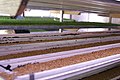 Fodder
 -
 Manual cutting of green fodder in Punjab
 -
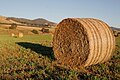 Round hay bale at dawn
 -
 Newton of Cawdor stack of bales
 -
 African boy transporting fodder by bicycle
 -
 A traditional method of storing wheat hay in Punjab
 -
 Green fodder
 -
 Farmer mills branches of shrubs for the production of animal fodder in Namibia
 -
 Опытная дробилка кормов Ф-IМ, вид со стороны электропривода
 -
 Fodder Solutions


