Castella: Difference between revisions
CSV import Tags: mobile edit mobile web edit |
CSV import |
||
| Line 20: | Line 20: | ||
{{Japanese-dessert-stub}} | {{Japanese-dessert-stub}} | ||
{{food-stub}} | {{food-stub}} | ||
<gallery> | |||
File:Castella,made_in_nagasaki-city,japan.JPG|Castella | |||
File:Nagasaki_kasutera_129349331_5d6c87fd4f_o_d.jpg|Castella | |||
File:Pão-de-ló.jpg|Castella | |||
File:Taiwanese_Casetella.jpg|Castella | |||
File:Taiwanese_Castella_1.png|Castella | |||
File:Taiwanese_Castella_2.png|Castella | |||
File:Taiwanese_Castella_3.png|Castella | |||
File:Taiwanese_Castella_4.png|Castella | |||
File:ファミマの台湾カステラ.jpg|Castella | |||
File:Nagasaki_BunmeidoubTotal_headquarters_2011.jpg|Castella | |||
</gallery> | |||
Latest revision as of 12:15, 18 February 2025
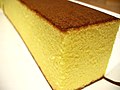
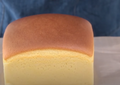
Castella is a popular Japanese sponge cake made of sugar, flour, eggs, and starch syrup. Now a specialty of Nagasaki, the cake was brought to Japan by Portuguese merchants in the 16th century. The name is derived from Portuguese Pão de Castela, meaning "bread from Castile". Castella cake is usually consumed with green tea.
History[edit]
The cake is believed to have been introduced to Japan in the 16th century by Portuguese merchants. The name castella comes from the Portuguese Pão de Castela, meaning "bread from Castile". Over time, the recipe was altered to suit Japanese tastes. Castella cakes became a specialty of the Nagasaki region, and remain a popular treat in Japan today.
Preparation and Varieties[edit]
Castella is made by whipping eggs, then adding sugar, flour, and starch syrup. The batter is then poured into a rectangular mold and baked. The cake is known for its sweet, moist texture and golden color. There are several varieties of castella cake, including honey castella, which includes honey in the batter, and brown sugar castella, which uses brown sugar instead of white.
Cultural Significance[edit]
Castella cake holds a significant place in Japanese culture. It is often given as a gift, particularly during the Ochugen and Oseibo gift-giving seasons. It is also a popular choice for celebration cakes, such as birthdays and weddings.
See Also[edit]
This article is a Japanese dessert-related stub. You can help WikiMD by expanding it!

-
 Castella
 -
 Castella
 -
 Castella
 -
 Castella
 -
 Castella
 -
 Castella
 -
 Castella
 -
 Castella
 -
 Castella
 -
 Castella


