Carl Friedrich Gauss: Difference between revisions
CSV import |
CSV import |
||
| Line 33: | Line 33: | ||
{{mathematician-stub}} | {{mathematician-stub}} | ||
<gallery> | |||
File:Carl_Friedrich_Gauss_1840_by_Jensen.jpg|Carl Friedrich Gauss | |||
File:Braunschweig_Brunswick_Geburtshaus_CF_Gauss_(1914).jpg|Birthplace of Carl Friedrich Gauss | |||
File:Goe.Kurze.Geismarstr.Gauss.Wohnhaus.JPG|Gauss's residence in Göttingen | |||
File:Goettingen_Sternwarte_01.jpeg|Göttingen Observatory | |||
File:Universitäts-Sternwarte_Göttingen_02.jpg|University Observatory Göttingen | |||
File:Die_Göttinger_Sieben_von_Eduard_Ritmüller.jpg|The Göttingen Seven by Eduard Ritmüller | |||
File:Carl_Friedrich_Gauss_on_his_Deathbed,_1855.jpg|Carl Friedrich Gauss on his Deathbed, 1855 | |||
File:Minna_Gauß_geb._Waldeck,_002.jpg|Minna Gauss née Waldeck | |||
File:Joseph_Gauß,_001.jpg|Joseph Gauss | |||
File:Joseph_Gauß,_003.jpg|Joseph Gauss | |||
File:Minna_Ewald_geb._Gauß,_003.jpg|Minna Ewald née Gauss | |||
File:Ewald,_Georg_Heinrich_August_(1803-1875).jpg|Georg Heinrich August Ewald | |||
</gallery> | |||
Latest revision as of 12:04, 18 February 2025
Carl Friedrich Johann Gauss (30 April 1777 – 23 February 1855) was a German mathematician and physicist who made significant contributions to many fields, including number theory, statistics, analysis, differential geometry, geophysics, electrostatics, astronomy, and optics. Often referred to as the "Prince of Mathematicians" and "greatest mathematician since antiquity," Gauss had an exceptional influence on many fields of mathematics and science and is ranked as one of history's most influential mathematicians.
Early Life[edit]
Gauss was born in Braunschweig, in the Duchy of Brunswick-Lüneburg (now part of Germany). His mother was illiterate and never recorded the date of his birth, remembering only that he was born on a Wednesday, eight days before the Feast of Ascension, which occurs 40 days after Easter. Gauss later solved the puzzle of his birthdate in the context of mathematics. He was a child prodigy, with many of his remarkable abilities in calculation apparent by the age of three.
Contributions to Mathematics[edit]
Gauss's contributions to mathematics are extensive. In 1799, he proved the fundamental theorem of algebra, which states that every non-constant single-variable polynomial over the complex numbers has at least one root. Gauss is also known for his contributions to number theory, as detailed in his book Disquisitiones Arithmeticae published in 1801. This work laid the groundwork for modern number theory and was hailed for its rigorous approach.
In the field of statistics, Gauss introduced the concept of the normal distribution and the method of least squares estimation, which are foundational to statistical theory and practice. His work in differential geometry included the Theorema Egregium, proving that the curvature of a surface is an intrinsic property.
Gauss also made significant contributions to physical science, with his work on magnetism leading to the formulation of Gauss's law for magnetism, one of the four Maxwell's equations that underpin all of modern electromagnetism.
Contributions to Astronomy[edit]
In astronomy, Gauss made notable contributions including the prediction of the location of the dwarf planet Ceres. After its discovery in 1801, Ceres was lost behind the sun, and astronomers were unable to predict its location. Using his mathematical methods, Gauss was able to predict its position accurately, which was a major achievement in the field.
Personal Life and Legacy[edit]
Gauss was known to be a bit reclusive and preferred not to publish work he deemed incomplete or not sufficiently innovative. This high standard meant that many of his findings were not made public until after his death. Gauss was married twice and had six children. His work has had a profound and lasting impact on the fields of mathematics and science, with many of his discoveries and theories still relevant today.
Death and Honors[edit]
Gauss died in Göttingen, Kingdom of Hanover (now Germany) in 1855. He has been honored with numerous awards and recognitions during his lifetime and posthumously. The CGS system unit of magnetic flux density is named the Gauss in his honor, and his likeness appeared on the German ten-mark banknote from 1989 until the introduction of the euro.
-
 Carl Friedrich Gauss
 -
 Birthplace of Carl Friedrich Gauss
 -
 Gauss's residence in Göttingen
 -
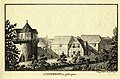 Göttingen Observatory
 -
 University Observatory Göttingen
 -
 The Göttingen Seven by Eduard Ritmüller
 -
 Carl Friedrich Gauss on his Deathbed, 1855
 -
 Minna Gauss née Waldeck
 -
 Joseph Gauss
 -
 Joseph Gauss
 -
 Minna Ewald née Gauss
 -
Georg Heinrich August Ewald

.jpg)


.jpg)