Inca Kola: Difference between revisions
CSV import Tags: mobile edit mobile web edit |
CSV import Tags: mobile edit mobile web edit |
||
| Line 27: | Line 27: | ||
[[Category:Coca-Cola brands]] | [[Category:Coca-Cola brands]] | ||
{{food-stub}} | {{food-stub}} | ||
<gallery> | |||
File:IncaKolaBottleGlass.jpg|Inca Kola bottle and glass | |||
File:Diet_Inca_Kola.jpg|Diet Inca Kola | |||
File:Inca_kola_in_texas.jpg|Inca Kola in Texas | |||
File:Inca_Kola_Slogan_El_Sabor_del_Peru.jpg|Inca Kola Slogan "El Sabor del Perú" | |||
File:Inca_Kola_Gordita_191207.JPG|Inca Kola Gordita | |||
</gallery> | |||
Latest revision as of 05:01, 18 February 2025
Inca Kola is a popular soft drink that originated in Peru. It is often described as having a sweet, fruity flavor, similar to bubblegum, and is known for its distinctive yellow color.
History[edit]
Inca Kola was first created in 1935 by British immigrant Joseph Robinson Lindley. Using a blend of native Peruvian plants and fruits, Lindley was able to create a unique flavor that quickly became popular among Peruvians. The drink was originally marketed as "The Golden Kola" and was sold in glass bottles.
In the 1940s, Inca Kola began to be sold in larger bottles, making it a popular choice for family gatherings and special occasions. By the 1970s, it had become the most popular soft drink in Peru, surpassing even international brands like Coca-Cola.
In 1999, due to its popularity, The Coca-Cola Company purchased a 50% stake in the brand. Today, Inca Kola is part of the Coca-Cola Company's international portfolio and is sold in many countries around the world.
Ingredients[edit]
The exact recipe of Inca Kola is a closely guarded secret. However, it is known that the drink contains carbonated water, sugar, citric acid, and flavorings. The distinctive yellow color is achieved through the use of FD&C Yellow No. 5, also known as tartrazine.
Cultural significance[edit]
Inca Kola is more than just a soft drink in Peru. It is a symbol of national pride and is often served at important events and celebrations. It is also commonly used in Peruvian cooking, particularly in marinades for chicken and other meats.
See also[edit]

-
 Inca Kola bottle and glass
 -
 Diet Inca Kola
 -
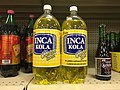 Inca Kola in Texas
 -
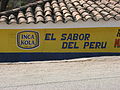 Inca Kola Slogan "El Sabor del Perú"
 -
 Inca Kola Gordita


