Snow pea: Difference between revisions
CSV import |
CSV import |
||
| Line 24: | Line 24: | ||
{{food-stub}} | {{food-stub}} | ||
== Snow pea == | |||
<gallery> | |||
File:Snow_Pea_on_Plant.JPG|Snow pea on plant | |||
File:Snow_peas.jpg|Snow peas | |||
File:2DU_Kenya_83_(5366710925).jpg|Snow pea field in Kenya | |||
File:Snow_pea_flowers.jpg|Snow pea flowers | |||
File:Sautéed_snow_pea_shoots,_Mayflower_Restaurant.jpg|Sautéed snow pea shoots | |||
</gallery> | |||
Latest revision as of 05:01, 18 February 2025
Snow pea (Pisum sativum var. saccharatum), also known as Chinese pea pod, is a variety of pea eaten whole in its pod while still unripe. The name "snow pea" comes from the white color of its flowers, although the pods themselves are typically a vibrant green.
Description[edit]
Snow peas are a type of legume, similar to the green pea. However, unlike green peas, snow peas are harvested before the peas inside have fully matured. This results in a pod that is flat and thin, with small peas visible through the pod if left to mature. The entire pod, including the peas, is edible and has a sweet, mild flavor.
Cultivation[edit]
Snow peas are a cool-season crop, thriving in temperatures between 55 and 65 degrees Fahrenheit. They are typically planted in the early spring or late fall, and can be harvested approximately 60 days after planting. Snow peas prefer well-drained soil and require regular watering.
Culinary Uses[edit]
Snow peas are commonly used in Asian cuisine, particularly in stir-fry dishes. They can be eaten raw, steamed, or sautéed, and are often paired with other vegetables such as bell peppers, carrots, and onions. Snow peas are also a popular addition to salads and pasta dishes.
Nutritional Value[edit]
Snow peas are low in calories and high in fiber, vitamin C, and iron. They also contain a small amount of protein and are a good source of vitamin K, which aids in blood clotting and bone health.
See Also[edit]

Snow pea[edit]
-
 Snow pea on plant
 -
 Snow peas
 -
 Snow pea field in Kenya
 -
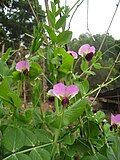 Snow pea flowers
 -
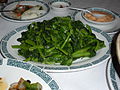 Sautéed snow pea shoots


.jpg)


