Near-infrared spectroscopy: Difference between revisions
CSV import |
CSV import |
||
| Line 30: | Line 30: | ||
[[Category:Neuroscience]] | [[Category:Neuroscience]] | ||
{{Medicine-stub}} | {{Medicine-stub}} | ||
== Near-infrared_spectroscopy == | |||
<gallery> | |||
File:Dichloromethane_near_IR_spectrum.png|Dichloromethane near IR spectrum | |||
File:Ethanol_near_IR_spectrum.png|Ethanol near IR spectrum | |||
File:Infrascanner_1000.jpg|Infrascanner 1000 device | |||
File:FNIRS_head_Hitachi_ETG4000_2.jpg|FNIRS head Hitachi ETG4000 | |||
</gallery> | |||
Latest revision as of 04:56, 18 February 2025
Near-infrared spectroscopy (NIRS) is a spectroscopic method that uses the near-infrared region of the electromagnetic spectrum (from about 780 nm to 2500 nm). It is used in various fields such as pharmacology, agriculture, and neuroscience for the purpose of chemical analysis, medical diagnosis, and the study of brain function, respectively. NIRS is particularly noted for its non-invasive, safe, and relatively inexpensive means of measuring both oxygenation and hemodynamic responses in the brain and muscle tissue.
Principles[edit]
NIRS works on the principle that molecules absorb specific frequencies of light. This absorption alters the intensity of light, which can be measured and analyzed to determine the concentration of various substances in a sample. In medical contexts, NIRS is often used to monitor tissue oxygenation and blood flow. The technique exploits the different absorption spectra of oxyhemoglobin and deoxyhemoglobin to estimate their concentrations in blood, providing insights into tissue viability and function.
Applications[edit]
Medical Diagnosis[edit]
In medicine, NIRS is applied in several areas including neonatal care where it is used to monitor the oxygenation of the brain in premature infants. It is also utilized in sports medicine to assess muscle performance and in critical care settings for monitoring cerebral oxygenation.
Functional Brain Imaging[edit]
NIRS is also a valuable tool in neuroscience for studying brain function. It is used in functional near-infrared spectroscopy (fNIRS), which measures brain activity by detecting changes in blood flow and oxygenation in response to neural activity. This application is particularly useful for understanding cognitive processes and for neurorehabilitation.
Agriculture and Food Industry[edit]
In agriculture, NIRS is used for assessing the quality of soil and crops. In the food industry, it provides a rapid and non-destructive means of analyzing food composition, such as moisture, fat, protein, and sugar content.
Advantages and Limitations[edit]
NIRS offers several advantages, including its non-invasive nature, the ability to provide continuous monitoring, and its safety, as it does not involve ionizing radiation. However, its accuracy can be affected by external factors such as ambient light and the thickness of the tissue being examined. Moreover, NIRS has a limited penetration depth, which restricts its use to superficial tissues.
Future Directions[edit]
Research in NIRS technology continues to advance, with developments aimed at improving its sensitivity, specificity, and usability. Innovations such as wearable NIRS devices are being explored for continuous monitoring of health parameters in outpatient settings. Additionally, combining NIRS with other imaging modalities, such as magnetic resonance imaging (MRI), is a growing area of interest that promises to enhance the understanding of complex biological processes.
See Also[edit]

Near-infrared_spectroscopy[edit]
-
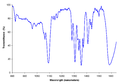 Dichloromethane near IR spectrum
 -
 Ethanol near IR spectrum
 -
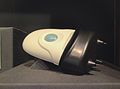 Infrascanner 1000 device
 -
 FNIRS head Hitachi ETG4000


