Paska (bread): Difference between revisions
CSV import |
CSV import Tags: mobile edit mobile web edit |
||
| Line 22: | Line 22: | ||
{{food-stub}} | {{food-stub}} | ||
== Paska (bread) == | |||
<gallery> | |||
File:Martiniouk_Paska.JPG|Paska bread with traditional decorations | |||
File:Lob_NARkult_02.JPG|Ukrainian Easter bread display | |||
File:PASKA2.JPG|Homemade Paska bread | |||
File:PimonenkoNK_PashalZautrRYB.jpg|"Easter Morning" by Mykola Pymonenko, depicting Paska | |||
File:Pasca.JPG|Traditional Paska bread | |||
</gallery> | |||
Latest revision as of 04:39, 18 February 2025
Paska is a traditional Easter bread that is a significant part of Easter celebrations in various Eastern European and Slavic cultures. It is particularly popular among Ukrainians, Russians, Belarusians, and Poles. Paska is known for its rich, sweet dough, which is often enhanced with ingredients such as eggs, milk, sugar, and butter, making it a luxurious and festive bread. The bread is typically baked in a round form, symbolizing the sun, life, and resurrection associated with the Easter season.
Ingredients and Preparation[edit]
The basic ingredients for Paska include flour, yeast, eggs, milk, sugar, and butter. Variations may include the addition of raisins, citrus zest, or vanilla for flavoring. The dough is enriched with a generous amount of eggs and butter, giving it a rich and tender crumb. After the dough is prepared, it is allowed to rise until it doubles in size. The risen dough is then shaped into round loaves or placed in special Paska molds, which are often decorated with religious symbols or designs that reflect the celebratory nature of the bread.
Traditions and Symbolism[edit]
Paska bread holds deep symbolic meaning in the Easter traditions of Eastern European and Slavic communities. It is often blessed during Easter services, along with other traditional foods such as eggs (particularly Pysanky, which are decorated Easter eggs) and meat. The round shape of the bread is symbolic of Jesus Christ's resurrection and eternal life, while the decorative elements on the bread, such as crosses or braids, have religious significance as well.
Serving and Consumption[edit]
Paska is traditionally served as part of the Easter meal, which breaks the Lenten fast. It is often sliced and spread with butter or served alongside other festive dishes. In some traditions, the top of the Paska loaf is cut off and used as a lid, which is then lifted to reveal the soft bread inside, symbolizing the opening of Christ's tomb.
Variations[edit]
While the basic recipe for Paska is widely shared across Eastern Europe and the Slavic world, there are regional variations that reflect local tastes and traditions. For example, in some areas, the bread may be more heavily spiced or include additional ingredients like nuts or chocolate. Despite these variations, the core elements of Paska—its rich, sweet dough and its association with Easter and resurrection—remain consistent.
Cultural Significance[edit]
Paska is more than just a bread; it is a symbol of faith, family, and the renewal of life. Preparing and sharing Paska is a way for families and communities to connect with their cultural and religious heritage, marking the end of Lent and the celebration of Easter with a special, meaningful food.

Paska (bread)[edit]
-
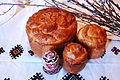 Paska bread with traditional decorations
 -
 Ukrainian Easter bread display
 -
Homemade Paska bread
-
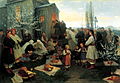 "Easter Morning" by Mykola Pymonenko, depicting Paska
 -
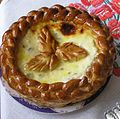 Traditional Paska bread


