Nutrient pollution: Difference between revisions
CSV import |
CSV import |
||
| Line 25: | Line 25: | ||
[[Category:Agriculture and the environment]] | [[Category:Agriculture and the environment]] | ||
{{environment-stub}} | {{environment-stub}} | ||
<gallery> | |||
File:Runoff_of_soil_&_fertilizer.jpg|Runoff of soil and fertilizer | |||
File:Nutrient_sources_Gulf-Mex_&_Chesbay_-_EPA_2010.png|Nutrient sources Gulf of Mexico and Chesapeake Bay - EPA 2010 | |||
File:NRCSTN83003_-_Tennessee_(6251)(NRCS_Photo_Gallery).jpg|Nutrient pollution | |||
File:Harmful_Algal_Bloom_in_Western_Lake_Erie,_July_9,_2018_(41641076380).jpg|Harmful Algal Bloom in Western Lake Erie, July 9, 2018 | |||
</gallery> | |||
Latest revision as of 04:38, 18 February 2025
Nutrient pollution is a form of water pollution caused by the excess of certain nutrients, particularly nitrogen and phosphorus, in water bodies. These nutrients, while essential for plant and animal growth, can cause significant environmental and health problems when present in large amounts.
Causes[edit]
The primary sources of nutrient pollution are agriculture, urban runoff, and wastewater treatment plants. Agricultural activities, such as the use of fertilizers and manure, can lead to the runoff of nutrients into nearby water bodies. Urban runoff, which includes stormwater and snowmelt, can carry nutrients from lawns, gardens, and septic systems into water bodies. Wastewater treatment plants can also contribute to nutrient pollution if they do not adequately remove nutrients from the water before discharging it.
Effects[edit]
Excessive nutrients in water bodies can lead to a number of environmental problems. One of the most significant is eutrophication, a process in which nutrient-rich water leads to the rapid growth of algae and other aquatic plants. This can result in algal blooms, which can deplete oxygen levels in the water, harm aquatic life, and produce toxins that are harmful to humans and animals.
Nutrient pollution can also contribute to the formation of dead zones, areas in water bodies where oxygen levels are so low that most marine life cannot survive. These zones can have significant impacts on commercial and recreational fishing industries.
Prevention and Control[edit]
Preventing and controlling nutrient pollution involves a combination of regulatory measures, best management practices, and public education. Regulatory measures can include laws and regulations that limit the amount of nutrients that can be discharged from agricultural and urban sources. Best management practices can include techniques such as crop rotation, cover crops, and buffer strips that can help to reduce nutrient runoff from agricultural lands. Public education can help to raise awareness about the causes and effects of nutrient pollution and encourage individuals to take actions to reduce their own contributions to the problem.
See Also[edit]

This article is a environment-related stub. You can help WikiMD by expanding it!
-
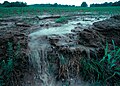 Runoff of soil and fertilizer
 -
 Nutrient sources Gulf of Mexico and Chesapeake Bay - EPA 2010
 -
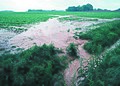 Nutrient pollution
 -
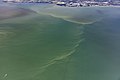 Harmful Algal Bloom in Western Lake Erie, July 9, 2018


(NRCS_Photo_Gallery).jpg)
.jpg)
