Infant formula: Difference between revisions
CSV import Tags: mobile edit mobile web edit |
CSV import |
||
| Line 39: | Line 39: | ||
{{Infant nutrition}} | {{Infant nutrition}} | ||
{{Food-stub}} | {{Food-stub}} | ||
<gallery> | |||
File:Infant_formula.jpg|Infant formula | |||
File:Flaskmatning.jpeg|Feeding with a bottle | |||
File:Nestle-milk-poster.jpg|Nestlé milk poster | |||
File:Nestlé_Food_advertisement,_1915.jpg|Nestlé Food advertisement, 1915 | |||
</gallery> | |||
Latest revision as of 04:38, 18 February 2025
Infant formula is a manufactured food designed and marketed for feeding to babies and infants under 12 months of age, usually prepared for bottle-feeding or cup-feeding from powder (mixed with water) or liquid (with or without additional water). The U.S. Federal Food, Drug, and Cosmetic Act (FFDCA) defines infant formula as "a food which purports to be or is represented for special dietary use solely as a food for infants by reason of its simulation of human milk or its suitability as a complete or partial substitute for human milk".
History[edit]
The first infant formula was invented in 1865 by Justus von Liebig. Liebig's formula was a powdered mixture of cow's milk, wheat and malt flour, and potassium bicarbonate. The product was initially sold as a nutritional supplement for infants who were unable to breastfeed.
Composition[edit]
Infant formula is designed to mimic human milk. It typically contains a mixture of proteins, fats, carbohydrates, vitamins, and minerals. The exact composition of infant formula can vary depending on the brand and the specific needs of the infant.
Types of Infant Formula[edit]
There are several types of infant formula available, including cow's milk-based formula, soy-based formula, and specialized formulas for infants with specific health conditions.
Cow's Milk-Based Formula[edit]
Most infant formulas are made from cow's milk that has been altered to resemble breast milk. This involves adjusting the levels of different proteins and adding carbohydrates, fats, vitamins, and minerals.
Soy-Based Formula[edit]
Soy-based formulas are often used for infants who are intolerant or allergic to cow's milk. They are also used for infants whose parents prefer a vegetarian diet.
Specialized Formulas[edit]
Specialized formulas are designed for infants with specific health conditions, such as premature infants or infants with metabolic disorders.
Health Considerations[edit]
While infant formula is designed to mimic breast milk, it is not an exact match. Breast milk contains antibodies and other immune factors that help protect the infant against disease, which are not present in infant formula. However, infant formula is a safe and effective alternative for infants who cannot be breastfed.
Regulation[edit]
In many countries, infant formula is regulated by government agencies. In the United States, for example, the Food and Drug Administration (FDA) sets standards for the composition of infant formula.
See Also[edit]
| Infant nutrition | ||||||||||
|---|---|---|---|---|---|---|---|---|---|---|
This infant nutrition related article is a stub.
|

-
 Infant formula
 -
 Feeding with a bottle
 -
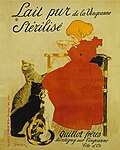 Nestlé milk poster
 -
 Nestlé Food advertisement, 1915


