Kopytka: Difference between revisions
CSV import |
CSV import |
||
| Line 30: | Line 30: | ||
{{Poland-food-stub}} | {{Poland-food-stub}} | ||
{{food-stub}} | {{food-stub}} | ||
<gallery> | |||
File:06379_potato_noodles,_sanok.png|Kopytka | |||
File:Litowskija_kapytki.jpg|Kopytka | |||
File:Kopytka_in_creamy_mushroom_sauce,_Brisbane,_2020.jpg|Kopytka in creamy mushroom sauce | |||
</gallery> | |||
Latest revision as of 04:00, 18 February 2025
Kopytka are a traditional Polish dish, similar to Italian gnocchi. The name 'kopytka' translates to 'little hooves', which refers to the shape of the dumplings, resembling small animal hooves.
History[edit]
The origins of kopytka are rooted in Polish culinary traditions. They were a common dish in the rural areas of Poland, where economical and filling meals were necessary. The simplicity of the ingredients - mainly potatoes and flour - made kopytka a popular choice.
Preparation[edit]
Kopytka are made by combining mashed potatoes with flour, an egg, and sometimes onions or cheese. The dough is then rolled out and cut into small, hoof-shaped pieces. These are boiled until they float to the surface, indicating they are cooked.
Kopytka can be served as a main dish or a side dish. They are often served with a variety of accompaniments, such as sauerkraut, mushrooms, or meat. They can also be served sweet, with sugar, fruit compote, or cinnamon.
Variations[edit]
There are several regional variations of kopytka. In some regions, they are made without potatoes, using only flour and eggs. Other variations include the addition of cottage cheese, buckwheat groats, or sauerkraut.
Cultural Significance[edit]
Kopytka hold a significant place in Polish culinary culture. They are often made for special occasions and family gatherings. They are also a popular dish in Polish restaurants, both in Poland and abroad.
See Also[edit]
This Poland-food related article is a stub. You can help WikiMD by expanding it.

-
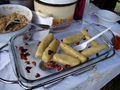 Kopytka
 -
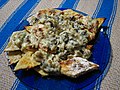 Kopytka
 -
 Kopytka in creamy mushroom sauce


