Glomus cell: Difference between revisions
CSV import |
CSV import |
||
| Line 22: | Line 22: | ||
[[Category:Human cells]] | [[Category:Human cells]] | ||
{{cell-biology-stub}} | {{cell-biology-stub}} | ||
<gallery> | |||
File:Gray's_Anatomy_with_markup_showing_carotid_artery_bifurcation.png|Gray's Anatomy with markup showing carotid artery bifurcation | |||
File:Neural_Crest.png|Neural Crest | |||
</gallery> | |||
Latest revision as of 00:48, 18 February 2025
Glomus cell is a type of cell that is found in the retina, ear, and chemoreceptors of the body. These cells are known for their role in oxygen sensing and regulation of blood flow.
Structure[edit]
Glomus cells are small, round cells that are densely packed with mitochondria. They have a unique structure that allows them to respond to changes in oxygen levels. The cell membrane of a glomus cell contains ion channels that are sensitive to changes in the concentration of oxygen in the surrounding environment.
Function[edit]
The primary function of glomus cells is to sense changes in oxygen levels and respond accordingly. In the retina, glomus cells help to regulate blood flow to ensure that the retina receives enough oxygen. In the ear, they play a role in the detection of sound. In chemoreceptors, glomus cells respond to changes in oxygen levels by altering the rate of respiration.
Clinical significance[edit]
Abnormalities in glomus cells can lead to a variety of medical conditions. For example, glomus tumors, which are benign tumors that arise from glomus cells, can cause pain and sensitivity to temperature changes. In addition, mutations in the genes that regulate the function of glomus cells can lead to conditions such as familial dysautonomia, a disorder that affects the nervous system.
See also[edit]
References[edit]
<references />

This article is a cell biology stub. You can help WikiMD by expanding it!
-
 Gray's Anatomy with markup showing carotid artery bifurcation
 -
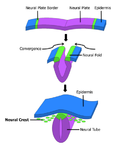 Neural Crest


