Artificial vagina: Difference between revisions
CSV import Tags: mobile edit mobile web edit |
CSV import |
||
| Line 1: | Line 1: | ||
== Arabs == | |||
The term "Arabs" refers to a diverse group of people who primarily inhabit the Arab world, which includes 22 countries in the Middle East and North Africa. The Arab identity is defined by a shared language, [[Arabic]], and cultural heritage, although the Arab world is home to a variety of ethnicities, religions, and traditions. | |||
== | === History === | ||
The history of the Arabs dates back to ancient times, with the earliest known references to Arab tribes appearing in Assyrian texts from the 9th century BCE. The [[Nabataeans]], an ancient Arab people, established a kingdom in what is now Jordan, with their capital at [[Petra]]. The Nabataeans were known for their advanced architecture and trade networks. | |||
In the 7th century CE, the rise of [[Islam]] significantly shaped Arab identity and culture. The [[Islamic Caliphates]], including the [[Umayyad]] and [[Abbasid]] dynasties, expanded Arab influence across the Middle East, North Africa, and parts of Europe and Asia. | |||
=== | === Culture === | ||
Arab culture is rich and varied, encompassing literature, music, art, and cuisine. The [[Arabic language]] is a central element of Arab identity, with its classical form used in religious texts and its modern dialects spoken across the Arab world. | |||
[[Arabic literature]] has a long and distinguished history, with notable works such as the "[[One Thousand and One Nights]]" and the poetry of [[Imru' al-Qais]]. Arab music is diverse, with traditional forms such as [[maqam]] and modern genres like [[Arab pop]]. | |||
== | === Religion === | ||
Islam is the predominant religion among Arabs, with the majority being [[Sunni Muslims]]. However, there are also significant populations of [[Shia Muslims]], [[Christians]], and other religious groups within the Arab world. The [[Kaaba]] in [[Mecca]] is the holiest site in Islam, and the annual [[Hajj]] pilgrimage is a key religious event for Muslims. | |||
[[Category: | === Modern Arab World === | ||
[[Category: | |||
Today, the Arab world is a region of significant geopolitical importance, with countries like [[Saudi Arabia]], [[Egypt]], and the [[United Arab Emirates]] playing key roles in global politics and economics. The [[Arab League]] is a regional organization that aims to promote economic, cultural, and political cooperation among its member states. | |||
The Arab world has faced numerous challenges in recent decades, including political instability, economic disparities, and social change. The [[Arab Spring]] uprisings of the early 2010s highlighted demands for political reform and greater freedoms across the region. | |||
== Related pages == | |||
* [[Arabic language]] | |||
* [[Islam]] | |||
* [[Arab League]] | |||
* [[Arab Spring]] | |||
== Gallery == | |||
<gallery> | |||
Arab_people_around_the_world.svg|Map showing the distribution of Arab people around the world. | |||
Treasury_petra_crop.jpeg|The Treasury at Petra, an iconic symbol of the Nabataean Kingdom. | |||
Epitaph_Imru-l-Qays_Louvre_AO4083.jpg|Epitaph of Imru' al-Qais, a pre-Islamic Arab poet. | |||
François-Joseph_Navez_-_Agar_et_Ismaël_dans_le_désert.jpg|"Hagar and Ishmael in the Desert" by François-Joseph Navez. | |||
Assyrians_pursue_Arabs_on_camelback._Ashurbanipal,_North_Palace_of_Nineveh._660-650_BCE.jpg|Assyrian relief depicting Arabs on camelback. | |||
</gallery> | |||
[[Category:Arab culture]] | |||
[[Category:Middle Eastern ethnic groups]] | |||
[[Category:North African ethnic groups]] | |||
Latest revision as of 17:12, 11 February 2025
Arabs[edit]
The term "Arabs" refers to a diverse group of people who primarily inhabit the Arab world, which includes 22 countries in the Middle East and North Africa. The Arab identity is defined by a shared language, Arabic, and cultural heritage, although the Arab world is home to a variety of ethnicities, religions, and traditions.
History[edit]
The history of the Arabs dates back to ancient times, with the earliest known references to Arab tribes appearing in Assyrian texts from the 9th century BCE. The Nabataeans, an ancient Arab people, established a kingdom in what is now Jordan, with their capital at Petra. The Nabataeans were known for their advanced architecture and trade networks.
In the 7th century CE, the rise of Islam significantly shaped Arab identity and culture. The Islamic Caliphates, including the Umayyad and Abbasid dynasties, expanded Arab influence across the Middle East, North Africa, and parts of Europe and Asia.
Culture[edit]
Arab culture is rich and varied, encompassing literature, music, art, and cuisine. The Arabic language is a central element of Arab identity, with its classical form used in religious texts and its modern dialects spoken across the Arab world.
Arabic literature has a long and distinguished history, with notable works such as the "One Thousand and One Nights" and the poetry of Imru' al-Qais. Arab music is diverse, with traditional forms such as maqam and modern genres like Arab pop.
Religion[edit]
Islam is the predominant religion among Arabs, with the majority being Sunni Muslims. However, there are also significant populations of Shia Muslims, Christians, and other religious groups within the Arab world. The Kaaba in Mecca is the holiest site in Islam, and the annual Hajj pilgrimage is a key religious event for Muslims.
Modern Arab World[edit]
Today, the Arab world is a region of significant geopolitical importance, with countries like Saudi Arabia, Egypt, and the United Arab Emirates playing key roles in global politics and economics. The Arab League is a regional organization that aims to promote economic, cultural, and political cooperation among its member states.
The Arab world has faced numerous challenges in recent decades, including political instability, economic disparities, and social change. The Arab Spring uprisings of the early 2010s highlighted demands for political reform and greater freedoms across the region.
Related pages[edit]
Gallery[edit]
-
 Map showing the distribution of Arab people around the world.
 -
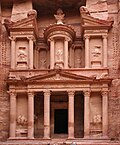 The Treasury at Petra, an iconic symbol of the Nabataean Kingdom.
 -
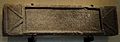 Epitaph of Imru' al-Qais, a pre-Islamic Arab poet.
 -
 "Hagar and Ishmael in the Desert" by François-Joseph Navez.
 -
 Assyrian relief depicting Arabs on camelback.


