Vastus medialis: Difference between revisions
CSV import |
CSV import |
||
| Line 1: | Line 1: | ||
{{Short description|Muscle in the human body}} | |||
{{Use dmy dates|date=October 2023}} | |||
The ''' | ==Vastus medialis== | ||
The '''vastus medialis''' is a muscle located in the anterior compartment of the [[thigh]]. It is one of the four muscles that make up the [[quadriceps femoris]] muscle group. The vastus medialis is situated medially in the thigh and is responsible for extending the [[knee joint]]. | |||
== Anatomy == | ==Anatomy== | ||
The vastus medialis originates from the [[intertrochanteric line]] and the medial lip of the [[linea aspera]] of the [[femur]]. It inserts into the [[quadriceps tendon]], which attaches to the [[patella]], and continues as the [[patellar ligament]] to the [[tibial tuberosity]]. | |||
The | ===Structure=== | ||
The vastus medialis is divided into two parts: the vastus medialis longus (VML) and the vastus medialis oblique (VMO). The VMO is particularly important for stabilizing the patella and is often targeted in rehabilitation exercises for [[patellofemoral pain syndrome]]. | |||
== Function == | ==Function== | ||
The primary function of the vastus medialis is to extend the knee. It plays a crucial role in activities such as walking, running, and jumping. The VMO component is also important for maintaining proper alignment of the patella during knee extension. | |||
==Clinical significance== | |||
Weakness or dysfunction of the vastus medialis, particularly the VMO, can lead to [[patellar tracking disorder]]s and [[knee pain]]. Strengthening exercises targeting the vastus medialis are often prescribed in physical therapy to address these issues. | |||
== | ==Images== | ||
<gallery> | |||
File:Gray245.png|Diagram of the quadriceps muscle group. | |||
File:Vastus_medialis_muscle.png|Location of the vastus medialis. | |||
File:Gray550.png|Muscles of the thigh. | |||
File:Anatomical_dissection2.JPG|Anatomical dissection showing the vastus medialis. | |||
File:Slide8rrr.JPG|Cross-section of the thigh showing the vastus medialis. | |||
File:Slide6www.JPG|Detailed view of the vastus medialis. | |||
File:Slide5CCCC.JPG|Vastus medialis in relation to other thigh muscles. | |||
File:Slide5FFFFF.JPG|Vastus medialis and surrounding structures. | |||
File:Slide10WWWW.JPG|Vastus medialis in a dissected specimen. | |||
File:Slide2EA.JPG|Vastus medialis in a cadaveric specimen. | |||
</gallery> | |||
==Related pages== | |||
* [[Quadriceps femoris]] | |||
* [[Knee joint]] | |||
* [[Patellar tracking disorder]] | |||
== | ==References== | ||
* | * Moore, K. L., Dalley, A. F., & Agur, A. M. R. (2013). ''Clinically Oriented Anatomy''. Lippincott Williams & Wilkins. | ||
* Neumann, D. A. (2010). ''Kinesiology of the Musculoskeletal System: Foundations for Rehabilitation''. Elsevier Health Sciences. | |||
* | |||
[[Category:Muscles of the lower limb]] | [[Category:Muscles of the lower limb]] | ||
Revision as of 00:44, 10 February 2025
Muscle in the human body
Vastus medialis
The vastus medialis is a muscle located in the anterior compartment of the thigh. It is one of the four muscles that make up the quadriceps femoris muscle group. The vastus medialis is situated medially in the thigh and is responsible for extending the knee joint.
Anatomy
The vastus medialis originates from the intertrochanteric line and the medial lip of the linea aspera of the femur. It inserts into the quadriceps tendon, which attaches to the patella, and continues as the patellar ligament to the tibial tuberosity.
Structure
The vastus medialis is divided into two parts: the vastus medialis longus (VML) and the vastus medialis oblique (VMO). The VMO is particularly important for stabilizing the patella and is often targeted in rehabilitation exercises for patellofemoral pain syndrome.
Function
The primary function of the vastus medialis is to extend the knee. It plays a crucial role in activities such as walking, running, and jumping. The VMO component is also important for maintaining proper alignment of the patella during knee extension.
Clinical significance
Weakness or dysfunction of the vastus medialis, particularly the VMO, can lead to patellar tracking disorders and knee pain. Strengthening exercises targeting the vastus medialis are often prescribed in physical therapy to address these issues.
Images
-
 Diagram of the quadriceps muscle group.
 -
 Location of the vastus medialis.
 -
 Muscles of the thigh.
 -
 Anatomical dissection showing the vastus medialis.
 -
 Cross-section of the thigh showing the vastus medialis.
 -
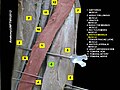 Detailed view of the vastus medialis.
 -
 Vastus medialis in relation to other thigh muscles.
 -
 Vastus medialis and surrounding structures.
 -
 Vastus medialis in a dissected specimen.
 -
 Vastus medialis in a cadaveric specimen.


Related pages
References
- Moore, K. L., Dalley, A. F., & Agur, A. M. R. (2013). Clinically Oriented Anatomy. Lippincott Williams & Wilkins.
- Neumann, D. A. (2010). Kinesiology of the Musculoskeletal System: Foundations for Rehabilitation. Elsevier Health Sciences.
