Vastus medialis

The vastus medialis is one of the four muscles that make up the quadriceps femoris muscle group, located in the anterior compartment of the thigh. It is a key muscle involved in knee extension and stabilization.
Anatomy[edit]
The vastus medialis is situated medially in the thigh and is part of the quadriceps muscle group, which also includes the vastus lateralis, vastus intermedius, and rectus femoris. The vastus medialis originates from the medial lip of the linea aspera of the femur and the intertrochanteric line. It inserts into the patella via the quadriceps tendon and continues to the tibial tuberosity through the patellar ligament.

Structure[edit]
The vastus medialis is characterized by its teardrop shape and is located on the inner part of the thigh. It is the most medial of the quadriceps muscles and is positioned next to the adductor magnus and sartorius muscles. The muscle fibers of the vastus medialis are oriented obliquely, which is why it is sometimes referred to as the vastus medialis obliquus (VMO).

Function[edit]
The primary function of the vastus medialis is to extend the knee joint. It plays a crucial role in stabilizing the patella and ensuring proper tracking during knee movements. This stabilization is essential for activities such as walking, running, and jumping.
Clinical Significance[edit]
Weakness or dysfunction of the vastus medialis can lead to patellofemoral pain syndrome and other knee-related issues. Strengthening the vastus medialis is often a focus in rehabilitation programs for knee injuries.

Training and Strengthening[edit]
Exercises that target the vastus medialis include squats, lunges, and leg extensions. Emphasizing the final degrees of knee extension can help specifically engage the vastus medialis.
Related Pages[edit]

Gallery[edit]
-
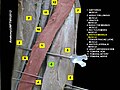 Detailed view of the vastus medialis
 -
 Vastus medialis in relation to other thigh muscles
 -
 Vastus medialis and surrounding structures


Advertise on WikiMD — 81,000+ full articles, ~900,000 total pages, ~250 million page views. Global reach, limited time promotional rates from $1/page/day. Learn more · View stats

Translate page: - East Asian
中文,
日本,
한국어,
South Asian
हिन्दी,
தமிழ்,
తెలుగు,
Urdu,
ಕನ್ನಡ,
Southeast Asian
Indonesian,
Vietnamese,
Thai,
မြန်မာဘာသာ,
বাংলা
European
español,
Deutsch,
français,
Greek,
português do Brasil,
polski,
română,
русский,
Nederlands,
norsk,
svenska,
suomi,
Italian
Middle Eastern & African
عربى,
Turkish,
Persian,
Hebrew,
Afrikaans,
isiZulu,
Kiswahili,
Other
Bulgarian,
Hungarian,
Czech,
Swedish,
മലയാളം,
मराठी,
ਪੰਜਾਬੀ,
ગુજરાતી,
Portuguese,
Ukrainian
About WikiMD • Contact • Disclaimer • Privacy • Copyright • Site statistics
Some content and images may originate from Wikimedia Commons or Wikipedia and remain subject to their stated licenses. Unless otherwise noted, eligible WikiMD content is available under CC BY-SA 4.0.
WikiMD Wellnesspedia — Free health & wellness information for patients, students, and health professionals.

