Anaplastic oligodendroglioma: Difference between revisions
CSV import |
CSV import |
||
| Line 54: | Line 54: | ||
[[Category:Neuro-oncology]] | [[Category:Neuro-oncology]] | ||
[[Category:Rare diseases]] | [[Category:Rare diseases]] | ||
<gallery> | |||
File:Mathematical-Modeling-of-Human-Glioma-Growth-Based-on-Brain-Topological-Structures-Study-of-Two-pone.0039616.s002.ogv|Anaplastic oligodendroglioma | |||
File:IDH1 R132H in anaplastic ologodendroglioma.jpg|Anaplastic oligodendroglioma | |||
</gallery> | |||
Latest revision as of 01:23, 20 February 2025
| Anaplastic Oligodendroglioma | |
|---|---|
| Synonyms | N/A |
| Pronounce | N/A |
| Specialty | N/A |
| Symptoms | Headache, seizures, neurological deficits |
| Complications | N/A |
| Onset | Adulthood |
| Duration | Chronic |
| Types | N/A |
| Causes | Genetic mutations |
| Risks | Family history, radiation exposure |
| Diagnosis | MRI, biopsy |
| Differential diagnosis | N/A |
| Prevention | N/A |
| Treatment | Surgery, radiation therapy, chemotherapy |
| Medication | N/A |
| Prognosis | Variable |
| Frequency | Rare |
| Deaths | N/A |
Anaplastic oligodendroglioma is a rare and aggressive type of brain tumor that originates from oligodendrocytes, which are cells in the central nervous system responsible for producing myelin. This tumor is classified as a World Health Organization (WHO) grade III glioma, indicating a high degree of malignancy.
Symptoms[edit]
Patients with anaplastic oligodendroglioma may experience a variety of symptoms depending on the tumor's location and size. Common symptoms include:
- Headache
- Seizures
- Neurological deficits such as weakness, numbness, or speech difficulties
Causes[edit]
The exact cause of anaplastic oligodendroglioma is not well understood, but it is believed to involve genetic mutations. Common genetic alterations associated with this tumor include co-deletion of chromosomes 1p and 19q and mutations in the IDH1 or IDH2 genes.
Diagnosis[edit]
Diagnosis of anaplastic oligodendroglioma typically involves imaging studies such as magnetic resonance imaging (MRI) to assess the tumor's location and characteristics. A biopsy is often performed to obtain a tissue sample for histological examination and genetic testing.
Treatment[edit]
Treatment options for anaplastic oligodendroglioma may include:
- Surgical resection to remove as much of the tumor as possible
- Radiation therapy to target remaining cancerous cells
- Chemotherapy with agents such as temozolomide or procarbazine, lomustine, and vincristine (PCV) regimen
Prognosis[edit]
The prognosis for patients with anaplastic oligodendroglioma varies based on factors such as the extent of surgical resection, genetic profile of the tumor, and response to treatment. Tumors with 1p/19q co-deletion generally have a better prognosis.
See also[edit]
References[edit]
<references />
External links[edit]
- [American Brain Tumor Association](https://www.abta.org/)
- [National Cancer Institute](https://www.cancer.gov/)
-
 Anaplastic oligodendroglioma
 -
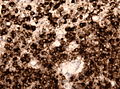 Anaplastic oligodendroglioma

