Anaplastic oligodendroglioma
| Anaplastic Oligodendroglioma | |
|---|---|
| Synonyms | N/A |
| Pronounce | N/A |
| Specialty | N/A |
| Symptoms | Headache, seizures, neurological deficits |
| Complications | N/A |
| Onset | Adulthood |
| Duration | Chronic |
| Types | N/A |
| Causes | Genetic mutations |
| Risks | Family history, radiation exposure |
| Diagnosis | MRI, biopsy |
| Differential diagnosis | N/A |
| Prevention | N/A |
| Treatment | Surgery, radiation therapy, chemotherapy |
| Medication | N/A |
| Prognosis | Variable |
| Frequency | Rare |
| Deaths | N/A |
Anaplastic oligodendroglioma is a rare and aggressive type of brain tumor that originates from oligodendrocytes, which are cells in the central nervous system responsible for producing myelin. This tumor is classified as a World Health Organization (WHO) grade III glioma, indicating a high degree of malignancy.
Symptoms[edit]
Patients with anaplastic oligodendroglioma may experience a variety of symptoms depending on the tumor's location and size. Common symptoms include:
- Headache
- Seizures
- Neurological deficits such as weakness, numbness, or speech difficulties
Causes[edit]
The exact cause of anaplastic oligodendroglioma is not well understood, but it is believed to involve genetic mutations. Common genetic alterations associated with this tumor include co-deletion of chromosomes 1p and 19q and mutations in the IDH1 or IDH2 genes.
Diagnosis[edit]
Diagnosis of anaplastic oligodendroglioma typically involves imaging studies such as magnetic resonance imaging (MRI) to assess the tumor's location and characteristics. A biopsy is often performed to obtain a tissue sample for histological examination and genetic testing.
Treatment[edit]
Treatment options for anaplastic oligodendroglioma may include:
- Surgical resection to remove as much of the tumor as possible
- Radiation therapy to target remaining cancerous cells
- Chemotherapy with agents such as temozolomide or procarbazine, lomustine, and vincristine (PCV) regimen
Prognosis[edit]
The prognosis for patients with anaplastic oligodendroglioma varies based on factors such as the extent of surgical resection, genetic profile of the tumor, and response to treatment. Tumors with 1p/19q co-deletion generally have a better prognosis.
See also[edit]
References[edit]
External links[edit]
- [American Brain Tumor Association](https://www.abta.org/)
- [National Cancer Institute](https://www.cancer.gov/)
-
 Anaplastic oligodendroglioma
 -
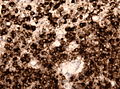 Anaplastic oligodendroglioma

Advertise on WikiMD — 81,000+ full articles, ~900,000 total pages, ~250 million page views. Global reach, limited time promotional rates from $1/page/day. Learn more · View stats


Translate page: - East Asian
中文,
日本,
한국어,
South Asian
हिन्दी,
தமிழ்,
తెలుగు,
Urdu,
ಕನ್ನಡ,
Southeast Asian
Indonesian,
Vietnamese,
Thai,
မြန်မာဘာသာ,
বাংলা
European
español,
Deutsch,
français,
Greek,
português do Brasil,
polski,
română,
русский,
Nederlands,
norsk,
svenska,
suomi,
Italian
Middle Eastern & African
عربى,
Turkish,
Persian,
Hebrew,
Afrikaans,
isiZulu,
Kiswahili,
Other
Bulgarian,
Hungarian,
Czech,
Swedish,
മലയാളം,
मराठी,
ਪੰਜਾਬੀ,
ગુજરાતી,
Portuguese,
Ukrainian
About WikiMD • Contact • Disclaimer • Privacy • Copyright • Site statistics
Some content and images may originate from Wikimedia Commons or Wikipedia and remain subject to their stated licenses. Unless otherwise noted, eligible WikiMD content is available under CC BY-SA 4.0.
WikiMD Wellnesspedia — Free health & wellness information for patients, students, and health professionals.

