Mathematical psychology: Difference between revisions
CSV import Tags: mobile edit mobile web edit |
CSV import |
||
| Line 36: | Line 36: | ||
{{Psychology-stub}} | {{Psychology-stub}} | ||
{{Math-stub}} | {{Math-stub}} | ||
<gallery> | |||
File:Ernst_Heinrich_Weber.jpg|Portrait of Ernst Heinrich Weber, a key figure in the development of mathematical psychology. | |||
File:Gustav_Fechner.jpg|Portrait of Gustav Fechner, known for his work in psychophysics and the Fechner scale. | |||
File:Baeyer's_Probe_Alkenes_V.2.svg|Diagram of Baeyer's Probe for Alkenes, illustrating a concept in mathematical psychology. | |||
</gallery> | |||
Latest revision as of 00:55, 18 February 2025
Mathematical psychology is a subfield of psychology that utilizes mathematical models and statistical methods to understand and predict psychological phenomena. It is an interdisciplinary field that combines elements of both psychology and mathematics, and it is closely related to other fields such as cognitive science, neuroscience, and behavioral economics.
History[edit]
The origins of mathematical psychology can be traced back to the work of Gustav Fechner, who in the 19th century developed the concept of psychophysics, a field that examines the relationship between physical stimuli and the sensations they evoke. However, it was not until the mid-20th century that mathematical psychology emerged as a distinct discipline, largely due to the work of researchers such as R. Duncan Luce, Patrick Suppes, and Richard C. Atkinson.
Methods[edit]
Mathematical psychology employs a variety of mathematical tools and techniques. These include probability theory, linear algebra, calculus, and differential equations. These methods are used to develop mathematical models that can describe and predict psychological phenomena.
Applications[edit]
Mathematical psychology has been applied to a wide range of areas within psychology. These include perception, learning, memory, decision making, and social psychology. For example, in the field of decision making, mathematical models have been used to predict how people make choices under uncertainty.
Criticisms[edit]
Despite its contributions, mathematical psychology has been criticized on several fronts. Some argue that the mathematical models used in the field are overly simplistic and do not adequately capture the complexity of human behavior. Others contend that the field is too focused on theory and not enough on empirical research.
See also[edit]
References[edit]
<references group="" responsive="1"></references>
External links[edit]

This article is a psychology-related stub. You can help WikiMD by expanding it!

This article is a mathematics-related stub. You can help WikiMD by expanding it!
-
 Portrait of Ernst Heinrich Weber, a key figure in the development of mathematical psychology.
 -
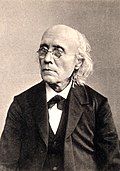 Portrait of Gustav Fechner, known for his work in psychophysics and the Fechner scale.
 -
 Diagram of Baeyer's Probe for Alkenes, illustrating a concept in mathematical psychology.


