Thenthuk: Difference between revisions
CSV import |
CSV import |
||
| Line 29: | Line 29: | ||
{{Noodle soups}} | {{Noodle soups}} | ||
{{food-stub}} | {{food-stub}} | ||
<gallery> | |||
File:Thenthuk, Thukpa, Tibetan noodle in Osaka, Japan.jpg|Thenthuk, Thukpa, Tibetan noodle in Osaka, Japan | |||
File:TibetanFood.JPG|Tibetan Food | |||
File:Brandy_Alexander_on_the_Rocks.jpg|Brandy Alexander on the Rocks | |||
</gallery> | |||
Revision as of 01:27, 18 February 2025
Thenthuk is a traditional Tibetan dish that is primarily consumed in the Tibet region. It is a type of noodle soup that is often eaten during the cold winter months. The name 'Thenthuk' translates to 'pull noodle', which describes the method of making the noodles by hand.
History
The exact origins of Thenthuk are unknown, but it is believed to have been a staple in Tibetan cuisine for centuries. It is often associated with the rural nomadic lifestyle of the Tibetan people, as the ingredients are easily transportable and the dish is simple to prepare.
Preparation
Thenthuk is made by pulling small pieces of dough and dropping them into a boiling broth. The broth is typically made from meat, although vegetarian versions are also common. The soup also often includes vegetables such as carrots, turnips, and spinach. The dish is seasoned with garlic, ginger, and Sichuan pepper.
Cultural Significance
Thenthuk is traditionally eaten during the Tibetan New Year, known as Losar. It is also a common dish during the cold winter months, as it is hearty and warming. In addition, Thenthuk is often served to guests as a sign of hospitality.
Variations
There are several variations of Thenthuk, including meat-based versions and vegetarian versions. Some versions also include momo, which are Tibetan dumplings. The dish can also be made with different types of noodles, including wheat noodles and rice noodles.
See Also
| Tibetan cuisine | ||||||||
|---|---|---|---|---|---|---|---|---|
This Tibetan cuisine-related article is a stub. You can help WikiMD by expanding it.
|

-
Thenthuk, Thukpa, Tibetan noodle in Osaka, Japan
-
 Tibetan Food
 -
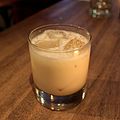 Brandy Alexander on the Rocks


