Sha phaley
Sha Phaley is a traditional Tibetan dish that is popular among the Tibetan community. It is a type of bread stuffed with seasoned beef and cabbage, which is then deep-fried to a golden brown. The dish is known for its crispy exterior and juicy, flavorful filling.
Ingredients[edit]
The main ingredients for Sha Phaley are:
Preparation[edit]
The preparation of Sha Phaley involves several steps. First, the beef is minced and mixed with finely chopped cabbage, onions, garlic, and ginger. This mixture is then seasoned with salt and pepper.
Next, a dough is prepared using flour and water. The dough is divided into small portions and each portion is rolled out into a flat circle. The beef and cabbage mixture is then placed in the center of each circle and the dough is folded over to enclose the filling, forming a semi-circle. The edges of the dough are then sealed to prevent the filling from leaking out during cooking.
Finally, the Sha Phaley are deep-fried in oil until they are golden brown and crispy. They are typically served hot and are often accompanied by a spicy Tibetan hot sauce.
Cultural Significance[edit]
Sha Phaley is a staple in Tibetan cuisine and is often served during special occasions and festivals. It is also a popular street food in areas with a large Tibetan population. The dish is known for its unique combination of flavors and textures, and is a beloved comfort food for many Tibetans.
Variations[edit]
While the traditional Sha Phaley is made with beef, there are also variations of the dish that use other types of meat, such as chicken or lamb. Some versions also include additional ingredients in the filling, such as cheese or mushrooms. There are also vegetarian versions of Sha Phaley that use tofu or vegetables in place of the meat.
See Also[edit]
References[edit]
- Tibetan Recipes
- Sha Phaley Recipe
- Tibetan Food and Drink
Sha_phaley[edit]
-
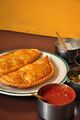 Tibetan snack Syabhaley in Nepal


Medical Disclaimer: WikiMD is for informational purposes only and is not a substitute for professional medical advice. Content may be inaccurate or outdated and should not be used for diagnosis or treatment. Always consult your healthcare provider for medical decisions. Verify information with trusted sources such as CDC.gov and NIH.gov. By using this site, you agree that WikiMD is not liable for any outcomes related to its content. See full disclaimer.
Credits:Most images are courtesy of Wikimedia commons, and templates, categories Wikipedia, licensed under CC BY SA or similar.
Translate page: - East Asian
中文,
日本,
한국어,
South Asian
हिन्दी,
தமிழ்,
తెలుగు,
Urdu,
ಕನ್ನಡ,
Southeast Asian
Indonesian,
Vietnamese,
Thai,
မြန်မာဘာသာ,
বাংলা
European
español,
Deutsch,
français,
Greek,
português do Brasil,
polski,
română,
русский,
Nederlands,
norsk,
svenska,
suomi,
Italian
Middle Eastern & African
عربى,
Turkish,
Persian,
Hebrew,
Afrikaans,
isiZulu,
Kiswahili,
Other
Bulgarian,
Hungarian,
Czech,
Swedish,
മലയാളം,
मराठी,
ਪੰਜਾਬੀ,
ગુજરાતી,
Portuguese,
Ukrainian

