Tea processing: Difference between revisions
CSV import |
CSV import |
||
| Line 49: | Line 49: | ||
* [http://www.teausa.com/ Tea Association of the USA] | * [http://www.teausa.com/ Tea Association of the USA] | ||
{{dictionary-stub1}} | {{dictionary-stub1}} | ||
<gallery> | |||
File:Teaprocessing.svg|Tea processing | |||
File:Assam.jpg|Tea processing | |||
File:2DU_Kenya15_(5366723263).jpg|Tea processing | |||
File:Lantern_Slide_-_Tangyes_Ltd,_Tea_Press,_circa_1910.jpg|Tea processing | |||
File:Darjeeling_Tea_Garden_worker.jpg|Tea processing | |||
File:Tea_plantation_picking.JPG|Tea processing | |||
File:Tea_Factory_Srimongol_Sylhet_Bangladesh_5.JPG|Tea processing | |||
File:Tea_factory,_Pinglin.jpg|Tea processing | |||
File:Pu-erh_factory.jpg|Tea processing | |||
File:Workers_heat_tea_leaves_in_tourist_area_of_Chinese_plantation.jpg|Tea processing | |||
File:Xiaguan_Te_Ji_Tuo_Cha_2004.jpg|Tea processing | |||
File:Huoshan_Huangya_tea_leaves_close.jpg|Tea processing | |||
</gallery> | |||
Revision as of 12:10, 18 February 2025
Introduction
Tea processing is the method by which the leaves from the tea plant Camellia sinensis are transformed into the dried leaves for brewing tea. The process of tea production is both an art and a science, involving a series of steps that can be adjusted to create a wide variety of different teas.
Types of Tea
There are several types of tea, including Green tea, Black tea, White tea, Oolong tea, and Pu-erh tea. Each type of tea requires a different method of processing to achieve its unique flavor and aroma.
Tea Processing Steps
Plucking
The first step in tea processing is plucking. This involves harvesting the tea leaves from the tea plant. The timing of the plucking can greatly affect the flavor of the tea.
Withering
After plucking, the tea leaves are spread out to wither. This allows the leaves to lose moisture and become more pliable, which is necessary for the next steps in the process.
Rolling
The withered leaves are then rolled to break down the cell walls and release the leaf juices. This step is crucial for the development of the tea's flavor.
Oxidation
Oxidation is the next step in the process. This involves exposing the rolled leaves to air, which causes them to darken and develop their characteristic flavor. The level of oxidation determines whether the tea will become green, oolong, or black tea.
Firing
The final step in tea processing is firing. This involves heating the leaves to stop the oxidation process and dry them out completely. The method of firing can also affect the flavor of the tea.
Conclusion
Tea processing is a complex process that requires a great deal of skill and knowledge. By understanding the steps involved in this process, one can better appreciate the art and science behind each cup of tea.
See Also
References
- The Story of Tea: A Cultural History and Drinking Guide. Mary Lou Heiss and Robert J. Heiss. Ten Speed Press, 2007.
- The Tea Enthusiast's Handbook: A Guide to the World's Best Teas. Mary Lou Heiss and Robert J. Heiss. Ten Speed Press, 2010.
External Links

-
 Tea processing
 -
 Tea processing
 -
 Tea processing
 -
 Tea processing
 -
 Tea processing
 -
 Tea processing
 -
 Tea processing
 -
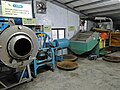 Tea processing
 -
 Tea processing
 -
 Tea processing
 -
 Tea processing
 -
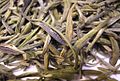 Tea processing


.jpg)


