Glomerulonephrosis: Difference between revisions
CSV import |
CSV import |
||
| Line 1: | Line 1: | ||
{{SI}} | |||
{{Infobox medical condition | |||
| name = Glomerulonephrosis | |||
| image = [[File:Leg_Edema_02.jpg|250px]] | |||
| caption = Edema in the legs, a common symptom of glomerulonephrosis | |||
| field = [[Nephrology]] | |||
| synonyms = Glomerular nephrosis | |||
| symptoms = [[Edema]], [[proteinuria]], [[hypertension]], [[hematuria]] | |||
| complications = [[Chronic kidney disease]], [[end-stage renal disease]] | |||
| onset = Variable | |||
| duration = Chronic | |||
| causes = [[Diabetes mellitus]], [[hypertension]], [[autoimmune diseases]] | |||
| risks = [[Family history]], [[obesity]], [[smoking]] | |||
| diagnosis = [[Urinalysis]], [[blood tests]], [[kidney biopsy]] | |||
| differential = [[Nephrotic syndrome]], [[nephritic syndrome]], [[acute kidney injury]] | |||
| treatment = [[ACE inhibitors]], [[angiotensin II receptor blockers]], [[diuretics]], [[immunosuppressants]] | |||
| medication = [[Prednisone]], [[cyclophosphamide]], [[mycophenolate mofetil]] | |||
| prognosis = Variable, depends on underlying cause and response to treatment | |||
| frequency = Common | |||
}} | |||
'''Glomerulonephrosis''' is a medical condition that affects the [[kidney|kidneys]]. It is characterized by the inflammation of the tiny filters in the kidneys known as [[glomeruli]]. These filters are responsible for removing excess fluid, electrolytes and waste from the bloodstream and converting them into urine. When the glomeruli are damaged, the kidneys can't filter blood properly, leading to a variety of health problems. | '''Glomerulonephrosis''' is a medical condition that affects the [[kidney|kidneys]]. It is characterized by the inflammation of the tiny filters in the kidneys known as [[glomeruli]]. These filters are responsible for removing excess fluid, electrolytes and waste from the bloodstream and converting them into urine. When the glomeruli are damaged, the kidneys can't filter blood properly, leading to a variety of health problems. | ||
== Causes == | == Causes == | ||
The exact cause of glomerulonephrosis is not known. However, it is believed to be associated with a number of conditions including [[diabetes]], [[lupus]], and certain infections such as [[HIV]], [[hepatitis B]], and [[hepatitis C]]. It can also be caused by certain medications and toxins. | The exact cause of glomerulonephrosis is not known. However, it is believed to be associated with a number of conditions including [[diabetes]], [[lupus]], and certain infections such as [[HIV]], [[hepatitis B]], and [[hepatitis C]]. It can also be caused by certain medications and toxins. | ||
== Symptoms == | == Symptoms == | ||
Symptoms of glomerulonephrosis can vary greatly from person to person. Some people may have no symptoms at all, while others may experience: | Symptoms of glomerulonephrosis can vary greatly from person to person. Some people may have no symptoms at all, while others may experience: | ||
* [[Edema]] (swelling), especially in the legs, ankles, and feet | * [[Edema]] (swelling), especially in the legs, ankles, and feet | ||
* Foamy urine, which may be caused by excess protein in the urine | * Foamy urine, which may be caused by excess protein in the urine | ||
| Line 15: | Line 30: | ||
* Nausea and vomiting | * Nausea and vomiting | ||
* Changes in urine output | * Changes in urine output | ||
== Diagnosis == | == Diagnosis == | ||
Diagnosis of glomerulonephrosis typically involves a series of tests including: | Diagnosis of glomerulonephrosis typically involves a series of tests including: | ||
* [[Urinalysis]] to check for protein and blood in the urine | * [[Urinalysis]] to check for protein and blood in the urine | ||
* Blood tests to measure kidney function | * Blood tests to measure kidney function | ||
* [[Kidney biopsy]] to examine a small sample of kidney tissue under a microscope | * [[Kidney biopsy]] to examine a small sample of kidney tissue under a microscope | ||
== Treatment == | == Treatment == | ||
Treatment for glomerulonephrosis aims to protect the kidneys from further damage, control symptoms, and treat any underlying conditions. This may involve: | Treatment for glomerulonephrosis aims to protect the kidneys from further damage, control symptoms, and treat any underlying conditions. This may involve: | ||
* Medications to control high blood pressure and reduce protein in the urine | * Medications to control high blood pressure and reduce protein in the urine | ||
* Dietary changes to limit protein and sodium intake | * Dietary changes to limit protein and sodium intake | ||
* Dialysis to remove waste and excess fluid from the blood | * Dialysis to remove waste and excess fluid from the blood | ||
* Kidney transplant in severe cases | * Kidney transplant in severe cases | ||
==Gallery== | |||
<gallery> | |||
File:Minimal_Change_Disease_Pathology_Diagram.svg|Diagram of minimal change disease pathology | |||
File:2613_Podocytes.jpg|Podocytes in the kidney | |||
File:Scanning_electron_microscopy_(SEM)_of_echinocytes.png|Scanning electron microscopy of echinocytes | |||
</gallery> | |||
== See also == | == See also == | ||
* [[Nephrotic syndrome]] | * [[Nephrotic syndrome]] | ||
* [[Chronic kidney disease]] | * [[Chronic kidney disease]] | ||
* [[Acute kidney injury]] | * [[Acute kidney injury]] | ||
[[Category:Kidney diseases]] | [[Category:Kidney diseases]] | ||
[[Category:Medical conditions]] | [[Category:Medical conditions]] | ||
[[Category:Health]] | [[Category:Health]] | ||
{{stub}} | {{stub}} | ||
Latest revision as of 03:21, 6 April 2025

Editor-In-Chief: Prab R Tumpati, MD
Obesity, Sleep & Internal medicine
Founder, WikiMD Wellnesspedia &
W8MD medical weight loss NYC and sleep center NYC
| Glomerulonephrosis | |
|---|---|

| |
| Synonyms | Glomerular nephrosis |
| Pronounce | N/A |
| Specialty | N/A |
| Symptoms | Edema, proteinuria, hypertension, hematuria |
| Complications | Chronic kidney disease, end-stage renal disease |
| Onset | Variable |
| Duration | Chronic |
| Types | N/A |
| Causes | Diabetes mellitus, hypertension, autoimmune diseases |
| Risks | Family history, obesity, smoking |
| Diagnosis | Urinalysis, blood tests, kidney biopsy |
| Differential diagnosis | Nephrotic syndrome, nephritic syndrome, acute kidney injury |
| Prevention | N/A |
| Treatment | ACE inhibitors, angiotensin II receptor blockers, diuretics, immunosuppressants |
| Medication | Prednisone, cyclophosphamide, mycophenolate mofetil |
| Prognosis | Variable, depends on underlying cause and response to treatment |
| Frequency | Common |
| Deaths | N/A |
Glomerulonephrosis is a medical condition that affects the kidneys. It is characterized by the inflammation of the tiny filters in the kidneys known as glomeruli. These filters are responsible for removing excess fluid, electrolytes and waste from the bloodstream and converting them into urine. When the glomeruli are damaged, the kidneys can't filter blood properly, leading to a variety of health problems.
Causes[edit]
The exact cause of glomerulonephrosis is not known. However, it is believed to be associated with a number of conditions including diabetes, lupus, and certain infections such as HIV, hepatitis B, and hepatitis C. It can also be caused by certain medications and toxins.
Symptoms[edit]
Symptoms of glomerulonephrosis can vary greatly from person to person. Some people may have no symptoms at all, while others may experience:
- Edema (swelling), especially in the legs, ankles, and feet
- Foamy urine, which may be caused by excess protein in the urine
- Fatigue
- Loss of appetite
- Nausea and vomiting
- Changes in urine output
Diagnosis[edit]
Diagnosis of glomerulonephrosis typically involves a series of tests including:
- Urinalysis to check for protein and blood in the urine
- Blood tests to measure kidney function
- Kidney biopsy to examine a small sample of kidney tissue under a microscope
Treatment[edit]
Treatment for glomerulonephrosis aims to protect the kidneys from further damage, control symptoms, and treat any underlying conditions. This may involve:
- Medications to control high blood pressure and reduce protein in the urine
- Dietary changes to limit protein and sodium intake
- Dialysis to remove waste and excess fluid from the blood
- Kidney transplant in severe cases
Gallery[edit]
-
 Diagram of minimal change disease pathology
 -
 Podocytes in the kidney
 -
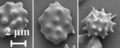 Scanning electron microscopy of echinocytes


_of_echinocytes.png)


