Dysgerminoma: Difference between revisions
CSV import |
CSV import |
||
| Line 1: | Line 1: | ||
{{SI}} | |||
{{Infobox medical condition | |||
| name = Dysgerminoma | |||
| image = [[File:Dysgerminoma,_high_mag.jpg|left|thumb|Dysgerminoma under high magnification]] | |||
| caption = Histopathological image of a dysgerminoma | |||
| field = [[Oncology]] | |||
| synonyms = | |||
| symptoms = Abdominal pain, swelling, irregular menstruation | |||
| complications = [[Metastasis]], [[infertility]] | |||
| onset = Typically in young women, often in their 20s | |||
| duration = Variable | |||
| causes = Unknown, possibly genetic factors | |||
| risks = [[Gonadal dysgenesis]], [[Turner syndrome]] | |||
| diagnosis = [[Pelvic examination]], [[Ultrasound]], [[CT scan]], [[Biopsy]] | |||
| differential = [[Ovarian cyst]], [[Teratoma]], [[Endometrioma]] | |||
| prevention = None specific | |||
| treatment = [[Surgery]], [[Chemotherapy]], [[Radiation therapy]] | |||
| medication = [[Cisplatin]], [[Etoposide]], [[Bleomycin]] | |||
| prognosis = Generally good with treatment | |||
| frequency = Rare, accounts for 1-2% of ovarian cancers | |||
| deaths = Rare with treatment | |||
}} | |||
'''Dysgerminoma''' is a type of [[germ cell tumor]] that is usually found in the [[ovary]]. It is the most common malignant germ cell tumor in females. Dysgerminomas are similar to the [[seminoma]], a type of testicular cancer, as both produce [[LDH]] (lactate dehydrogenase). | '''Dysgerminoma''' is a type of [[germ cell tumor]] that is usually found in the [[ovary]]. It is the most common malignant germ cell tumor in females. Dysgerminomas are similar to the [[seminoma]], a type of testicular cancer, as both produce [[LDH]] (lactate dehydrogenase). | ||
==Symptoms== | ==Symptoms== | ||
The most common symptom of dysgerminoma is a painless enlargement of the ovary. Other symptoms may include [[abdominal pain]], [[bloating]], or [[constipation]]. In some cases, dysgerminoma can cause [[precocious puberty]] in children due to the production of [[human chorionic gonadotropin]] (hCG). | The most common symptom of dysgerminoma is a painless enlargement of the ovary. Other symptoms may include [[abdominal pain]], [[bloating]], or [[constipation]]. In some cases, dysgerminoma can cause [[precocious puberty]] in children due to the production of [[human chorionic gonadotropin]] (hCG). | ||
==Diagnosis== | ==Diagnosis== | ||
[[Ultrasound]] is often the first test done when a dysgerminoma is suspected. Other tests may include a [[CT scan]] or [[MRI]] to determine the size and location of the tumor. Blood tests may be done to check the levels of certain substances, such as LDH, hCG, and [[alpha-fetoprotein]] (AFP), which can be elevated in people with dysgerminoma. | [[Ultrasound]] is often the first test done when a dysgerminoma is suspected. Other tests may include a [[CT scan]] or [[MRI]] to determine the size and location of the tumor. Blood tests may be done to check the levels of certain substances, such as LDH, hCG, and [[alpha-fetoprotein]] (AFP), which can be elevated in people with dysgerminoma. | ||
==Treatment== | ==Treatment== | ||
Treatment for dysgerminoma usually involves surgery to remove the tumor. This may be followed by [[chemotherapy]] or [[radiation therapy]] to kill any remaining cancer cells. The choice of treatment depends on the stage of the cancer and the patient's overall health. | Treatment for dysgerminoma usually involves surgery to remove the tumor. This may be followed by [[chemotherapy]] or [[radiation therapy]] to kill any remaining cancer cells. The choice of treatment depends on the stage of the cancer and the patient's overall health. | ||
==Prognosis== | ==Prognosis== | ||
The prognosis for dysgerminoma is generally good, especially if the cancer is detected early and treated promptly. The 5-year survival rate for stage I dysgerminoma is over 90%. | The prognosis for dysgerminoma is generally good, especially if the cancer is detected early and treated promptly. The 5-year survival rate for stage I dysgerminoma is over 90%. | ||
== Gallery == | |||
<gallery> | |||
File:Dysgerminoma_surgery.jpg|Dysgerminoma during surgery | |||
File:Dysgerminoma,_intermed._mag.1.jpg|Intermediate magnification view of dysgerminoma | |||
File:Dysgerminoma,_low_mag.2.jpg|Low magnification view of dysgerminoma | |||
</gallery> | |||
==See also== | ==See also== | ||
* [[Ovarian cancer]] | * [[Ovarian cancer]] | ||
* [[Germ cell tumor]] | * [[Germ cell tumor]] | ||
* [[Seminoma]] | * [[Seminoma]] | ||
[[Category:Oncology]] | [[Category:Oncology]] | ||
[[Category:Gynecology]] | [[Category:Gynecology]] | ||
[[Category:Pathology]] | [[Category:Pathology]] | ||
{{stub}} | {{stub}} | ||
Latest revision as of 19:21, 5 April 2025

Editor-In-Chief: Prab R Tumpati, MD
Obesity, Sleep & Internal medicine
Founder, WikiMD Wellnesspedia &
W8MD's medical weight loss NYC, sleep center NYC
Philadelphia medical weight loss and Philadelphia sleep clinics
| Dysgerminoma | |
|---|---|
| Synonyms | |
| Pronounce | N/A |
| Specialty | N/A |
| Symptoms | Abdominal pain, swelling, irregular menstruation |
| Complications | Metastasis, infertility |
| Onset | Typically in young women, often in their 20s |
| Duration | Variable |
| Types | N/A |
| Causes | Unknown, possibly genetic factors |
| Risks | Gonadal dysgenesis, Turner syndrome |
| Diagnosis | Pelvic examination, Ultrasound, CT scan, Biopsy |
| Differential diagnosis | Ovarian cyst, Teratoma, Endometrioma |
| Prevention | None specific |
| Treatment | Surgery, Chemotherapy, Radiation therapy |
| Medication | Cisplatin, Etoposide, Bleomycin |
| Prognosis | Generally good with treatment |
| Frequency | Rare, accounts for 1-2% of ovarian cancers |
| Deaths | Rare with treatment |
Dysgerminoma is a type of germ cell tumor that is usually found in the ovary. It is the most common malignant germ cell tumor in females. Dysgerminomas are similar to the seminoma, a type of testicular cancer, as both produce LDH (lactate dehydrogenase).
Symptoms[edit]
The most common symptom of dysgerminoma is a painless enlargement of the ovary. Other symptoms may include abdominal pain, bloating, or constipation. In some cases, dysgerminoma can cause precocious puberty in children due to the production of human chorionic gonadotropin (hCG).
Diagnosis[edit]
Ultrasound is often the first test done when a dysgerminoma is suspected. Other tests may include a CT scan or MRI to determine the size and location of the tumor. Blood tests may be done to check the levels of certain substances, such as LDH, hCG, and alpha-fetoprotein (AFP), which can be elevated in people with dysgerminoma.
Treatment[edit]
Treatment for dysgerminoma usually involves surgery to remove the tumor. This may be followed by chemotherapy or radiation therapy to kill any remaining cancer cells. The choice of treatment depends on the stage of the cancer and the patient's overall health.
Prognosis[edit]
The prognosis for dysgerminoma is generally good, especially if the cancer is detected early and treated promptly. The 5-year survival rate for stage I dysgerminoma is over 90%.
Gallery[edit]
-
 Dysgerminoma during surgery
 -
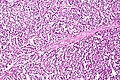 Intermediate magnification view of dysgerminoma
 -
 Low magnification view of dysgerminoma


