Alchermes: Difference between revisions
CSV import |
CSV import |
||
| (One intermediate revision by the same user not shown) | |||
| Line 1: | Line 1: | ||
== Alchermes == | |||
[[File:Antica_bottiglia_alchermes.JPG|thumb|right|A traditional bottle of Alchermes]] | |||
'''Alchermes''' is a traditional [[Italian]] [[liqueur]] that is known for its vibrant red color and sweet, spicy flavor. It has a long history and is often used in [[Italian cuisine]] as both a beverage and an ingredient in various [[desserts]]. | |||
Alchermes | |||
== | == History == | ||
The origins of Alchermes can be traced back to the [[Middle Ages]], where it was initially created by [[apothecaries]] and used for medicinal purposes. The name "Alchermes" is derived from the [[Arabic]] word "al-qirmiz," which refers to the [[kermes]] insect used to produce the red dye. This liqueur was popular among the [[nobility]] and was often served at [[banquets]] and [[feasts]]. | |||
Alchermes | |||
== | == Ingredients == | ||
Alchermes is made from a blend of [[spices]] and [[herbs]], including [[cinnamon]], [[cloves]], [[nutmeg]], and [[vanilla]]. It also contains [[sugar]], [[rose water]], and [[alcohol]]. The distinctive red color traditionally comes from the [[kermes]] insect, although modern versions may use [[artificial coloring]]. | |||
== Uses == | |||
In [[Italian cuisine]], Alchermes is used to flavor [[cakes]], [[pastries]], and [[desserts]] such as [[zuppa inglese]], a type of [[trifle]]. It is also enjoyed as a [[digestif]] after meals. The liqueur's unique flavor profile makes it a versatile ingredient in both [[sweet]] and [[savory]] dishes. | |||
== Production == | |||
The production of Alchermes involves infusing the spices and herbs in alcohol, allowing the flavors to meld over time. The mixture is then sweetened with sugar and colored to achieve its characteristic appearance. The process requires careful balancing of ingredients to maintain the traditional taste. | |||
== Cultural Significance == | |||
Alchermes holds a special place in [[Italian culture]], particularly in regions such as [[Tuscany]] and [[Emilia-Romagna]]. It is often associated with [[festive]] occasions and is a staple in many traditional [[recipes]]. | |||
== Related Pages == | |||
* [[Liqueur]] | * [[Liqueur]] | ||
* [[Italian cuisine]] | * [[Italian cuisine]] | ||
* [[Digestif]] | * [[Digestif]] | ||
* [[Zuppa inglese]] | |||
[[Category:Italian liqueurs]] | [[Category:Italian liqueurs]] | ||
[[Category:Herbal liqueurs]] | [[Category:Herbal liqueurs]] | ||
[[Category:Italian cuisine]] | [[Category:Italian cuisine]] | ||
<gallery> | |||
File:Antica_bottiglia_alchermes.JPG|Antica bottiglia alchermes | |||
</gallery> | |||
Latest revision as of 11:54, 25 February 2025
Alchermes[edit]

Alchermes is a traditional Italian liqueur that is known for its vibrant red color and sweet, spicy flavor. It has a long history and is often used in Italian cuisine as both a beverage and an ingredient in various desserts.
History[edit]
The origins of Alchermes can be traced back to the Middle Ages, where it was initially created by apothecaries and used for medicinal purposes. The name "Alchermes" is derived from the Arabic word "al-qirmiz," which refers to the kermes insect used to produce the red dye. This liqueur was popular among the nobility and was often served at banquets and feasts.
Ingredients[edit]
Alchermes is made from a blend of spices and herbs, including cinnamon, cloves, nutmeg, and vanilla. It also contains sugar, rose water, and alcohol. The distinctive red color traditionally comes from the kermes insect, although modern versions may use artificial coloring.
Uses[edit]
In Italian cuisine, Alchermes is used to flavor cakes, pastries, and desserts such as zuppa inglese, a type of trifle. It is also enjoyed as a digestif after meals. The liqueur's unique flavor profile makes it a versatile ingredient in both sweet and savory dishes.
Production[edit]
The production of Alchermes involves infusing the spices and herbs in alcohol, allowing the flavors to meld over time. The mixture is then sweetened with sugar and colored to achieve its characteristic appearance. The process requires careful balancing of ingredients to maintain the traditional taste.
Cultural Significance[edit]
Alchermes holds a special place in Italian culture, particularly in regions such as Tuscany and Emilia-Romagna. It is often associated with festive occasions and is a staple in many traditional recipes.
Related Pages[edit]
-
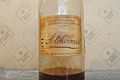 Antica bottiglia alchermes
